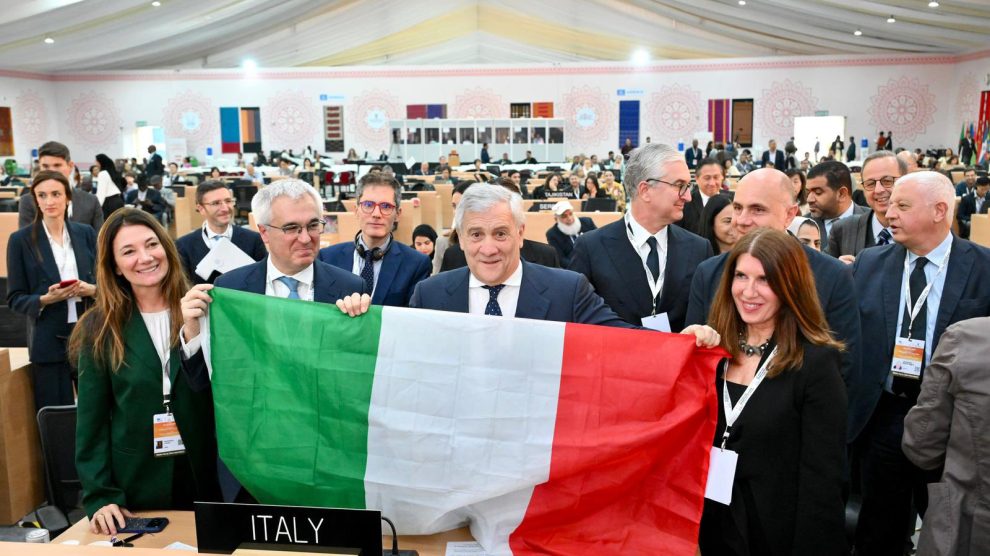
Unesco has officially recognized Italian cuisine as Intangible Cultural Heritage of Humanity, marking the first time ever a national culinary tradition is protected in its entirety.
Why it matters: Prime Minister Giorgia Meloni hailed the decision as a matter of national identity and economic strength: “Today we celebrate a victory for Italy.”
- The recognition strengthens one of the most strategic pillars of the Italy system: €70 billion in agri-food exports and the highest agricultural value added in the EU.
- It provides a stronger tool to protect Italian products and supply chains from imitation and unfair competition.
- It elevates Italian cuisine to a global cultural asset: not just food and recipes, but tradition, community bonds and intergenerational transmission.
What they’re saying: Meloni framed the recognition as a collective national achievement rooted in culture and production. Three key messages from her statement:
- Identity and culture: “For us, cuisine is not just food or a set of recipes. It is culture, tradition, work and wealth.”
- Economic and industrial impact: “This recognition will give the Italy system a decisive boost toward new milestones.
- Political and diplomatic leadership: The prime minister thanked Ministers Francesco Lollobrigida and Alessandro Giuli for leading the Unesco dossier and stressed that the victory was achieved “together with the Italian people and our communities abroad.”
The global context: In its official justification, Unesco defines Italian cuisine as a “cultural and social blend of culinary traditions” that:
- fosters care for oneself and others;
- expresses love and belonging;
- strengthens social ties;
- promotes inclusion and lifelong intergenerational learning.
Italy’s bid was among 60 dossiers evaluated this year from 56 countries. The announcement was met with prolonged applause in the plenary hall.
Between the lines: The recognition comes as the Italian government increasingly frames cultural identity as a strategic national asset, spanning tourism, exports and agri-food diplomacy — while stepping up efforts to combat Italian sounding and food counterfeiting abroad.
- At the same time, the Unesco label places Italian cuisine squarely within the global soft power competition, where countries such as France, Japan and South Korea are also investing in food diplomacy as a geopolitical tool.
What we’re watching:
- Potential expansion of international campaigns against imitation and misleading labeling.
- Greater focus on agricultural supply chains and sustainability as defining features of the Italian model.
- New branding opportunities for tourism, hospitality and the broader Made in Italy ecosystem.
(Photo: X, @antonio_tajani)