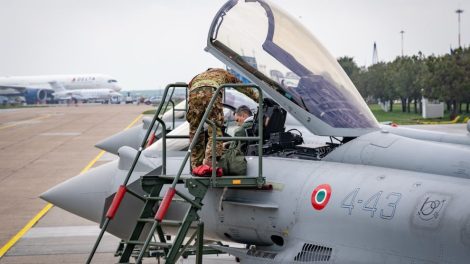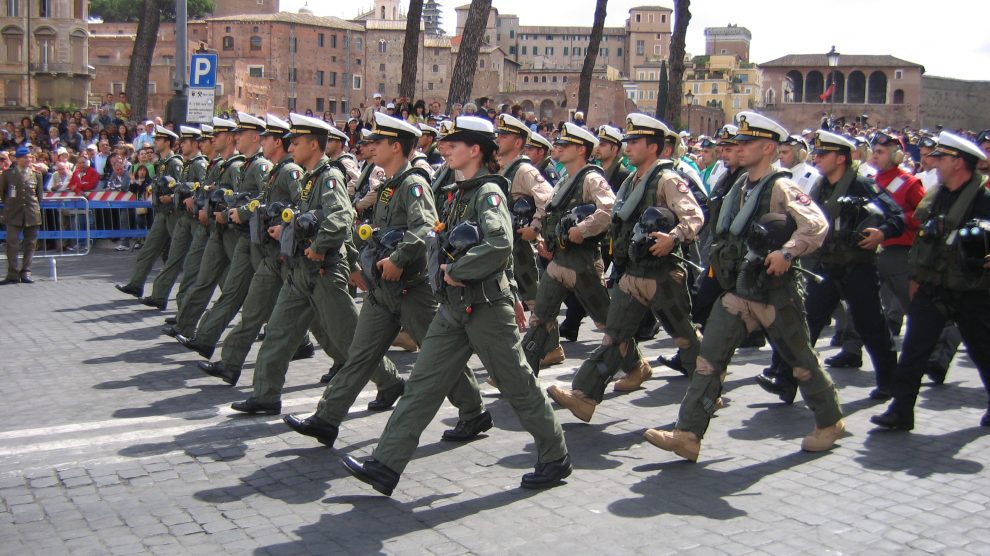
Italian Prime Minister Giorgia Meloni argued that dialogue, diplomacy, and good intentions remain essential tools, but they cannot stand alone. Peace efforts, she stressed, must rest on “solid foundations,” which she explicitly identified with the strength, professionalism, and credibility of the armed forces.
What happened: Addressing the troops directly, PM Meloni credited those foundations to their sacrifice, competence, and courage, adding that any success in restoring peace — described as “the greatest objective of our time” — would ultimately depend on their commitment on the ground.
Why it matters: The message reinforces a strategic line increasingly embraced by Rome: diplomacy is effective only when backed by credible deterrence. It places Italy’s political leadership firmly alongside its military posture at a moment of sustained international instability and long-term overseas deployments.
Between the lines: Prime Minister’s remarks echo a broader trend within NATO. Last week, Allies approved record 2026 common budgets, increasing both civilian and military spending to strengthen readiness, interoperability, and deterrence. Rome’s emphasis on military credibility aligns perfectly with an Alliance that aims to be stronger, fairer — and more lethal.
Not just words: The emphasis on military credibility is matched by policy. According to the “Documento Programmatico di Finanza Pubblica” – Italy’s medium-term fiscal policy framework approved by the Cabinet – Italian government plans a gradual increase in defence spending over the next three years, amounting to roughly €12 billion.
- Defence expenditure as a share of GDP is projected to rise by 0.15 percentage points annually in 2026 and 2027, and by 0.2 points in 2028 — translating into additional allocations of €3.49 billion, €3.57 billion, and €4.89 billion, respectively.
- The signal is clear: deterrence and readiness are becoming structural budget priorities.
The bottom line: For PM Meloni, peace is not opposed to force but enabled by it. Italy’s diplomatic ambitions, the Prime Minister suggests, rest on the credibility, preparedness, and sustained investment in its armed forces.
- “ It is the strength of armies and their credibility that constitute the most effective tool for fighting wars. Dialogue, diplomacy, and good intentions certainly matter, but they must rest on solid foundations.”