In the final weeks of 2025, Italy has reinforced its operational footprint along a strategic arc stretching from the Levant to the Red Sea.
The big picture: The visit of Chief of Defence Luciano Portolano to Italian forces in Iraq fits into a broader sequence that includes Defence Minister Guido Crosetto’s travel to Lebanon and Foreign Minister Antonio Tajani’s visit to Djibouti. Taken together, the moves outline a single posture: Italy closing the year not by recalibrating its role, but by reaffirming it.
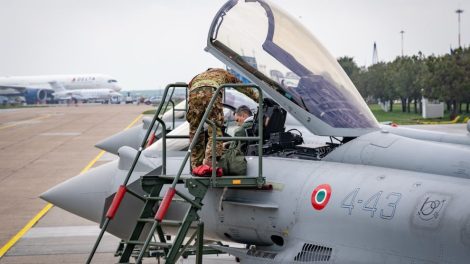
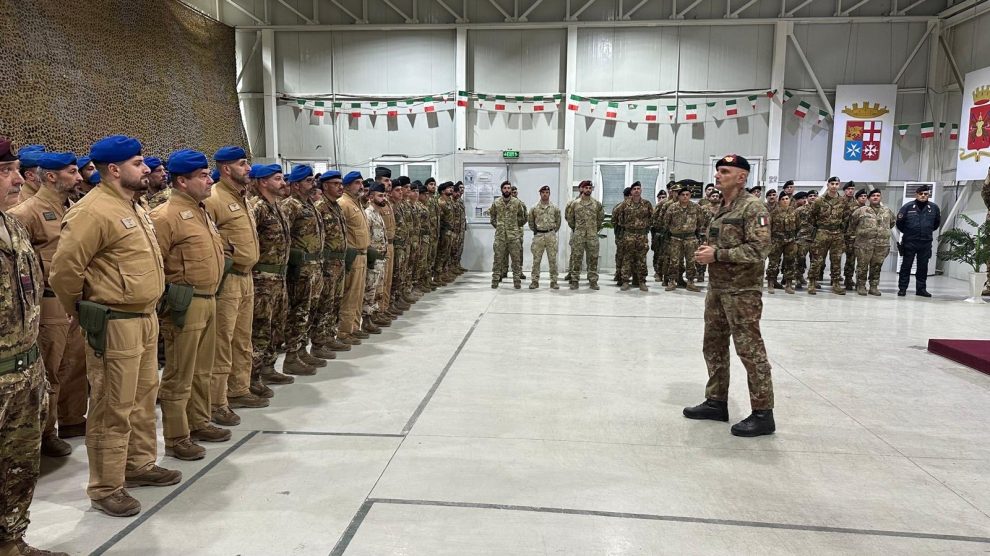
What’s happening in Iraq: Portolano visited Italian personnel deployed under the NATO Mission Iraq and “Prima Parthica,” also meeting embassy staff and Iraqi authorities in Baghdad and Erbil.
- The message was deliberately understated but firm: professionalism, dialogue and cooperation remain the hallmarks of Italy’s contribution, at a time when Iraq’s internal and regional security environment continues to demand sustained international engagement.
What Gen. Portolano said: “Every day, in silence, without clamour and through concrete actions, you show that your work is inspired by the most authentic military values. You are a recognised excellence for your great professionalism, founded on respect, listening and dialogue: this is what makes you unique, respected and sought after by the international community.”
The common thread. Different theatres, same message. From Iraq to southern Lebanon and the Bab el-Mandeb Strait, Rome is deliberately focusing on operational missions, not diplomatic set pieces.
- The underlying principle is simple:
- Presence generates influence.
- Absence creates strategic risk.
- Africa and the Middle East are treated not as separate dossiers, but as interconnected spaces with direct implications for Italian and European security, trade flows and regional stability. These are the roots of Mattei Plan.
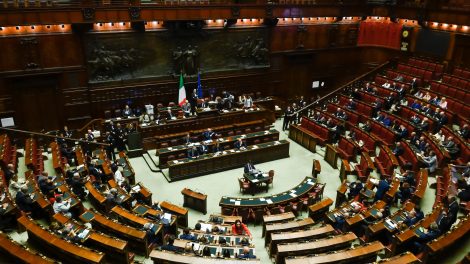
Zoom In: Iraq’s political uncertainty. According to a recent analysis by the Med-Or Italiana Foundation, authored by Alessandro Riccioni, Iraq’s November 2025 parliamentary elections mark only the opening phase of a far more complex process.
- The absence of a clear majority has triggered a prolonged and fragile negotiation over government formation, shaped by entrenched ethno-sectarian balances and the continued influence of pro-Iranian political blocs.
- In this environment, internal stability remains uncertain — reinforcing the political and strategic value of an international security presence on the ground.
The bottom line: Italy is not ending 2025 by winding down its Indo-Mediterranean engagement — it is locking it in.
- From Portolano to Crosetto and Tajani, the message delivered from different fronts is consistent: Italy’s regional role is built on staying power, multilateral frameworks and the fusion of security with national interest.
- Not a farewell tour, but a marker of where Rome intends to stand in 2026.
(Photo: X, @SDM_Difesa)