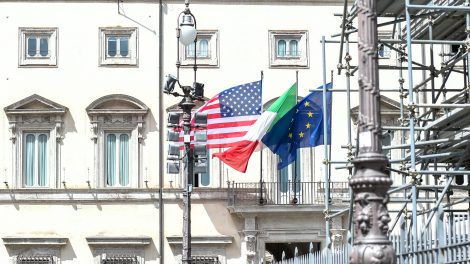

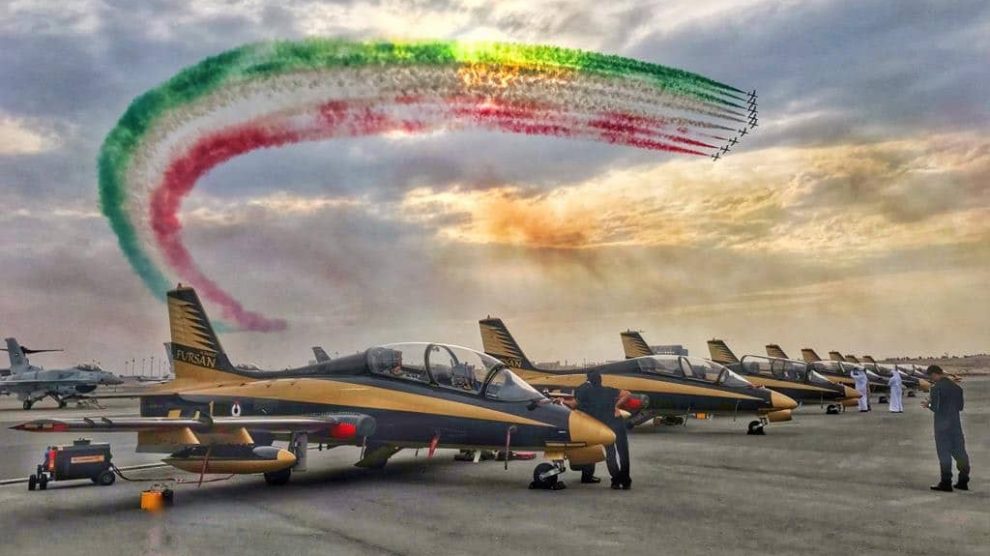
Italy’s Council of Ministers, the country’s top executive body chaired by the Prime Minister, on Tuesday approved a draft law to ratify the defence cooperation agreement signed with the United Arab Emirates in February 2025.
The vote: In Italy’s institutional system, cabinet approval is not a procedural matter: it signals a political decision to anchor a partnership over the long term, paving the way for parliamentary ratification and sustained strategic engagement.
- The deal provides a formal legal framework for military cooperation, including training, joint exercises, personnel exchanges, industrial collaboration, and defence-related research.
Decoding the news: This vote is less about specific military capabilities and more about positioning.
- Rome is placing the UAE at the centre of its wider geopolitical projection across the Indo-Mediterranean space, where security, advanced technology, energy and supply chains increasingly overlap.
- The agreement reflects a core Italian assessment: today, defence cooperation cannot be separated from digital infrastructure, technological resilience and economic security.
Why the UAE matters. Two recent developments help explain Abu Dhabi’s growing strategic weight.
- First, the UAE has formally joined Pax Silica, a U.S.-led initiative aimed at securing critical technology value chains — from semiconductors and artificial intelligence to energy systems, logistics and critical minerals.
- Abu Dhabi’s entry broadened the initiative beyond its original Indo-Pacific and transatlantic core, underscoring the UAE’s role as a trusted node in global supply chains and technology governance.
- Second, the UAE has deepened its strategic partnership with India. New Delhi has set the goal of doubling bilateral trade to $200 billion by 2032, while recent high-level meetings have reinforced long-term cooperation in energy and economic integration.
- Together, these trends position the UAE as a connective platform linking U.S., Asian and European strategic interests.
The security dimension. For Italy and the UAE, security cooperation is a central pillar of the broader strategic partnership.
- As outlined in the February 2025 joint statement, both sides see defence, cybersecurity, and intelligence cooperation as essential to strengthening regional stability across the Mediterranean, the Middle East, and adjacent theatres.
- The partnership spans military cooperation, joint training and exercises, defence technology collaboration, cybersecurity capacity-building, secure connectivity and information sharing, including on counter-terrorism and emerging hybrid threats.
From buyer to producer. The UAE has also undergone a structural shift in defence industrial terms.
- Once primarily a buyer of advanced military systems, it is now investing heavily in domestic defence production, joint ventures and technology development.
- Areas such as unmanned systems, advanced sensors, cyber capabilities and platform integration are increasingly part of its national defence ecosystem.
- This evolution makes the UAE a different kind of partner for European countries: not just an end market, but a participant in defence value chains and co-development processes.
Why it matters for Italy. Italy–UAE relationship is a strategic partnership spanning defence, energy, artificial intelligence, data centres, cybersecurity, space, infrastructure, and cooperation in Africa.
- Both countries are logistical and connectivity hubs between Europe and Asia, including in the context of the India–Middle East–Europe Economic Corridor.
- Against this backdrop, the cabinet vote gives operational substance to a broader strategy. Defence cooperation becomes an enabler — not the end goal — of Italy’s effort to embed itself in emerging geopolitical networks linking the Mediterranean, the Middle East and the Indo-Pacific.
The bottom line: Rome’s decision is not a technical step but a strategic signal. By ratifying the defence agreement with the UAE, Italy is betting on security as the backbone of its Indo-Mediterranean posture — and on Abu Dhabi as a partner capable of bridging defence, technology, and connectivity in an increasingly fragmented global order.