The diplomatic and commercial success of Prime Minister Giorgia Meloni’s visit to Uzbekistan in 2025 is now etched into the toponymy of Samarkand with the establishment of a street named “Via di Roma.” But beyond the symbolism, that trip was above all a sophisticated act of geopolitical positioning, marked by the signing of around ten agreements worth more than €3 billion.
Amid the crisis of linear globalization, Italy appears to have identified Central Asia as a strategic space in which to build long-lasting relationships, transforming a region long perceived as peripheral into one of the cornerstones of its economic foreign policy. The numbers confirm the soundness of this bet: by the end of 2025, Uzbekistan’s GDP reached €118 billion, with robust growth of 6.2%.
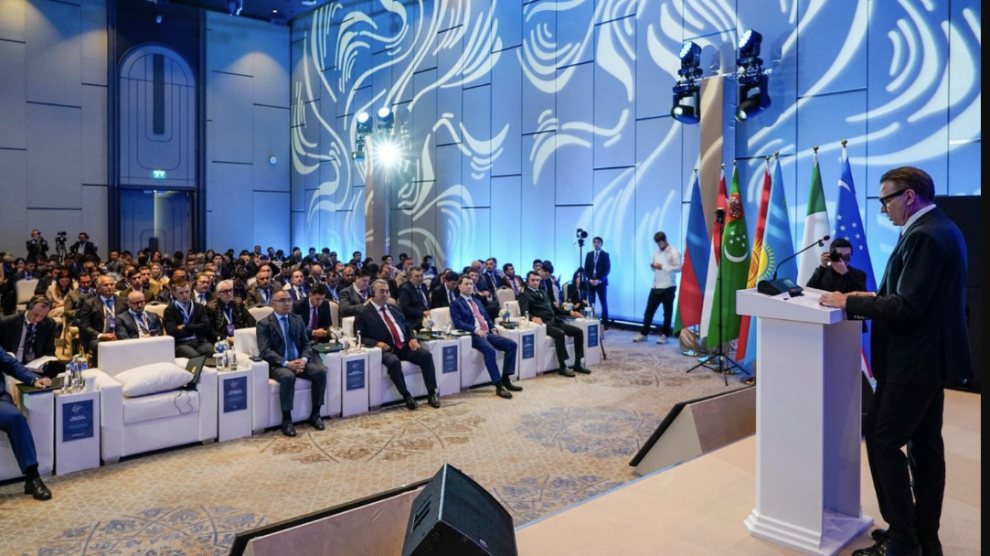
The mission. Nearly a year later, the mission of Minister Francesco Lollobrigida within the framework of the Italy–Central Asia Business Forum, held in Tashkent from March 23 to 24, marks an important operational step: under the impetus of Masaf and the ICE Agency, Italy is deploying its internationalization “operational arms,” SACE and SIMEST.
- Alongside the participation of more than 70 companies (25 of which exceed €25 million in turnover), trade associations, universities, and Italian research centers are also involved, brought together to forge agreements and sign new investments.
- To fully grasp the scope of the Tashkent mission, it is necessary to move beyond the traditional reading of economic missions. Indeed, this initiative appears to go well beyond mere commercial promotion and clearly signals an attempt to build a lasting presence.
- The forum, in fact, extends beyond Uzbekistan’s borders to embrace the entire “Stan” quadrant (Kazakhstan, Kyrgyzstan, Tajikistan, Turkmenistan) and Azerbaijan, confirming Rome’s intention to position itself as a privileged interlocutor for the entire Central Asian region.
Food and agriculture as a geopolitical lever — Lollobrigida’s Tashkent mission. The decision to assign a central role to agriculture in the mission is not accidental. Uzbekistan and neighboring countries are undergoing a profound transformation toward more open market economies.
- Italy presents itself as a systemic partner in key sectors: agricultural mechanization, smart irrigation systems, and precision technologies.
- In a region marked by environmental fragility, such as the Aral Sea basin, these areas represent strategic tools for strengthening food security and regional stability, fully aligned with climate adaptation policies reiterated in the Tashkent final communiqué.
Uzbekistan, pivot of a transforming region. Tashkent confirms itself as the “connective tissue” of Central Asia. Despite the geographical challenge of being a double-landlocked country, Uzbekistan is turning this limitation into an advantage, positioning itself as a regional and inter-regional logistics hub.
- For Italian companies, macroeconomic stability is a strong attractor: inflation is declining and Special Economic Zones (SEZs) offer unprecedented incentives.
- But the March forum showed that Rome’s strategy now embraces the entire “Stan” quadrant and Azerbaijan, aiming at coordinated intergovernmental cooperation to address market volatility and soil degradation.
The scientific dimension: the new Agrarian Alliance. A decisive element of the mission is its knowledge component. In addition to the joint research projects already launched in Rome in February 2026, a major initiative was introduced in Tashkent: the creation of the Eurasian Agrarian University Alliance for Climate Resilience and Food Security.
- This multilateral platform, involving Italian universities and research centers (such as CREA) alongside Central Asian partners, will act as a technological and training “pathfinder.”
- The goal is to develop a class of technicians and researchers trained to Italian standards, facilitating the future adoption of Italian industrial technologies and ensuring the long-term sustainability of investments.
The test of strategic coherence. Trade is accelerating rapidly: Italian exports to Uzbekistan recorded a +30.7% increase in the January–November 2025 period, with strong growth in mechanical machinery (+74%) and furniture.
- The question, at this point, is not whether Central Asia matters — it does, increasingly so — but whether Italy will be able to maintain coherence and continuity.
What we’re watching: All indications suggest that a solid strategy is in place. If consolidated, this trajectory could redefine Italy’s role in the Eurasian space: no longer merely an exporter, but an essential partner in building new economic and agro-ecological balances.
- Tashkent has been the testing ground of this ambition; the outcomes of bilateral meetings and the creation of the university alliance provide its operational confirmation.
(Photo: X, @SocialMasaf)