
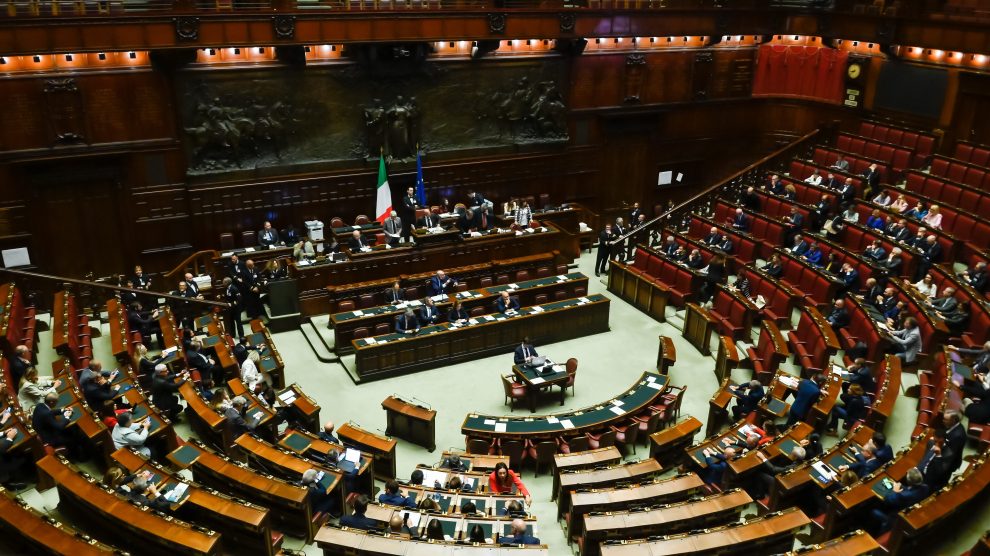
What happened: Italy’s Defense Minister Guido Crosetto addressed Parliament amid political tensions over the use of U.S. military bases on Italian soil, clarifying Rome’s position as the U.S. and Israel escalate military pressure on Iran.
The key message. Italy is respecting its NATO commitments — but is not at war with Iran.
- “Respecting agreements does not mean being involved in a war. We are part of NATO, we are not at war with Iran. We know how to enforce treaties,” Crosetto said.
Why it matters. The statement comes after controversy over a halted landing of U.S. bombers in Sicily, which triggered domestic political backlash and questions about Italy’s role in a widening Middle East crisis.
- The government reaffirmed that relations with Washington remain solid
- But it also signaled a clear boundary between alliance obligations and direct military involvement
The legal framework. Crosetto emphasized continuity:
- Italy has honored agreements on U.S. base usage for over 75 years
- No government — of any political color — has ever questioned them
- The current government is acting strictly within treaties, law, and the Constitution
“The application of agreements on the use of U.S. military bases in Italy has always been characterized by absolute, consistent continuity for over 75 years. No government, of any political color, has ever failed to implement, questioned, or even suggested not implementing these international treaties between Italy and the United States,” Crosetto said.
Between pressure and restraint. Crosetto rejected two extremes:
- “hysterical ruptures”
- “infantile subordination”
Instead, Italy is positioning itself along a legalistic and balanced line, anchored in international commitments but wary of escalation.
The political layer. Domestically, Crosetto called for unity:
- Italy faces a dangerous global environment, marked by:
- arms races
- nuclear proliferation risks
- escalating regional conflicts
- “At this moment our country needs unity, at least in the most difficult sector we are facing,” Crosetto said.
About the nuke. “I fear that what is already dramatic could worsen even further. Because I know that humanity has shown us that there is no limit to madness,” Crosetto said in an interview with Corriere della Sera.
- He added: “They are human beings like us who decided that, to end a conflict, even Hiroshima and Nagasaki were acceptable. Unfortunately, we continue to have nuclear weapons, and those who do not have them seek them. We have learned nothing.”
The bigger picture: Italy is navigating a familiar but increasingly fragile equilibrium:
- Strategic alignment with the U.S. and NATO
- Political sensitivity at home
- Escalating regional instability, from Iran to the broader Middle East
The takeaway: Rome is trying to stay inside the alliance — without sliding into the war.