Italy’s defence minister Guido Crosetto used a three-stop tour of Saudi Arabia, the United Arab Emirates and Qatar to deliver a calibrated message: Rome wants to be seen as a politically reliable and militarily relevant partner in the Gulf. The sequence of visits – Jeddah, Abu Dhabi, Doha – underscored an Italian effort to tie regional security, maritime stability and defence cooperation into a single strategic posture.
The move: Italian MoD Guido Crosetto’s mission unfolded along a precise diplomatic arc.
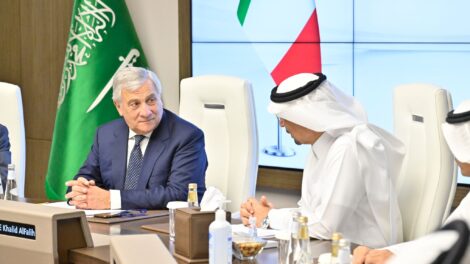
- In Saudi Arabia, talks with Prince Khalid bin Salman focused on Iranian attacks and their consequences, with Italy reaffirming both its defensive military support and its backing for a diplomatic solution to the crisis.
- The discussions also moved quickly beyond the immediate emergency, touching on freedom of navigation in the strait of Hormuz, military-to-military cooperation and defence industry prospects.
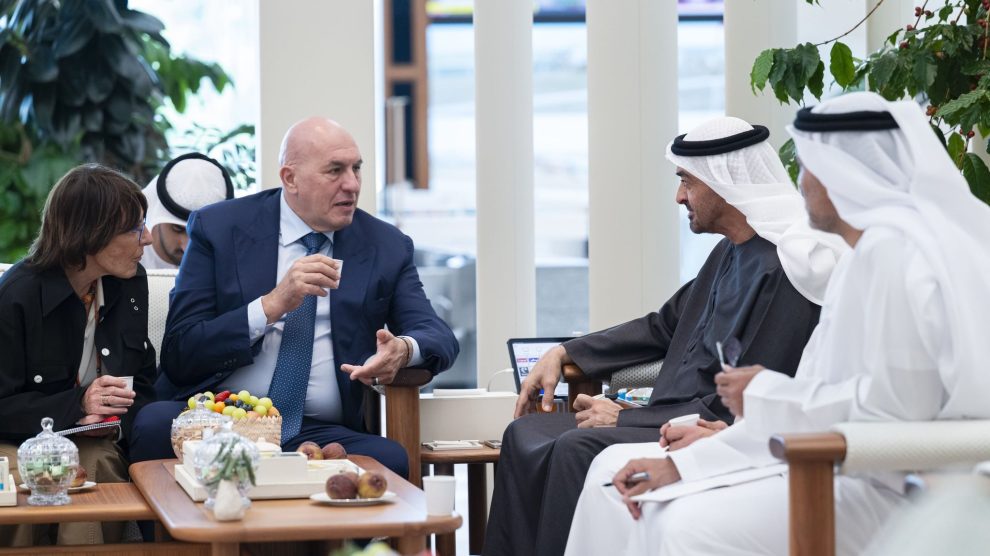
- In the United Arab Emirates, the political weight of the trip became even clearer. Crosetto met President Sheikh Mohamed bin Zayed Al Nahyan, placing bilateral defence ties within a broader conversation about the Middle East’s latest escalation and its effects on regional and international stability.
- The UAE stop also produced a tangible outcome: a letter of intent to expand defence cooperation, developed through talks with minister of state for defence affairs Mohamed Bin Mubarak Bin Fadhel Al Mazrouei.
- In Qatar, Crosetto met vice prime minister and defence minister Sheikh Saoud bin Abdulrahman Al Thani before holding talks with emir Tamim bin Hamad Al Thani.
- Here the emphasis shifted toward political-military coordination, bilateral defence links and Qatar’s role in preserving regional stability.
Why it matters: The trip was not simply about maintaining contacts.
- It was about placing Italy inside the Gulf security conversation at a moment defined by military tensions, threats to critical infrastructure and rising concern over maritime routes.
- Hormuz, in particular, remains a strategic choke point where regional instability quickly becomes a global economic issue.
Strategic convergence. What stands out is the coherence of the mission.
- Saudi Arabia, the UAE and Qatar are distinct actors with different diplomatic styles and regional roles, yet Rome approached all three through the same strategic lens: political reassurance, defence dialogue and practical cooperation.
- That suggests Italy is seeking a more structured presence in the Gulf, not episodic engagement.
The bigger picture: The tour reflects a broader European trend: middle and major powers alike are paying closer attention to the Gulf as both an energy hub and a security theatre.
- For Italy, the region is increasingly tied to its wider Mediterranean and Indo-Mediterranean outlook, where maritime security and political partnerships overlap.
What it signals: Taken together, the three stops define a clearer Italian line.
- Rome wants to be present where regional crises, critical infrastructure protection and strategic sea lanes intersect.
- Crosetto’s trip signals an Italy that is trying to turn political access in the Gulf into long-term strategic relevance.
(Photo: X, @MinisteroDifesa)