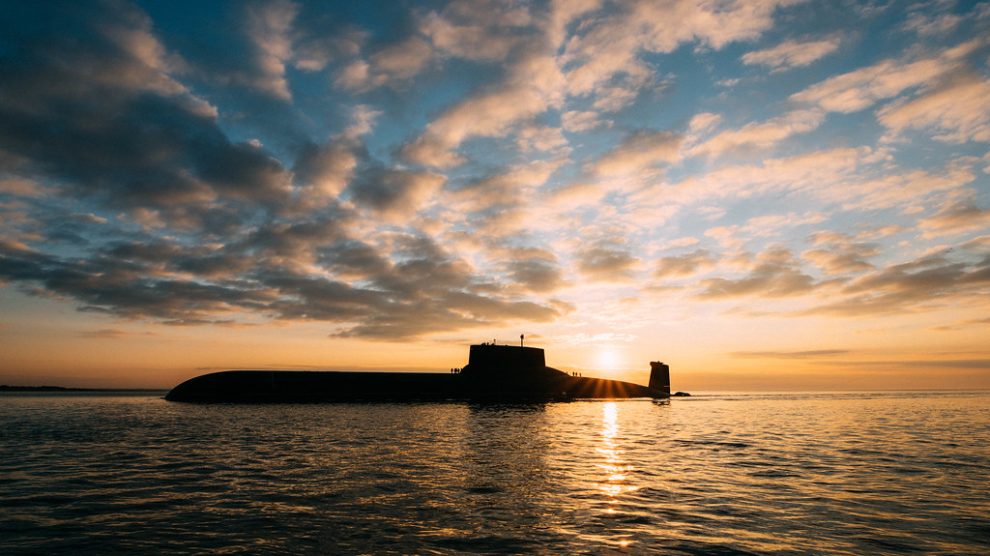
During the Cold War, the GIUK Gap was among the most heavily monitored maritime chokepoints in the world. In the decades that followed the end of bipolar confrontation, it appeared to fade into strategic irrelevance. That has not been the case.
As great-power competition returns, the corridor is once again central to both Russian and Western naval strategy—albeit shaped by new actors, technologies and operational dynamics. Decode39 discussed these developments with Nicolò Boschetti, a researcher at the Blekinge Institute of Technology and the Marine Technology Center of Sweden.
Q: The GIUK Gap has forcefully returned to the centre of strategic debate. Mutatis mutandis, is it still the same critical chokepoint it was during the Cold War?
A: Absolutely. Although the broader geopolitical landscape is no longer defined by the rigid bipolar confrontation of the last century, the importance of this stretch of sea remains unchanged. The GIUK Gap continues to represent a mandatory passage for Russian submarines seeking access to the Atlantic, as well as for operations in the Norwegian Sea or even the North Sea.
Q: Russia is reinforcing its Northern Fleet in Murmansk and modernising old Soviet bases in Novaya Zemlya and Franz Josef Land. Should this be read in defensive or offensive terms?
A: Personally, I interpret it more as defensive than offensive. But the key point, in my view, lies elsewhere: Russia is deploying new technologies to do what it has always done. The Soviet Union sent submarines to operate close to NATO coastlines throughout the Cold War.
- In Karlskrona, in the 1980s, one even ran aground just outside the harbour. The issue is that public debate continues to portray these activities as something entirely new, without asking what is actually being done and why. There is certainly an element of power projection, both conventional and nuclear. Beyond that, the picture is far more blurred.
Q: Are you referring to undersea cables and the reported sightings of Russian submersibles near them?
A: Yes, exactly. And it is important to clarify that the common scenario—where a submarine approaches a cable and damages it with a single strike—is a simplification that does not reflect reality.
- In the case of European submarines, a vessel operating at 50–100 metres from a cable has very limited capabilities: it cannot intercept communications, it may struggle to locate the cable precisely, and in open waters deploying divers to cut it is impractical due to depth.
- This leaves an open question: what are Russian submarines actually doing near these infrastructures? It is still unclear whether this amounts to political signalling or whether Russia possesses advanced technologies unknown to us. That is precisely the question we need to answer.
Q: What could those capabilities be?
A: Russia has historically had expertise in deep-sea vehicles and high-pressure underwater operations that we do not possess—one need only think of the Mir submersibles.
- My view is that either Russia has developed underwater drones capable of being deployed from larger platforms and positioned near cables, or that these platforms could place explosive devices or underwater buoys near cables, to be detonated at a later stage.
Q: And yet, the only documented cable damage incidents have not involved submarines or advanced drones, but conventional ships using anchors…
A: That is true. And I believe that what we have seen in the Baltic was a way to test both our political will and our response capabilities.
- Assuming these were not accidents but deliberate actions, the actors involved were trying to understand how we react technically, and how data traffic is rerouted when a single infrastructure is disrupted.
- The issue with ships using anchors is that they are visible—they have transponders, AIS signals. Underwater, the situation is entirely different.
Q: This looks more like a conventional warfare scenario than hybrid warfare.
A: Exactly. And this is something that is not sufficiently discussed in public debate today, where the focus is overwhelmingly on hybrid warfare. But if we continue to frame everything in those terms, we miss the point.
- Ukraine has shown us this clearly. Conventional warfare exists. It may be difficult to even imagine for Western Europe, but it must be taken into account. If we stop doing so, Russia already knows it has won.
Q: Let’s turn to the technical dimension. New technologies have altered the balance between detection and concealment. Where does the advantage lie today?
A: If you compare today’s GIUK Gap with that of the 1970s and 1980s, monitoring and situational awareness capabilities are far more advanced and pervasive.
- There is a very large number of satellites conducting Earth observation—not only NATO assets, but also private companies—equipped with synthetic aperture radar, optical sensors and infrared systems.
- These can cover the entire route from Murmansk, or even from Novaya Zemlya and Franz Josef Land, all the way to the Gap.
- Underwater, even in the 1960s and 1970s we had hydrophone networks to track Soviet submarines. Today there are many more, and they are more capable. By contrast, progress in stealth technologies has been more limited.
- Any object moving underwater generates noise. Increasing the number of sensors reduces the acoustic signature, but not completely. As far as I know, the “caterpillar drive” from The Hunt for Red October still does not exist.
Q: Is this surveillance architecture primarily American, European, or hybrid?
A: It is hybrid, with contributions from both sides of the Atlantic. The British navy, for example, is at the forefront within NATO in terms of infrastructure and sensor systems. But maritime awareness is highly complex: it involves coastguards, government infrastructures, naval sensors, undersea cables, pipelines, and private space companies.
- The real challenge—for NATO and for individual states—is to integrate all these data streams. Satellite imagery alone does not reveal what happens underwater, and hydrophones or distributed acoustic systems cannot always identify the source of a signal with certainty. The ocean is vast—even if it looks small on a map. In the case of the GIUK Gap, we are talking about thousands of nautical miles.
Q: Many are asking whether Europe could manage this surveillance architecture independently, without US support. Is that realistic?
A: In my view, yes. Of course, Europe does not have the same submarine fleet as the United States, especially in terms of blue-water capabilities. But in terms of infrastructure, the GIUK Gap is European territory: the UK controls part of it, Norway another, Iceland another. Europe also has a solid degree of autonomy in supply chains and expertise, with effective partnerships between defence and the private sector.
- The cables are European. Companies like Kongsberg in Norway and Saab in Sweden produce underwater drones. There are no major gaps in this respect.
Q: Where should Europe focus to strengthen its projection in the High North?
A: We are seeing cautious but meaningful efforts by NATO to acquire new technologies, such as underwater drones and advanced monitoring systems. Two years ago, NATO launched the Digital Ocean Initiative, and projects like HEIST are moving in the same direction—towards acquiring the right technologies, including autonomous platforms, both underwater and on the surface.
- But above all, it is necessary to build defence–private sector consortia capable of integrating all these data sources. The ocean is vast: you do not necessarily need 500 submarines to wage naval warfare, but you do need to know where to deploy the ones you have.
- NATO is investing in greater harmonisation of infrastructure and sensors. Beyond the framework of the Alliance, however, there is limited movement.