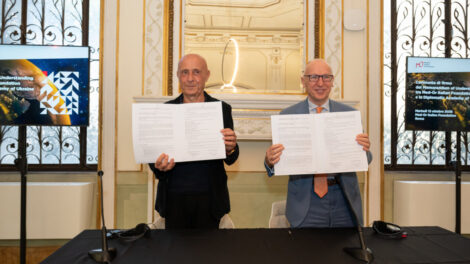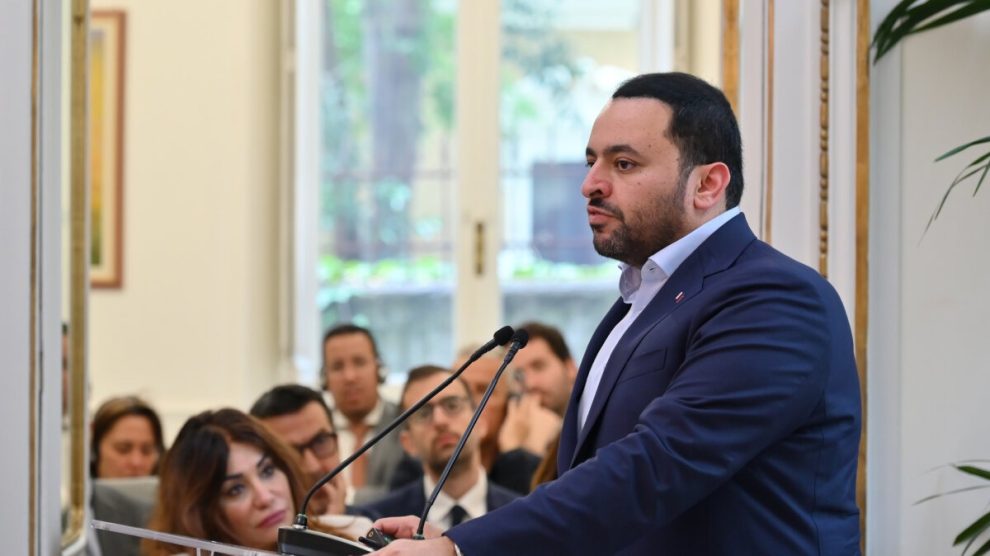
Going against the grain. Introducing the event, Med-Or president Marco Minniti highlighted how mediation is regaining strategic relevance at a moment when unilateral approaches and power politics increasingly dominate the international landscape. Against this backdrop, Al-Khulaifi presented Doha’s diplomatic model as an attempt to preserve dialogue channels across some of the world’s most complex crises.
North Star. For Qatar, mediation is not an occasional instrument but “a cornerstone” of statecraft. Al-Khulaifi reiterated Doha’s rejection of purely military solutions and stressed that sustainable outcomes can only emerge through dialogue, trust-building and long-term political engagement.
- “The role of the mediator is not to reach the agreement – that is the responsibility of the conflicting parties. The mediator’s role is to build bridges,” Al-Khulaifi said.
- Over the last two decades, Qatar has consolidated its reputation as a facilitator able to engage simultaneously with actors often unwilling to communicate directly. This role has been reinforced through mediation efforts spanning multiple theatres, from Afghanistan to Gaza, from Lebanon and Libya to Ukraine, Venezuela and several African conflicts.
Acta, non verba. According to the Qatari minister, effective mediation requires a highly pragmatic approach.
- Understanding the structural roots of conflicts, creating confidence between adversaries, carefully shaping the negotiating environment and mobilising multidisciplinary expertise are all critical components of successful diplomacy.
- Equally important, he argued, is the implementation phase: the durability of agreements matters more than the symbolic achievement of signing them.
The Middle East as core business. The Israeli-Palestinian dossier remains central to Doha’s diplomatic agenda. Al-Khulaifi confirmed that Qatar continues to coordinate closely with Egypt, Türkiye and the United States to pursue a more stable framework for Gaza. Reflecting on the post-October 7 diplomatic efforts, he underlined Qatar’s role in facilitating humanitarian pauses and hostage exchanges while warning that ceasefires alone cannot resolve the broader conflict.
- “We do not surrender to a ceasefire, because it is not a durable solution,” stated Al-Khulaifi.
The bigger picture. Beyond individual crises, the Qatari minister emphasised the growing interconnectedness of regional dynamics. Instability in Europe, he argued, inevitably affects the Gulf, just as Middle Eastern crises generate repercussions far beyond the region itself. In this context, Doha sees mediation not simply as conflict management, but as a necessary foundation for rebuilding an increasingly fragile international order based on dialogue, inclusion and sustained diplomatic engagement.