For years, Italy’s international missions were approved in Parliament with overwhelming, often bipartisan, support. Last week’s vote in the Chamber of Deputies, however, exposed the different positions within the broad opposition coalition, reopening debate over its cohesion on major foreign policy and security issues.
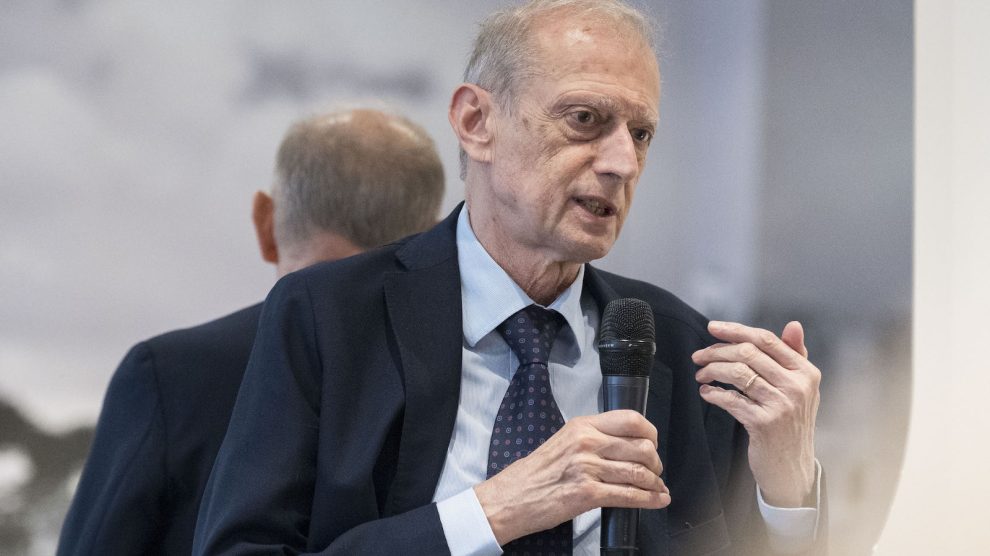
According to Piero Fassino, Democratic Party MP and Vice-Chair of the Chamber’s Defence Committee, diversity of opinion should not become a source of structural division.
Italy’s international credibility, he argues in this interview with Formiche.net, also depends on its ability to express clear and consistent positions—starting with Ukraine and European defence, and extending to the EU’s SAFE instrument, on which he calls on the government to abandon its ambiguity.
Q: For years, Italy’s international missions were authorised with broad, often unanimous, parliamentary support. This time, however, the broad opposition coalition tabled four separate motions. Is this a sign of a political divide that could have lasting consequences?
A: For many years, Parliament authorised Italy’s international missions with what was essentially a united vote. There was a shared understanding that deploying Italian troops to conflict zones or highly unstable regions involved risks, responsibilities and commitments that required the broadest possible political consensus.
- The fact that we are now divided on these issues is a sign of weakness and should not be underestimated. Our soldiers are better able to carry out the peace objectives of these missions when they know they have the widest possible support from the country behind them.
Q: The Democratic Party nevertheless presented its own motion, setting itself apart from the other opposition parties. What was your position?
A: The Democratic Party has been consistent. We believe that contributing to United Nations and European Union peace missions is a duty for Italy. That does not mean we should refrain from assessing each mission on its merits or raising concerns where necessary.
- For example, we voiced objections regarding cooperation with the Libyan Coast Guard, which has repeatedly been implicated in serious human rights violations. We are equally unconvinced by continued support for Tunisia, where an increasingly authoritarian regime has consolidated power, failed to uphold basic democratic standards and suppressed dissent.
Q: The Democratic Party also abstained on the mission in Niger. Why?
A: We recognize the importance of Italy’s presence in the Sahel, but we cannot ignore the political reality of the region. Across the Sahel we have witnessed coups d’état and the emergence of authoritarian and dictatorial regimes.
- Our abstention does not reflect a retreat from our commitment to the region’s security; rather, it is a call for a rigorous political assessment consistent with democratic principles.
Q: Could the fact that the broad opposition coalition presented four different motions become a broader problem for the opposition as a whole?
A: Yes, it is a problem, and it should not be minimised. Differences of opinion are perfectly natural, but when they concern the major issues of foreign and security policy they risk undermining both national and European cohesion.
- Italy is reliable to the extent that it is credible in foreign policy. There are certain issues on which fundamentally opposing positions are simply not sustainable.
Q: Which issues do you have in mind?
A: Ukraine, first and foremost. [Russian Presidente Vladimir] Putin is the aggressor, and Russia continues every night to subject the civilian population to devastating indiscriminate bombardments.
- There can be no retreat in our support for Ukraine. This is not only about solidarity with a country under attack; it directly concerns European security, particularly in light of Donald Trump’s statements and positions. We must also avoid simplistic and unserious arguments when discussing defence and the strengthening of Europe’s capabilities.
Q: Yet the debate over rearmament continues to divide Italian politics.
A: We have to acknowledge the profound changes taking place in the international environment. The era of broad international cooperation has come to an end, and the system of multilateral governance that shaped global affairs after the fall of the Berlin Wall has weakened considerably. Many regions are now affected by conflict and instability.
- We risk sliding into a condition of international anarchy that threatens everyone’s security. We need a strategy that matches the complexity of the current moment. The European Union was created as a peace project and remains one today, but precisely for that reason it must also be capable of defending itself against those who would threaten peace and of ensuring the security of the continent.
Q: Against this backdrop, the Italian government has yet to clarify whether it intends to make use of the EU’s SAFE instrument. Do you believe that hesitation is justified?
A: It would be a serious mistake not to use SAFE. It is a European initiative based on financing long-term joint programmes involving several member states, with the objective of promoting projects that contribute to building a genuine European defence while strengthening the Union’s industrial and strategic integration.
Q: What would be the concrete benefit for Italy?
A: These are loans that can be repaid over half a century under extremely favourable conditions, with interest rates close to zero. There are no comparable sources of financing available.
- Renouncing SAFE would mean giving up an exceptionally advantageous instrument precisely at a time when Europe needs to strengthen both its security and its strategic autonomy. The government must end its ambiguity: choosing not to adopt SAFE would be a serious mistake.