There is the market, with its unwritten rules. And then there is national interest. As the debate returns in Italy — with implications for Europe — over whether to embrace low-cost manufacturing made in China, the question is again becoming hard to avoid: the price of a product matters, but what happens when technological and industrial sovereignty are put at risk?
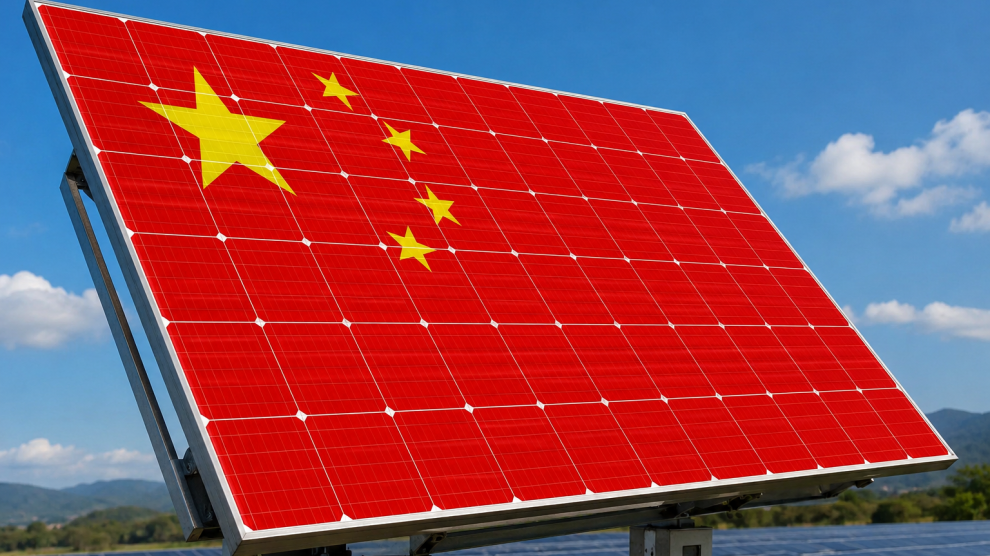
Decoding the news. The case in point is solar panels, a sector where China holds a position close to global semi-monopoly.
- The issue stems from Italy’s Transition 5.0 plan, the incentive scheme designed to support the digital and energy transformation of companies. Once built around tax credits, the system now revolves around hyper-depreciation. It appears to be working, but only up to a point: subsidized investments in traditional machinery are moving fast, while green investments are lagging.
Why? Critics argue that the government has made access to the incentives conditional on companies buying only solar modules produced in Europe, including those supplied by 3Sun in Catania, Enel’s photovoltaic flagship. This, they say, may have slowed corporate investment, with companies more attracted by cheaper Chinese panels and related technologies.
- The debate has gained space in Italy’s business press, including Il Sole 24 Ore, traditionally attentive to trade arguments and, by extension, often open to Beijing. In recent days, two further interventions on the newspaper have again pointed in China’s direction, also bringing in Beijing’s role in the race for artificial intelligence.
- The point is clear: Chinese manufacturing may cost less, but it also carries the seed of dependence. That dependence risks weakening the industrial alternative Europe may need precisely when reliance on China becomes a problem. This explains the growing pressure, including through the media, to reopen Transition 5.0 incentives to Chinese technologies.
But according to Carlo Alberto Giusti – professor of comparative private law, Rector of Link Campus University in Rome and president of Ansaldo Energia – there is a possible landing point. And it is also a way out.
Q: Professor, the issue of low-cost Chinese manufacturing as a source of industrial dependence keeps coming back into the debate. The case of green-technology incentives shows it. What is your view?
A: Concepts such as fair and healthy competition, reciprocity and transparency are today even more inseparable than they were in the past. In this sense, markets can and must remain open, while still safeguarding a country’s interests.
- Look at some of the more or less recent choices made by the Trump administration. On the one hand, they were risky moves and immediately led to a market contraction. But then the market, so to speak, regulated itself and absorbed the impact of the U.S. government’s decision.
- That is why I say again: market openness and the protection of national interest are not two forces in collision. On the contrary, they must continue to coexist.
Q: Can you think of a good example of this coexistence?
A: Yes, France. But also Italy, where this government has maintained an admirable line of prudence. It is a line that can be summed up in one word: de-risking.
- The model shaped by Italy – keeping a free and open market while protecting national interest – has, in the end, become something of a reference across much of Europe. It means consciously removing risk without giving in to sovereignist or protectionist impulses.
- The result of this synthesis is that the European Union has embraced a solid, robust transition, but with forms of self-protection for its own industry. This path will bear fruit in the coming months.
Q: From the entrepreneur’s point of view, what costs less is often more convenient, or at least more attractive. How can the message of national interest be conveyed to the business community?
A: To begin with, the market naturally tends to regulate itself. A European product with EU characteristics is more reliable than one that costs much less.
- Industry knows this. It understands that the quality of a product has its own value.
- This is why the EU must prevent companies from suffering an economic decline as a result of the protective constraints we mentioned. In other words, preventing companies from buying low-cost products in favor of quality goods must become an added value for them, not a loss.
- At the same time, Europe must find a way to encourage its industry to become even more competitive. That goal can only be reached through incentives.
Q: Do you think the industrial system will be able to absorb and metabolize this vision?
A: I believe so. The point here is not to limit relations with China. That is not even the goal of European governments.
- Beijing is part of the world and of its economic system. There is no point in ignoring that. What we should hope for, however, is that European manufacturing becomes even more competitive than in the past. How do we do that? By investing in technological innovation and training.
- Let me bring China back into the discussion. Last year I was part of a delegation accompanying the President of the Republic, during which we signed numerous agreements. This shows that cooperation with Beijing should not be seen as something to fear.
- If anything, it should push the EU not to close in on itself, as Trump did, but to design policies that protect Italian companies — as this government is doing — while also working to increase competitiveness.
- In short: bridges with China should not be blown up. But Europe must protect its companies and become stronger in the market.
Q: The world is moving fast and changing shape at increasing speed. Looking at the next ten years, what do you see?
A: The next decade will mark the transition toward a less predictable multipolar system.
- The United States will remain the West’s cultural and technological reference point, but it will have to share the stage with an increasingly assertive China and with a Europe forced to confront its own strategic sovereignty.
- The energy mix will play an increasingly important role, starting from one awareness: Italy has high-level industrial and scientific expertise that can contribute to this transition.