Cagliari is hosting the second edition of the Security Festival, promoted by the Vittorio Occorsio Foundation and dedicated this year to international security. At the center of the discussion will be geopolitical crises, hybrid threats, organized crime, strategic infrastructure and industry, with representatives from institutions, defense, academia and the private sector.
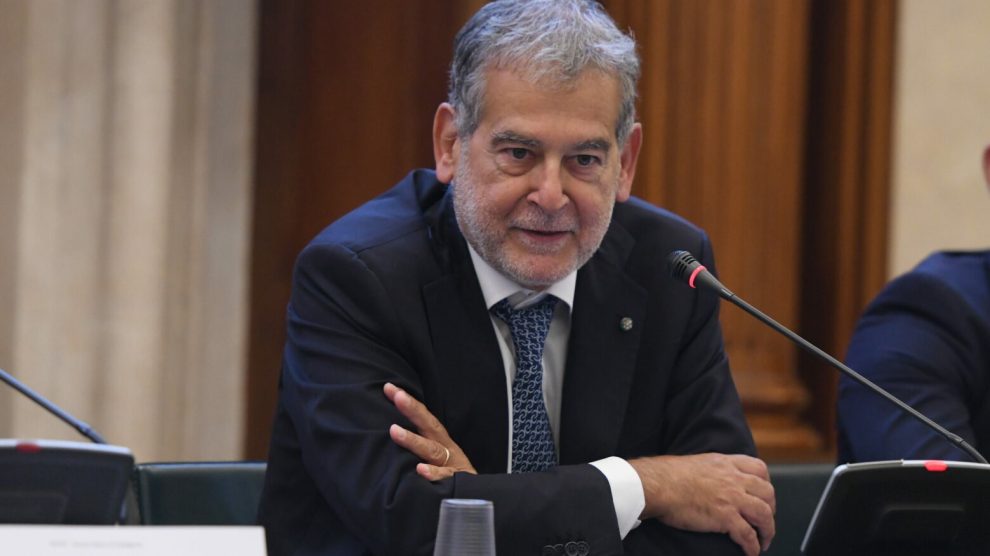
Airpress, our sister magazine on aerospace dynamics, discussed these issues with Luciano Carta, senior special advisor to the Vittorio Occorsio Foundation.
-
- Foreign Intelligence: Former Director of AISE, Italy’s external spy agency.
- Defense Industry: Former Chairman of Leonardo S.p.A., a NATO defense giant.
- Financial Security: Three-star General and former Chief of Staff of the Guardia di Finanza.
Q: General Carta, this second edition of the Security Festival comes at a time when the very concept of security is changing. Why is an event of this kind needed today?
A: The title remains that of security, but every year we choose a specific focus. Last year, we concentrated on energy networks, a topic that still retains extraordinary relevance today. This year, also with respect to the Festival’s original approach, we decided to broaden our perspective to international security, because we are facing a period of profound geopolitical crisis.
- The international landscape is characterized by a continuous increase in competition among nations and in conflicts. Public attention focuses mainly on the two major theaters of war, but there are almost sixty conflicts around the world. Added to this are the hybrid threat, the growing role of critical infrastructure, and the evolution of mafias and other criminal organizations, including foreign ones, which find new opportunities in the international disorder for economic infiltration and the exercise of power, to the point of assuming a transnational strategic dimension.
- We are witnessing the crisis of a world order that for decades we considered substantially stable. Multilateral institutions are increasingly struggling, while the international system is moving toward a multicentric order in which it is not always easy to distinguish the role of states from that of other centers of power, including economic actors whose size exceeds that of entire countries.
- Added to this picture are climate, energy, raw materials, natural resources, water, health, demographics, and growing economic and social imbalances. The balance among international organizations is also changing, the weight of the BRICS, the Shanghai Cooperation Organization and non-aligned countries is growing, while the United States has progressively shifted its strategic center of gravity. Obama began the move away from the Mediterranean, Biden implemented the withdrawal from Afghanistan, and today Trump is pursuing an often isolationist course.
- Faced with this complexity, the ambition of the Vittorio Occorsio Foundation is to bring public and political decision-makers, the scientific community, analysts and the private sector around the same table. The objective is to use different skills and experiences to produce analyses that can also be useful to those called upon to make decisions.
Q: International crises now directly affect domestic security, the economy and infrastructure. What must Italy do today to protect itself from increasingly interconnected risks?
A: The first step is to acknowledge that the threat today takes different forms than in the past. I hope that kinetic wars will not represent the main concern for our country. The central issue is rather that of hybrid threats, which can be carried out by state actors but also by non-state actors used as proxies.
- The hybrid threat combines actions across different domains. There is the diplomatic domain, the information domain, but speaking only of disinformation would be reductive. We must also consider the cognitive, military, economic and financial domains, as well as Intelligence. The objective may be to destabilize our democracies, weaken trust in institutions, create social divisions and influence public opinion.
- Cyberspace is a major facilitator of these dynamics. Part of the intermediation traditionally exercised by the media has disappeared, and today it is possible to reach citizens directly. Tools such as artificial intelligence also make it possible to identify specific social groups and direct targeted actions toward them, including through bots capable of enormously amplifying their reach. These operations also offer another advantage to those who conduct them, because they are often difficult to attribute.
- Authoritarian states may have an additional advantage, because they are more easily able to coordinate the different branches of the state apparatus and are subject to fewer constraints than democracies. In some countries, for example, cyber operations were for a long time conceived only in defensive terms. But today it is no longer sufficient simply to defend oneself. It is also necessary to have the capability to respond against those carrying out the attack.
Q: In the program, organized crime enters directly into the international security framework. How can mafias, new technologies and transnational networks become a national security problem?
A: Cyber is a very clear example of how blurred the boundaries between state actors and organized crime are becoming. Today, there is no longer a clear separation between operations conducted by states and activities attributable to organized crime. A hybrid model has emerged, that of so-called cyber mercenaries: actors who do not formally depend on governments but who may be tolerated, financed or even directed by them.
- There are actors who, with varying levels of direction and sponsorship, attack Western targets and in some cases are directly linked to Intelligence services. For the states that use these actors, there is an obvious advantage: deniability, and therefore the difficulty of attributing the attack directly to the government.
- The phenomenon does not concern only one side. On the Ukrainian front, for example, a volunteer cyber force has been established, a sort of digital militia employed in national defense and capable of striking Russian targets. The point is that today the distinction between national security and corporate security is becoming increasingly blurred. Companies must therefore also rethink their exposure to risk.
- A chief security officer of a large company must now also possess geopolitical knowledge, because the company, whether it wants to or not, becomes an actor embedded in international competition. Risk management must be integrated with geopolitical analysis, adopting zero-trust architectures and investing in threat intelligence. In a hybrid conflict, there are no truly neutral observers, but rather potential targets that may not yet know they are targets.
What is increasingly at stake is trust. Operation Rubicon involving Crypto AG demonstrates this very well. For decades, a Swiss company that was a leader in encryption machines was secretly controlled by the CIA and Germany’s BND and sold its systems to around 120 countries, allowing Washington and Bonn to read encrypted traffic. It is therefore not simply a matter of breaking the lock, but of controlling who produces it.
- The same logic can be found in the 2024 operation against Hezbollah, when an apparently reliable supply chain became the very instrument of the attack, and in the 2017 NotPetya case, when the compromise of Ukrainian tax-update softwarecaused approximately ten billion dollars in damage. For a large industrial group, the perimeter to be defended no longer coincides solely with the corporate network. It includes the chain of trust: suppliers, the people who have access to systems, and also the companies that are integrated through acquisitions.
- Added to all this is the issue of cryptocurrencies, which have become a tool for circumventing restrictions, controls, embargoes and exclusion from traditional financial circuits. At a time when attempts to use currencies alternative to the dollar are growing and the use of non-traditional financial instruments is increasing, cryptocurrencies also represent a privileged channel for international crime. It is an issue that inevitably falls within the broader discussion of security and organized crime.
Q: Speaking of industry, how much does a country’s security today depend on the strength of its industrial supply chains and, at the same time, how much do the functioning and resilience of those supply chains depend on the security that the country is able to guarantee its companies?
A: This is an issue that directly falls within economic warfare and economic Intelligence. Having information in advance makes it possible to understand the behavior of competitors and identify tools through which to protect and strengthen one’s economic system.
- In a highly interconnected world, it is necessary to work as a system, building close integration between Intelligence and industry, especially strategic and defense industry. Some countries have long developed a genuine doctrine in this field. I am thinking of France, not because it is better than us, but because it started earlier. It is a country where there is even a school of economic warfare and where the system brings together academia, professions, intelligence and the economic world.
- It is essential that there be a constant exchange of knowledge among these actors. This creates an advantage for the country, for national security and for businesses. Large strategic companies, including state-participated ones, are extraordinary observers of international dynamics and can offer an interpretation of economic processes that in turn becomes a lever for strengthening national security.
The bottom line: “Only through integration among large strategic companies, the security community and Intelligence can we be truly competitive. It is a necessary collaboration, and it is right that it exists,” said Carta.