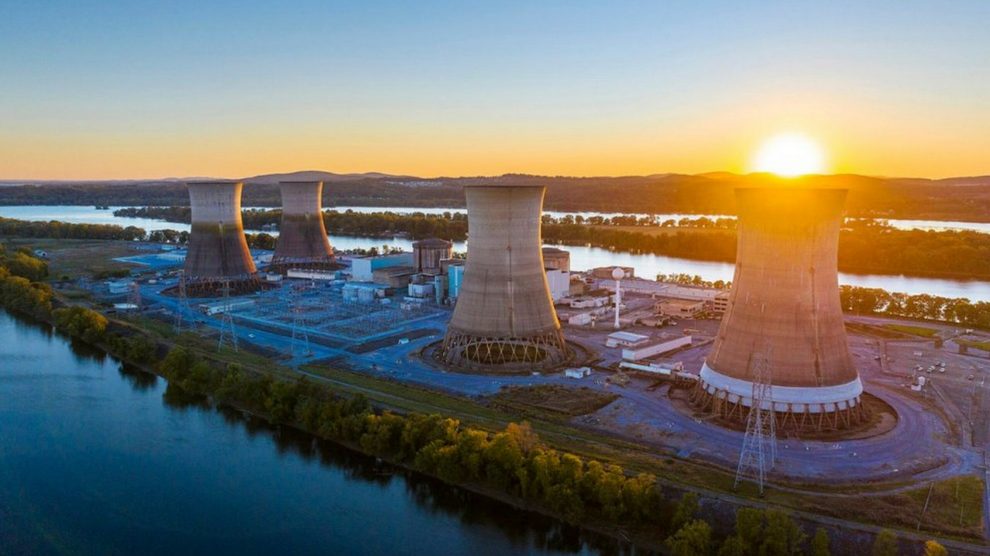
Technological, military and industrial superiority are all interconnected. For Italy, the greatest risk at present is energy — a sector over which the country may not have full geopolitical control. But nuclear power could change the equation.
Professor Carlo Pelanda, one of Italy’s leading analysts, as well as a professor and essayist and the author of L’Italia globale, breaks down the political shift now underway following Parliament’s green light for the country’s return to nuclear power. He also examines the opportunities it could open up, including for foreign investment.
Q: Beyond the technical aspects of the decision to return to nuclear power, what geopolitical element should be highlighted? What does Italy stand to gain in terms of its international position, industrial relations and its concept of a “global Italy”?
A: Italy will be able to significantly reduce its vulnerability when it comes to the energy supplies it currently has to import. Today, Italy already pays around 28% more for energy than competing countries, both inside and outside the European Union. It therefore has a dependency problem that it absolutely needs to address and, in the short term, it should seek to extract more gas and oil within Italy’s economic zone. That is a first step.
Q: And looking further ahead?
A: The solution is next-generation nuclear power. But first, it should be stressed that the government’s approach is the right one, because there is a serious risk of deindustrialization caused by energy costs and by projected future energy demand.
- I would add another factor: think about data centers, which consume considerable amounts of energy, or increasingly hot seasons, which are leading us to consume more power. We will need more localized climate control both in workplaces and in homes. This translates into a major increase in energy consumption, and there are other factors pointing to rising demand as well.
Q: How does geopolitical vulnerability fit into this equation?
A: It comes down to dependence on imports. We buy American LNG, but we pay much more for it. A new energy formula for the future will have to include more alternative energy sources, but these cannot be limited to solar and wind. Nuclear power will be needed as a baseload energy source that is not affected by intermittency.
- Then there is hydropower and localized energy sources that work in some areas but not everywhere, alongside thermal energy, which works and is fairly widespread in Italy, although again not everywhere.
- The new formula therefore needs to combine a new generation of stable energy sources with a new generation of alternative sources that do not suffer from intermittency. Vulnerability can be reduced by creating large-scale energy storage systems, but I believe a mix of nuclear power and new alternatives would be preferable.
Q: Is that the key geopolitical point?
A: If Italy does not reduce its energy vulnerability, and therefore its energy costs, it will face a very high risk of deindustrialization. So the choice to return to nuclear power is welcome, but I would emphasize new nuclear in particular.
- I am currently reading projections pointing to 2034, but I would be inclined to bring that deadline forward, given that reactors will already be tested in France in 2029. These small reactors could be mass-produced and deployed very rapidly across the country.
- According to calculations by my think tank, testing could begin as early as 2028/29. My recommendation is therefore to accelerate as much as possible.
Q: What advantages could this bring, including in other areas such as defense?
A: It would help reduce the risk of deindustrialization, which is currently significant. If geopolitics cannot halt rising fossil fuel prices, every delay produces inflation and factory closures.
- Technology now makes it possible to accelerate. We could readily build nuclear-powered aircraft carriers and nuclear-powered commercial vessels.
- But that is not all, because nuclear power becomes part of the solution to this combined challenge. The financial world is also watching these dynamics closely. If investors see a positive energy outlook for Italy, they will invest more in certain industrial sectors.