

Italy and the United States are strengthening their dialogue on energy security, critical raw materials and strategic infrastructure, with next-generation nuclear power emerging as a particularly important area of convergence.
The discussions reflect Rome’s ambition to position itself as a key transatlantic partner and an energy hub connecting Europe, Africa and the Indo-Mediterranean.
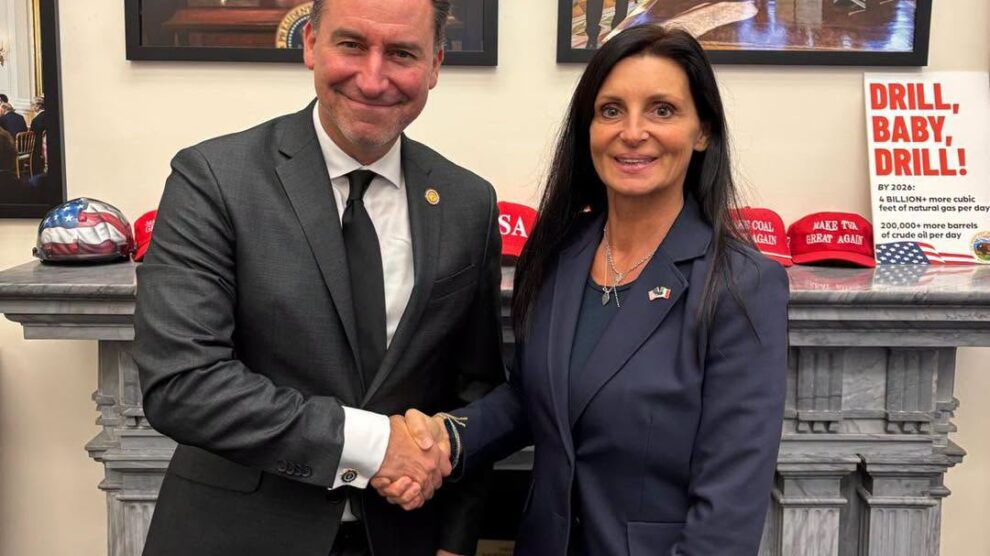
Driving the news: Italy’s Deputy Minister for Environment and Energy Security, Vannia Gava, met with Jarrod Agen, Executive Director of the White House National Energy Dominance Council, during an official visit to Washington.
- “With Jarrod Agen, we shared at the White House a perspective that unites Italy and the United States: energy security is national security,” Gava said.
- “For manufacturing countries like Italy and the United States, this means ensuring reliable energy at affordable costs for businesses, diversifying sources, including next-generation nuclear power in the energy mix, and choosing stable and reliable partners.”
Zoom in: Critical minerals. The talks also addressed vulnerabilities in the supply chains underpinning the energy transition and advanced industrial production.
- “During our discussion, we focused on critical raw materials, on which energy security will increasingly depend in the coming years, and whose refining is currently concentrated in very few countries,” Gava explained.
- “This is a vulnerability that the West must address together, building shared supply chains and partnerships with producing countries, many of which are in Africa.”
- Italy’s critical minerals agreement with Washington could also strengthen Rome’s role in the US-led Pax Silica initiative, while Brussels has selected five Italian strategic projects focused on critical materials processing and recycling.
The Africa connection: Gava highlighted Italy’s Mattei Plan as a framework for strengthening partnerships with African countries and developing more resilient energy and industrial supply chains.
- “I wanted to emphasise that this is the perspective in which the Mattei Plan fits, through which Italy has redefined its relationship with Africa, a strategic region for our country,” she said.
Between the lines: Nuclear power stands out as a crucial strategic point of convergence in the Italy-US energy dialogue, linking industrial competitiveness, technological cooperation and long-term energy independence.
- The nuclear dimension. In a 2023 interview with Decode39, Gava outlined Italy’s renewed interest in nuclear energy, advocating technological neutrality and highlighting the potential of advanced reactors to complement renewables, support energy-intensive industries and strengthen strategic autonomy.
- During her US visit, Gava also toured Commonwealth Fusion Systems in Boston, one of the world’s leading companies developing nuclear fusion technology, which holds the potential to provide a clean, safe and sustainable energy source. She highlighted the significant contribution of Italian companies, investors, industrial suppliers and research institutions to this emerging sector, presenting fusion as an example of Italy’s role in shaping the future of energy innovation.
The security dimension. More recently, as Decode39 reported, Gava placed energy security at the centre of Italy’s economic and strategic priorities during the International Energy Agency’s ministerial meeting in Paris, emphasising diversification, critical minerals and stronger international partnerships.
The bigger picture: Beyond nuclear cooperation and critical minerals, Rome is looking at emerging energy corridors as instruments of geopolitical and economic integration.
- “We also discussed the new energy routes,” Gava said. “Corridors such as IMEC, with its energy pillar, and the interconnections between North Africa and Europe will reshape flows between India, the Mediterranean, the Middle East and Europe.”
- “Italy can become their natural hub, thereby making a concrete contribution to the West, which will only be able to overcome the challenges of the coming years by remaining united.”
Why it matters: The White House meeting places Italy’s energy ambitions within a broader transatlantic framework. Rome is seeking to combine its industrial capabilities, Mediterranean geography and African partnerships with closer cooperation with Washington on technologies, supply chains and infrastructure.
The strategic opportunity lies in translating that alignment into concrete projects — particularly in nuclear energy, where Italy’s industrial expertise and US technological capabilities could provide a foundation for deeper cooperation.
(Photo: Facebook, Vanni Gava)