
The Philippines is seeking to deepen political and security cooperation with Italy as Manila expands its European partnerships and strengthens its diplomatic role in the Indo-Pacific. Among the possibilities raised by the Philippine government is a bilateral visiting forces agreement, building on arrangements pursued with other European partners.
The message emerged from a conversation with Philippine Secretary of Foreign Affairs Maria Theresa P. Lazaro at the Philippine Embassy in Rome, where Decode39 was among a select group of invited media outlets. Lazaro’s visit to the Italian capital included a public speaking engagement.
The discussion covered bilateral relations, Europe’s expanding security engagement in Asia, tensions with China in the South China Sea, Taiwan and the Philippines’ growing international profile through its 2026 ASEAN Chairship.
Italy and the Philippines: Untapped potential. Italy and the Philippines will celebrate 80 years of diplomatic relations in 2027, an anniversary that Lazaro sees as an opportunity to inject fresh momentum into a partnership that has yet to realize its full potential. “I think that we can do more in our bilateral relations,” she said, emphasizing the need for more regular political engagement between the two governments.
- “We have been requesting for political consultations,” Lazaro explained, referring to a mechanism intended to address political and economic issues alongside people-to-people relations, but which has yet to materialize.
The foreign secretary also called for more frequent high-level exchanges. During her visit to Rome, she did not have the opportunity to meet members of the Italian government, despite having expressed interest in talks with her Italian counterpart. She acknowledged that scheduling commitments may have prevented the meeting, without suggesting any political disagreement.
- Defense cooperation, however, stands out as an area of tangible progress. Lazaro recalled the agreement signed in Munich in February with Italian Defense Minister Guido Crosetto, describing it as a positive development on which further initiatives could be built.
- Her broader message to Rome was that an established bilateral relationship, already supported by instruments of cooperation, now needs more sustained political engagement to develop its full potential.
Indo-Pacific security and the prospect of an agreement with Italy. The Philippines regards Europe’s growing presence in the Indo-Pacific as a positive contribution to regional security. Asked by Decode39 whether increased European military engagement could be perceived by other regional actors as a source of additional tension, Lazaro welcomed the involvement of European partners.
- “We are of the view that any support from our like-minded friends, European countries as well as, of course, the United States, is good, because it’s not only the like-mindedness and how things should proceed, but the support is very much needed.”
- She highlighted the importance of European naval visits to Philippine ports, particularly in strengthening maritime domain awareness amid continuing disputes in the South China Sea. “You know, these port visits are very important, because this also defines our maritime domain awareness. And it’s very important for us, particularly with our issue with China.”
Lazaro suggested that Italy could contribute more substantially to Philippine defense capabilities, although additional political momentum would be needed to translate existing cooperation into further initiatives.
- The most significant opening concerned the prospect of a Visiting Forces Agreement (VFA), which could establish a legal framework governing the temporary presence of Italian military personnel in the Philippines for agreed activities.
- Referring to arrangements with other European partners, including France and the United Kingdom, Lazaro added: “We’re waiting for the opportunity with Italy.”
- Her remarks did not amount to an announcement of formal negotiations, but they signaled Manila’s interest in exploring such an arrangement with Rome. A potential agreement would fit into the broader expansion of Philippine security cooperation with European countries as their involvement in the Indo-Pacific becomes increasingly consequential.
China: Managing tensions without sacrificing dialogue. Competition with Beijing remains one of the principal factors shaping Philippine foreign and security policy. Yet Lazaro was careful to distinguish disputes in the South China Sea from the broader relationship between the two countries.
- Manila, she explained, seeks to separate maritime disagreements from other dimensions of its engagement with China, preserving economic exchanges and diplomatic contacts despite persistent tensions.
- “We have already compartmentalized,” she said, describing an approach that allows the foreign ministry to maintain channels of dialogue while Philippine defense authorities continue to protect the country’s maritime interests.
- Lazaro referred to Chinese incursions and incidents involving the use of water cannons against Philippine vessels, while stressing that President Ferdinand Marcos Jr.’s policy remains grounded in diplomatic engagement. “We are of the view, and this is upon the guidelines from the president, that we have to settle these issues, of course, through diplomacy and diplomatic dialogue.”
Manila and Beijing therefore continue to use bilateral consultation mechanisms addressing the South China Sea, alongside exchanges between their foreign ministries. Meetings alternate between the two capitals, Lazaro explained, even as tensions persist on the water.
- The foreign ministry’s priority is to manage disputes through diplomacy, while the Philippine defense establishment remains responsible for protecting national waters and responding to incursions. Lazaro also emphasized that trade with China remains robust, as do people-to-people exchanges.
- Her account suggests a policy that combines firmness over sovereignty and maritime security with a determination to preserve an economically and diplomatically important relationship. It also helps explain Manila’s interest in a stronger European presence: expanding its network of security partnerships while maintaining diplomatic engagement with Beijing.
Europe as a political, economic and strategic partner. While bilateral relations with Italy would benefit from greater continuity, Lazaro portrayed the Philippines’ relationship with the European Union as moving in a distinctly positive direction.
- She pointed to the institutional framework provided by the Partnership and Cooperation Agreement and ongoing consultations covering security, maritime affairs, governance, human rights and development cooperation. “We have a very good political relationship with EU,” she said.
The FTA: A central element of this expanding relationship is the negotiation of a free trade agreement (FTA) between the Philippines and the European Union. Lazaro expressed confidence that the agreement could be concluded in the near future, highlighting its potential economic impact. “Just imagine the kind of economic impetus this would be for our relations.”
- The foreign secretary also pointed to growing European diplomatic interest in Manila, citing the establishment of new embassies by countries including Slovakia, Slovenia and Portugal. In her assessment, this expanding presence reflects both the Philippines’ political importance and the economic opportunities associated with the country and its regional integration.
- For Italy, the strengthening of EU–Philippines relations could provide a favorable setting for deeper bilateral cooperation, from maritime security and investment to infrastructure and supply chains.
Taiwan: Protecting 200,000 Filipinos is the priority. A crisis in the Taiwan Strait would have immediate implications for the Philippines due to its geographic proximity and the significant Filipino population residing and working in Taiwan. Ambassador Lazaro noted that Manila’s approach to the Taiwan issue is driven primarily by these two factors.
- “Our foremost concern is the presence of 200,000 Filipinos in Taiwan.” The priority is safeguarding Philippine nationals and preparing for potential evacuation in the event of conflict. “Consequently, our contingency planning is centered on the security of these 200,000 workers.”
- Lazaro reaffirmed Manila’s commitment to a peaceful resolution, cautioning that escalation would carry severe consequences—particularly for the Philippines given its proximity to Taiwan.
- Her comments highlighted the practical and immediate aspects of regional security for the Philippines. Beyond broader strategic considerations, the protection of overseas citizens remains a central operational priority.
ASEAN: Manila’s expanding diplomatic reach. The Philippines’ 2026 ASEAN Chairship has provided Manila with an opportunity to consolidate its international standing and demonstrate its ability to bring together countries with competing strategic interests. “We found out that we have the convening power as the Philippines being chair,” Lazaro said.
- She recalled the participation of numerous senior international officials in meetings hosted in Manila, including US Secretary of State Marco Rubio, Russian Foreign Minister Sergei Lavrov, Chinese Foreign Minister Wang Yi and Australian Foreign Minister Penny Wong.
- Lazaro also noted the absence of Italian representatives at the ministerial gathering, a point consistent with her broader hope for more substantial political engagement from Rome, including stronger Italian representation at major regional diplomatic meetings.
Among the achievements and priorities of the Philippine ASEAN’s Chairship, she highlighted maritime cooperation, ongoing negotiations with China over a South China Sea code of conduct and efforts to advance regional digital integration.
- Manila’s diplomatic responsibilities also extend to managing crises within Southeast Asia. Lazaro, who serves as the ASEAN Chair’s special envoy to Myanmar, explained that she would leave Rome for a diplomatic and humanitarian mission related to the country’s ongoing crisis.
- The ASEAN Chairship thus provides the Philippines with a platform to strengthen its diplomatic influence and broaden its international network of partners.
The bigger picture. Lazaro’s remarks reflect a Philippine foreign policy operating across several interconnected fronts. Managing competition with China, the country’s central regional security challenge, goes hand in hand with diversifying security partnerships, deepening economic ties with Europe and strengthening Manila’s role within ASEAN.
The bottom line: Within this broader strategy, Italy emerges as a partner with whom the Philippines would like to develop a more structured relationship. The opportunities extend from political dialogue to defense cooperation and Europe’s security presence in the Indo-Pacific. Manila’s willingness to explore a visiting forces agreement offers one concrete avenue through which that relationship could advance.
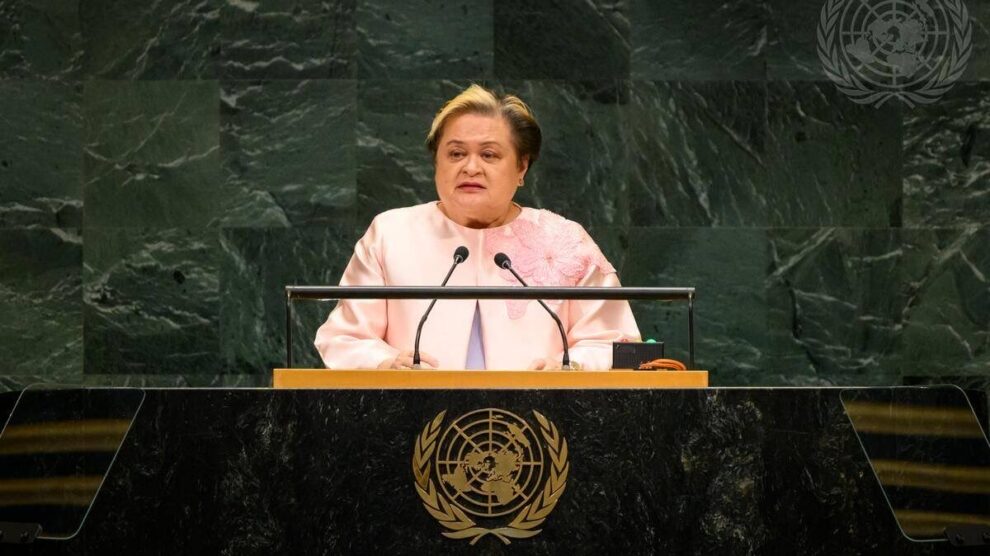
(Photo: X, @SecLazaro)