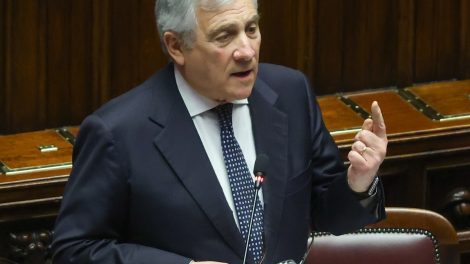

Italy’s foreign policy footprint in the broader Middle East has entered a high-tempo phase, anchored by Prime Minister Giorgia Meloni’s landmark diplomatic sweep in the Gulf and Deputy Prime Minister Antonio Tajani’s active role at the eight-nation summit in Istanbul.
The big picture. Rome is systematically aligning its economic resilience with proactive diplomatic engagement, connecting energy security, maritime trade, and regional de-escalation across two critical geopolitical fronts.
- The Gulf Milestone: In Kuwait, Meloni completed a historic mandate-long cycle by visiting all six nations of the Gulf Cooperation Council (GCC), cementing long-term institutional, defense, and economic ties.
- The Istanbul 4+4 Format: Concurrently, Tajani joined European (E3) and regional (R4) counterparts in Turkey to address escalating flashpoints, warning that ongoing disruptions to maritime routes and energy supplies directly threaten international economic stability.
Zoom in: The Italy-Kuwait Action Plan (2027–2030). Adopted during the bilateral summit, the comprehensive strategic framework institutionalizes multi-sector cooperation across several core pillars:
- Economic & Energy Resilience: Focuses on boosting SME partnerships, advancing sustainable energy technologies (including biofuels, hydrogen, and CCUS), exploring critical and strategic minerals for the energy transition, and enhancing electricity grids and agri-food cooperation.
- Defense & Advanced Tech: Deepens military education, cyber defense, and space cooperation, alongside joint initiatives in emerging and disruptive technologies (EDTs) such as artificial intelligence and quantum computing.
- Security & Public Policy: Outlines structured collaboration in judicial matters, combating transnational crime,cybercrime, cultural property protection, and deepening exchanges in health, life sciences, and tourism infrastructure.
Zoom out: Ankara’s diplomatic balancing act and regional outreach. Hosting the eight-nation ministerial meeting in Istanbul, Turkish Foreign Minister Hakan Fidan underscored Ankara’s ambition to position itself as a central mediator for regional de-escalation.
- A united front against escalation: Fidan emphasized that none of the participating nations support further military intervention against Iran, warning that an expanded conflict would severely destabilize the wider region.
- Navigating maritime and territorial disputes: Beyond the immediate crisis management of shipping lanes, Ankara signalled a constructive willingness to address longstanding regional frictions—including discussions with Cairo and Rome concerning Eastern Mediterranean maritime boundaries and prospects for political and military unification in Libya.
Between the lines: Balancing military deterrence and diplomatic dialogue. Across both diplomatic tracks, Italy has emphasized that complex regional crises—from the Strait of Hormuz to the Red Sea—cannot be resolved through military measures alone.
- Protecting maritime corridors: Speaking in Istanbul, Tajani stressed that freedom of navigation in critical chokepoints like Bab el-Mandeb and the Strait of Hormuz “must be guaranteed,” pointing to Italy’s active operational footprint through the EU naval mission Aspides.
- Economic vulnerabilities: Highlighting the direct impact of surging gas and oil prices on industrial supply chains, Tajani called for permanent economic working groups within the 4+4 format to safeguard energy and food security.
- Leveraging partnerships: The synergy between robust naval deterrence and sustained political dialogue—exemplified by Rome’s deepening bilateral ties with Gulf heavyheads like Kuwait—positions Italy as an indispensable bridge between Europe and the Middle East.
Why it matters: As overlapping conflicts threaten international trade routes and European energy stability, Italy cannot rely on isolated domestic policies. By combining high-level bilateral outreach in the Gulf with active participation in plurilateral formats in Ankara, Rome is successfully turning its foreign policy investments into tangible strategic leverage.