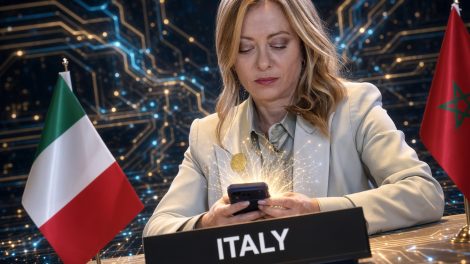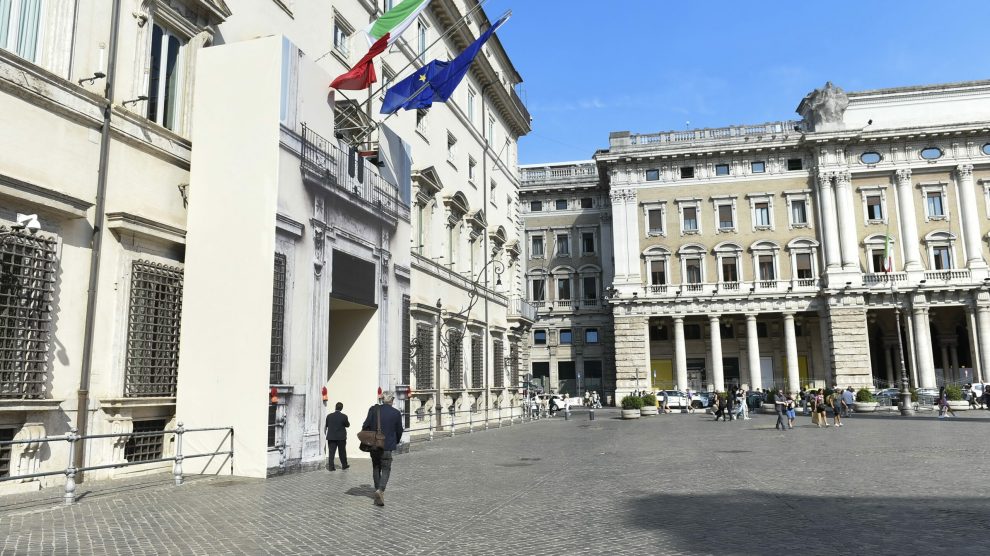
A bipartisan stance on national security. Prime Minister Giorgia Meloni convened a high-level institutional summit at Palazzo Chigi, bringing together government leaders and top figures from the parliamentary minority to forge a united front against an unprecedented wave of cyber-hybrid pressures and coordinated bomb hoaxes targeting Italian schools.
The institutional table: Executive and parliamentary leaders unite. The emergency briefing gathered key architects of Italy’s national security apparatus alongside leaders across the political spectrum, signaling a shared resolve to protect public infrastructure from cognitive destabilization.
- The Executive Leadership: Prime Minister Giorgia Meloni led the summit, flanked by Deputy Prime Minister and Minister of Foreign Affairs Antonio Tajani, Deputy Prime Minister and Minister of Infrastructure Matteo Salvini, Minister of the Interior Matteo Piantedosi, Minister of Defense Guido Crosetto, and Minister for Parliamentary Relations Luca Ciriani.
- The table included key leaders from the parliamentary minority: Democratic Party (PD) Secretary Elly Schlein, Five Star Movement (M5S) President Giuseppe Conte, Alleanza Verdi e Sinistra (AVS) co-leaders Nicola Fratoianni and Angelo Bonelli, Italia Viva leader Matteo Renzi, +Europa Secretary Riccardo Magi, Azione leader Carlo Calenda, and Deputy Edoardo Ziello representing the nationalist movement Futuro Nazionale (on behalf of Member of the European Parliament Roberto Vannacci).
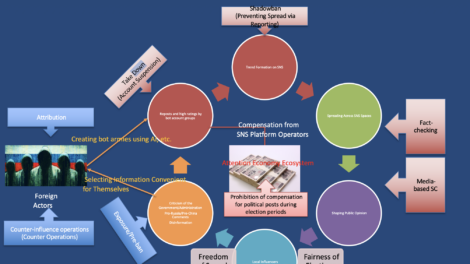
The big picture: Responding to hybrid pressure. The summit directly addressed the fallout from a mass cyber-harassment campaign that saw approximately 6,000 educational institutions hit by automated, foreign-domain email hoaxes (signed under the alias “Mikhail Andropov”) threatening explosive devices and public figures. While domestic security forces confirmed that no actual physical danger existed, the attacks underscore a broader, systemic vulnerability to cognitive warfare and hybrid disruptions designed to paralyze civic life.
Broad institutional engagement. While several figures from the parliamentary minority also voiced critical remarks regarding technical execution and resource allocation — a natural dynamic of democratic debate, particularly with next year’s general elections on the horizon — the overarching consensus remained anchored in institutional responsibility.
- M5S’s Giuseppe Conte noted that the executive holds the technical expertise and intelligence tools to formulate operational proposals for Parliament to evaluate.
- AVS co-leader Nicola Fratoianni reaffirmed his willingness to cooperate while advocating for increased funding dedicated to national cybersecurity, and Matteo Renzi welcomed the institutional format of the briefing alongside calls for stronger technical defenses.
What they’re saying: “On the security of Italians, starting with perceived security, there is no majority and there is no opposition: there is Italy,” commented PM Meloni.
- We are fully available to cooperate in the face of threats aimed at destabilizing the country and creating alarm,” said Dem’s leader Schlein.
- “In moments of emergency, the country must show that it is united,” added Calenda, head of centrist Azione.
Why it matters: By transcending traditional partisan divisions during a critical national security test, Rome is projecting institutional resilience on the international stage. Even amid the normal political sparring ahead of an election year, Italy’s unified approach at Palazzo Chigi establishes a clear benchmark for safeguarding democratic processes, critical infrastructure, and public trust against foreign hybrid interference.
- Crucially, countering hybrid threats is not an isolated national priority for Italy alone — the issue is set to feature prominently on the agenda of upcoming summits among European leaders, reflecting a shared continental effort to build collective resilience against foreign interference.