The dispute touches on a broader theme that resonates internationally: how liberal democracies balance academic autonomy, civil–military relations, and the need for armed forces trained to navigate complex geopolitical environments.
Driving the news: Army Chief of Staff Gen. Carmine Masiello revealed that Italy’s oldest university declined his request to enrol 10–15 young officers in a tailored philosophy track.
- He said the goal was to strengthen “lateral thinking” and help future commanders “step outside stereotypes” — but the university allegedly feared a “militarisation” of the faculty.
- Masiello called the refusal “surprising and disappointing”, framing it as symptomatic of “how far we still need to go before the public — especially younger generations — understands the role of the armed forces.”
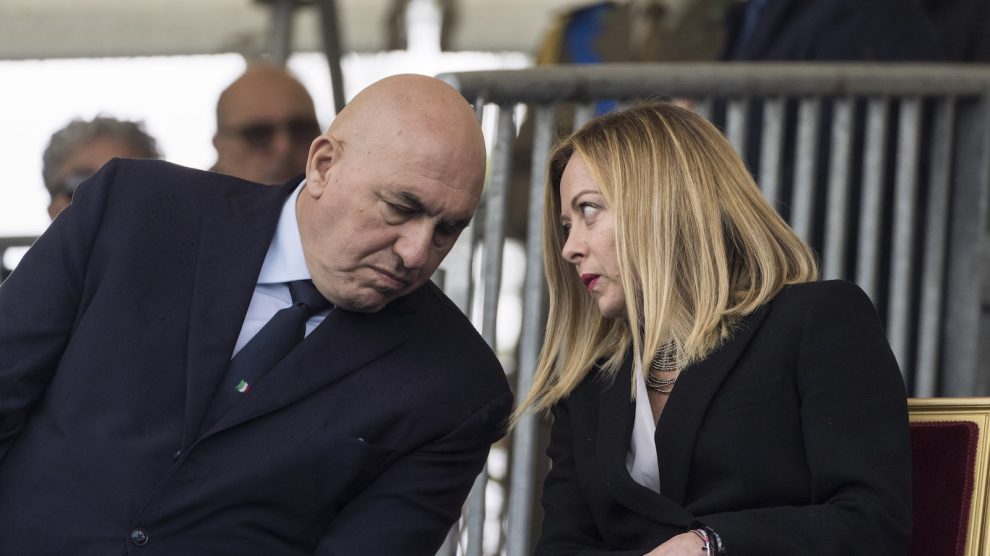
The political response: Prime Minister Giorgia Meloni issued today the sharpest institutional reaction, calling the decision “an incomprehensible and gravely mistaken act,” adding that an academic centre devoted to pluralism “has a constitutional duty to welcome and value every path of cultural advancement, free from ideological prejudice.”
- She argues that enriching officers’ training with the humanities is a strategic asset for Italy’s security posture, especially given the international contexts in which they operate.
- Defence Minister Guido Crosetto elevated the point, saying those officers “will still be ready to defend” the very professors who rejected them — a remark aimed at highlighting the asymmetry between academic suspicion and military service.
A bipartisan angle: Piero Fassino of the Democratic Party echoed the government’s criticism.
- He described the refusal as “a sad and desolating confirmation” of an academia “increasingly inclined toward ideological battles” instead of knowledge-building.
The takeaway: Political Italy — from the governing right to part of the centre-left — views the decision as a missed opportunity for civil-military dialogue and for strengthening the intellectual foundations of the country’s armed forces.
- The convergence itself is the headline: on strategic issues, Italy can still speak with one, clear voice.
- “The society that separates its scholars from its warriors will have cowards to think and idiots to fight” — Thucydides