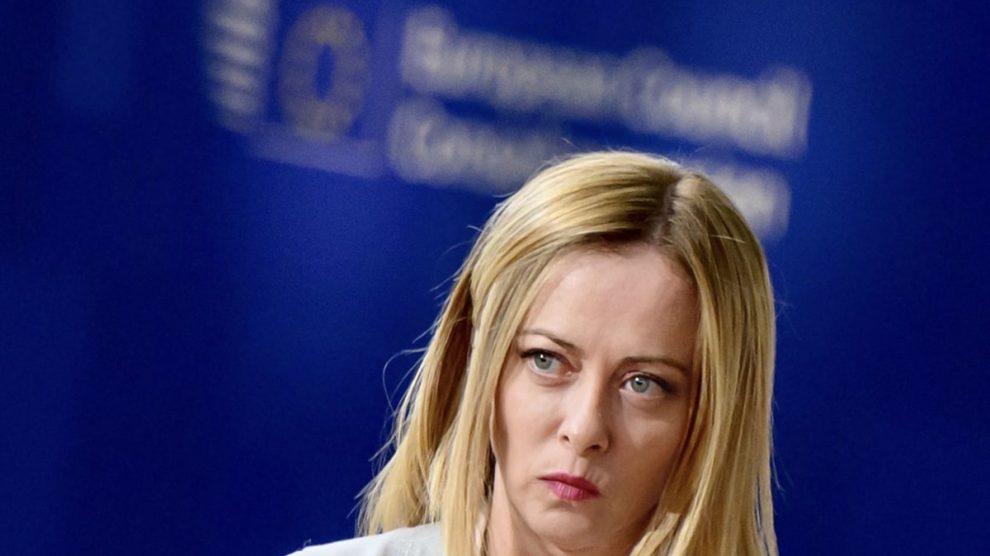
At the core, as expected, remains the war in Ukraine and the construction of a negotiating package (peace, security guarantees, reconstruction), in a context that Rome still describes as lacking credible Russian “willingness”. In parallel, Italy brings to the European table a broader agenda: the 2028–2034 EU budget, migration (including Albania/return hubs), enlargement, Mercosur, competitiveness, and a pragmatic revision of parts of the EU’s green agenda.
Why it matters: PM Meloni directly links Ukraine to European security: “what is at stake is not only the dignity, freedom and independence of Ukraine, but also the security of Europe.”
- On the financial front, Rome warns against solutions that could trigger litigation or market backlash: “this result must be achieved on a solid legal basis,” particularly as the government says it is committed to exiting the excessive deficit procedure.
What’s happening:
- 1) Ukraine: three tracks, but Moscow is still not there. Meloni describes negotiations unfolding “on three parallel tracks”: a peace plan, security guarantees and agreements on reconstruction.
- She argues, however, that Russia has yet to engage in an “equitable” manner, citing continued bombardments and territorial demands: “the main one concerns the portion of Donbas not conquered by the Russians.”
- She adds a data point to challenge Moscow’s narrative: “from the end of 2022 to today, [Russia] has managed to conquer only 1.45% of Ukrainian territory.”
- 2) Security guarantees: openness to options, no Italian troops. Rome identifies three pillars: a strong Ukrainian army, a possible multinational force for force regeneration (the so-called coalition of the willing) that would be voluntarily established, and guarantees from international allies “on the model of Article 5.”
- Here, Meloni draws a clear line: “Italy does not intend to send soldiers to Ukraine,” while reaffirming Italy’s role in advancing the Article 5‑style option.
- 3) Russian assets: political backing, operational caution. Italy supported the regulation immobilising Russian assets, but separates freezing from using them: “without… still endorsing… any decision on their use.”
- She also raises the decision‑making bar: “decisions of such legal, financial and institutional magnitude… can only be taken at leaders’ level.”
- Substantively, Rome calls for clarity on “reputational” risks, retaliation and possible spillovers onto national budgets, warning that it would be “short‑sighted” to focus on a single holder (Belgium) when other financial systems also host frozen assets.
- 4) Middle East: security, the Gulf and Gaza in a Euro‑Mediterranean frame. Meloni links domestic security and foreign policy, condemning the antisemitic attack in Sydney and urging “no more distinctions or reticence in condemning every form of antisemitism.”
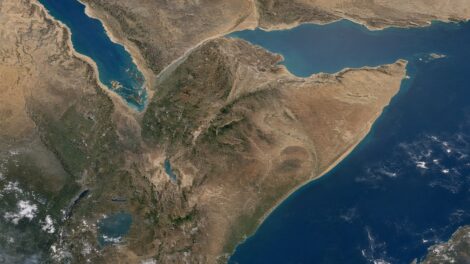
- Regionally, she points to Italy’s recognition at the GCC summit in Bahrain and proposes a new Mediterranean-Gulf forum built around “interconnections” (economic, digital, and energy) and strategic chokepoints (Hormuz, Bab el-Mandeb, Suez, and Gibraltar).
- On Gaza, she frames the US‑backed plan as a necessary basis that “had the great merit of putting an end to the conflict,” while stressing the fragility of the truce and the need for humanitarian access, reconstruction and Hamas’ disarmament.
- 5) Europe: 2028–2034 budget, migration, enlargement and competitiveness. On the Multiannual Financial Framework, Rome supports a more “streamlined” EU but warns: “we will not accept paying more to receive less,” defending the CAP and Cohesion Policy and opposing new “European taxes” that would weigh on citizens and competitiveness.
- On migration, Meloni claims Italy’s role as a trailblazer (return hubs, revised safe third country concept) and defends the Albania centres as a deterrence tool.
- On enlargement, she calls for a “strong political message” and pushes for momentum in the Western Balkans.
- On Mercosur, Italy remains open but deems the signature “premature” without safeguards and reciprocity for agriculture.
Between the lines: Italy’s line seeks to reconcile maximum pressure on Moscow and sustained support for Kyiv with the avoidance of legal precedents that could undermine the rule of law or Europe’s financial stability.
- Meloni deploys the same lens — “pragmatism” versus “dogmatism” — across dossiers, from Ukraine (deterrence) to EU policy choices (green rules, automotive, simplification, migration).
What’s next:
- At the European Council, decisions on ensuring the continuity of financial support to Ukraine over the next two years, alongside a first political debate on the architecture of the 2028–2034 EU budget.
What we’re watching:
- In the weeks ahead, negotiations on legal and financial instruments linked to frozen Russian assets;
- Renewed Italian momentum on migration (return hubs, safe countries, external dimension/Piano Mattei) and consolidation of a “pragmatic” front on competitiveness and green policies.