
Washington’s urge for Europe to transition from being a security consumer to a security provider, and its diagnosis of European structural vulnerabilities, from economic stagnation, technological lag, political fragmentation, and strategic dependence, could be viewed through the lens of strategic calculation rather than just critique. Are there ways for the EU respond constructively to this pressure and could it become an opportunity for Europe to rebuild its strategic capacity, enhance innovation, and restore geopolitical relevance, in collaboration with the United States?
We asked five leading experts in the field to unpack these dynamics.

The NSS as a Manifesto for Transatlantic Far-Right Alignment – by Rachel Tausendfreund, Senior Research Fellow at the German Council on Foreign Relations (DGAP)
For Europe’s nationalist and ethno-nationalist right-wing parties there is much to celebrate in the Europe section of the 2025 NSS. It is nothing less than a declaration of transatlantic far-right political alignment on the project of “restoring Europe’s [and US] civilizational self-confidence and Western identity.” Even in Trump’s White House, Europeans are seen as partners in a project of common values, but today’s values are ethno-nationalist.
For everyone else is Europe, the NSS offers few small comforts. The first consolation is that Europe is still important, coming in at third position behind the Western Hemisphere and Asia and supporting European allies “in preserving the freedom and security of Europe” is defined as one of five US “core, vital national interests” (ital in original). Despite emphasis on the Western Hemisphere and a Trump corollary to the Monroe Doctrine, there is nothing in the strategy to indicate that this administration is initiating any policy shifts toward Europe or agrees that Europe is in Russia’s sphere of influence (Ukraine, perhaps, but also that is nowhere explicit).
In fact, perhaps the main comfort for Europe in the NSS is that other than tech-expansionism and a relaunch of the Monroe Doctrine, no clear grand-strategy vis-à-vis China or Russia emerges, which indicates that different factions are still fighting it out.
 Critical but Not Isolationist: Why the U.S. Still Needs Europe – by di Peter Rough, Senior Fellow and Director, Center on Europe and Eurasia, Hudson Institute
The Trump administration’s National Security Strategy is as pessimistic about the trajectory of Europe as it is pollyannish about the prospects for “strategic stability” with Russia. But that criticism should not be interpreted as disinterest; quite the contrary, the NSS states directly that Europe “remains strategically and culturally vital to the United States. … Not only can we not afford to write Europe off, doing so would be self-defeating …” This is hardly the language of American isolationism.
In the section that all but names China, the strategy argues that the United States “must work with our treaty allies and partners—who together add another $35 trillion in economic power to our own $30 trillion national economy (together constituting more than half the world economy)—to counteract predatory economic practices …” In America’s economic competition with China, so the strategy says, the U.S. will need Europe at its side.
Moreover, by prioritizing “commercial ties” and “weapon sales” to the countries of central, easter, and southern Europe as part of a broader approach of “enabling Europe to stand on its own feet and operate as a group of aligned sovereign nations,” the strategy implicitly recognizes the possibility of continued Russian aggression—and the need to prepare for it.
But these points have been lost in the incensed reaction over the NSS’s priority of “cultivating resistance to Europe’s current trajectory within European nations” in order to reverse “civilizational erasure” and widespread “subversion of democratic processes.” This critique cuts deep. But rather than lose itself in Trumpian hyperbole and overreach, Europe should reflect on whether there’s a kernel of truth in that analysis and proceed accordingly.
 A Strategic “Love Letter”: Reclaiming Europe’s Identity, Industry, and Energy – by Carla Sands, Chair, Foreign Policy Initiative, Distinguished Senior Fellow, Energy Policy, AFPI, former U.S. Ambassador to the Kingdom of Denmark (ret.)
In spite of the recent howls from European leaders, I consider the 2025 Trump Administration’s US National Security Strategy to be a love letter to America’s European Allies. Europe and the UK are the birthplaces of America’s founders. Europe was the cradle of our founding ideals, including fundamental freedoms and democracy, as well as our Judeo-Christian religions and religious practices, and our legal system and laws. Europe’s Christian heritage set the conditions and framework for the greatest period of human freedom and flourishing the world has ever seen.
In the National Security Strategy, members of the Trump administration are begging our European friends and Allies to reassert their industrial might. They also offer a pathway forward, suggesting sound energy policy, with less regulation so that businesses can flourish and innovation can return to Europe. European and UK NATO Allies took advantage of the peace dividend after the fall of the Soviet Union and have not had a credible fighting force since then. The Net Zero mandates and regulation from Brussels are causing Europe to lag far behind the United States and Asia in innovation and growth. The United States needs Europe to be strong economically, and with strengthened economies, continue to be strong trading partners with the United States and capable of paying for their own strong defense and offense.
In my opinion, the Trump administration is begging Europe and the UK to secure their borders, protect their cultures, reinvigorate their industry by reducing regulations, to get back to common-sense energy policies that allow the people and businesses to have affordable and abundant energy, to reestablish the right to freedom of speech without punishment, including criticizing politicians, which is fundamental to democracy. Reasserting the Christian faith in European society may also awaken the noble and powerful people of Europe.
 More Warning Than Strategy: Ending Europe’s Strategic Complacency – by Joseph Vann, National Security consultant and former professor of national security studies at the George C. Marshall European Center for Security Studies
The new U.S. National Security Strategy is more policy pronouncement than a strategy. While it preaches the importance of a coherent and focused strategy, it presents neither. Vocal about what the U.S. wants, in and from the world, but lacking in alignment with administration’s current attitude towards long-term allies and partners. This is especially acute when the descriptive means to get what it wants are being offset by the administration’s mercurial policy decisions.
The administration’s broadside against Europe sends an unmistakable message: Europe can no longer afford to treat U.S. security guarantees as immutable thus ending an era of strategic complacency. It must now immediately build an independent defense posture that is credible, sustainable, and resilient. This will be hard but doable. Interestingly, the U.S. strategy calls for the prevention of NATO as a perpetually expanding alliance without mentioning the fact that the reason countries want to become a NATO member is because of the fear of Russian aggression.
Yes, many points in the document are valid. European reforms are needed. Energy dependence must be further diversified. Bureaucratic inertia must be broken. Migration needs fixing. Free speech plays notably in the strategy’s narrative, but fairness comes up short. Is regulating hate speech, incitement against minorities, and countering online disinformation unacceptable censorship? Europe must not be shy about making quick and meaningful course corrections where needed. The same applies to the U.S.
In the strategic sense, Europe has money, strong institutions, rule of law, the industrial base, and the technological capacity to defend itself militarily and advance on every economic front. If anything, the U.S. strategy serves Europe by adding a sense of urgency to do what it needs to do. In the final analysis, it is worth remembering that drafting strategy and executing strategy are two different undertakings.
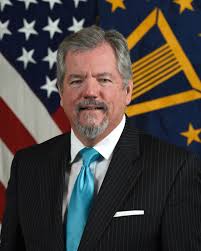 Reading Past the Rhetoric: What the NSS Says About Allied Interests – by Mike Ryan, former U.S. Deputy Assistant Secretary of Defense for European and NATO, Member of the Board of Trustees of Friends of Europe
I invite everyone to set their pre-conceived notions about President Trump aside and then read the 2025 National Security Strategy and while doing so take a big black marker and strike out everything you do not like. Then, go back and read what’s left. When you do, you will see things like this: We want the world’s most robust, credible, and modern nuclear deterrent, plus next-generation missile defenses, including a Golden Dome for the American homeland, to protect the American people, American assets overseas, and American allies.[Emphasis added] and like this: We want to … while keeping the Indo-Pacific free and open preserving freedom of navigation in all crucial sea lanes, and maintaining secure and reliable supply chains and access to critical materials. We want to support our allies in preserving the freedom and security of Europe, while restoring Europe’s civilizational self-confidence and Western identity; [Emphasis added]. After your editing, the remaining document is replete with clear statements of protecting America’s allies and partners as well as their interests. The expectations of Europe are merely for Europe to finally do everything Europe has said it wants to do. Thankfully, Europe seems to be rising to the occasion. Would such a rise be possible if the benevolent superpower kept its security blanket over the continent and allowed it to flourish economically in ways that disadvantage America’s interests? Short answer: No. A safe, secure, and prosperous Europe is a vital American interest as is the well-being of its Asia-Pacific partners. You are not forgotten, but America has other work to do.