Italy is using wine — and the full value chain behind it — as a tool of soft power in India, aligning trade promotion with diplomacy at a time of rapidly strengthening Rome–New Delhi relations.
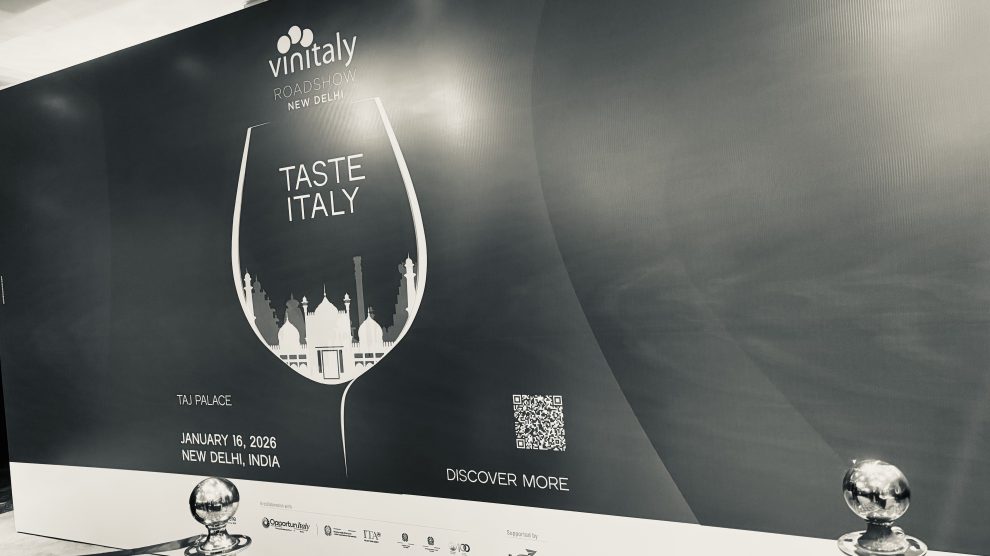
What’s happening: The Vinitaly India Roadshow 2026 has kicked off in New Delhi, marking a new phase in Italy’s outreach to a young but fast-growing wine market and reinforcing wine’s role in Italy’s broader international positioning.
The big picture: Italy, the world’s largest wine producer, sees wine and agrifood as pillars of international projection and reputational power. That strategy now intersects with India — not yet a volume market, but increasingly central both economically and geopolitically, amid a clear upgrade in bilateral ties over the past three years.
By the numbers:
- $30.5 million: value of India’s wine imports in 2023 (Uiv–Vinitaly Observatory).
- +12%: average annual market growth rate (excluding the Covid period).
- +14%: Italy’s growth rate in the Indian market, above the market average.
- $415 million → $520+ million: projected growth in India’s wine consumption value by 2028 (IWSR).
- Italy is currently the fourth-largest supplier, after Australia, France and Singapore.
On the ground: The Roadshow is organized by Veronafiere in partnership with ICE – Italian Trade Agency, with the support of the Italian Embassy in India, led by Ambassador Antonio Bartoli.
- 30+ Italian companies are taking part:
- 8 within the ICE collective
- 9 from the Valpolicella Wine Consortium
- 13 participating directly
- The operational goal is to engage more than 200 importers, distributors and Horeca professionals, while identifying buyers to be invited to Vinitaly 2026 in Verona (April 12–15).
What they’re saying: For Veronafiere CEO Adolfo Rebughini, the initiative goes well beyond sales.
- “Wine is not just a commercial product, but certainly a vehicle for cultural — and therefore international — relations, and we can comfortably speak of wine diplomacy.”
- “In recent years, Vinitaly has evolved from a marketplace for supply and demand into a platform that brings together producers, territories, supply chains and national institutions. This is what drives us to push further, toward an increasingly international dimension.”
That shift reflects a broader change in how Vinitaly positions itself.
- “We have increasingly defined Vinitaly as a space where the wine world engages with institutions,” Rebughini says, recalling the most recent Vinitaly in Verona, which hosted two European commissioners working on issues extending beyond product sales — from health and agriculture to the circular economy and related industries.
- “Wine becomes a key to interpreting more complex economic relationships.”
Why India? India fits this strategy as a young but geopolitically central market.
- “This is our fourth mission to the country,” Rebughini says. “We preceded the Delhi and Goa stops with a series of previews to prepare the market and support a more structured rapprochement.”
That effort unfolds alongside negotiations on the EU–India free trade agreement.
- “The FTA is a factor of facilitation,” Rebughini says. “Reducing tariffs and fiscal barriers is decisive, and the signing scheduled for January 27 will be fundamental for our products and many others.”
Beyond trade. The push also focuses on culture, education and territory.
- “We are here above all to build wine culture. Representing the excellence of Made in Italy means telling the story of territories, of productive diversity — the widest in the world — and creating a stable link between production and place.”
- This includes tailored masterclasses for a market with “high potential but not yet fully sophisticated,” and a growing focus on wine tourism through Vinitaly Tourism.
What’s next:
- The New Delhi leg, hosted at the Taj Palace, features B2B meetings, tastings and two masterclasses led by Sonal C. Holland, India’s first and only Master of Wine.
- The program concludes with a dinner at the Italian Embassy, before moving to Goa on January 18.
- The 2026 international calendar continues in Norway, Poland and China.
The bottom line: In India, wine is not yet a volume business — but it already functions as a positioning tool.
- A light but consistent lever supporting Italy’s broader economic, cultural and diplomatic footprint across the Indo-Mediterranean space, increasingly shaped by strategic projects such as IMEC and by symbolic initiatives reconnecting contemporary diplomacy with ancient trade routes such the trip of INS Kaundinya.