The accelerating transformation of the Arctic is reshaping global trade routes, strategic balances, and security dynamics well beyond the High North. As polar routes gradually open and competition over resources and infrastructure intensifies, Italy views the Arctic as increasingly interconnected with the Mediterranean and the Euro-Atlantic security framework. In this interview, Isabella Rauti outlines Italy’s strategic vision for the Arctic, grounded in deterrence, multilateral cooperation, and respect for international law.
Why she matters: Isabella Rauti is Italy’s Undersecretary of Defence with responsibility for Arctic affairs. She plays a key role in shaping Italy’s strategic posture in the High North, coordinating defence, security, and international cooperation within the NATO and EU frameworks.
Q: Undersecretary, you hold the Arctic portfolio and have long stressed the strategic importance of this theatre, from rare earths to commercial prospects linked to the gradual opening of polar routes, as well as international security implications. How do developments in the Arctic also affect the Mediterranean region?
A: The Arctic is no longer a remote and unreachable “Far North.” What happens in that region affects economic, energy, and strategic interests that directly concern the Mediterranean and, therefore, Italy. The Arctic and the Mediterranean are now part of the same strategic geography; they are no longer separate spaces, but components of a single interconnected system whose dynamics are directly reflected in security balances.
- The progressive melting of ice is opening new high-latitude maritime routes that complement traditional corridors, reshaping the geography of global trade and directly influencing flows crossing the Mediterranean and the Suez Canal.
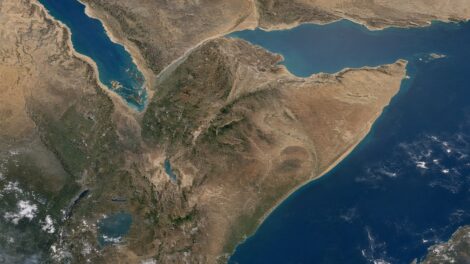
- Greater accessibility of Arctic routes opens up new scenarios. In certain seasonal windows, they can reduce Asia–Europe transit times, potentially affecting traffic currently passing through traditional choke points such as the Red Sea/Bab el-Mandeb and the Suez Canal, and, by extension, Mediterranean ports and logistics chains. In this context, the Mediterranean does not lose centrality; rather, it is reinforced as an essential hub connecting emerging Arctic routes, the Suez corridor, and Euro-Asian supply chains.
- Recent crises affecting maritime choke points demonstrate how events occurring far away can generate cascading effects on trade, energy supply, and infrastructure security, highlighting the structural link between the High North and Europe’s southern flank.
- It is within this perspective that issues such as the security of sea lines of communication, access to energy and mineral resources, and the protection of critical infrastructure—including subsea and space assets—must be understood. All these elements directly connect the Arctic to the Mediterranean and to Italy’s strategic space.
- For Italy, a natural bridge between Northern and Southern Europe, Arctic stability is therefore a direct factor of national and Mediterranean security, requiring vision, international cooperation, and an integrated security approach.
Q: In recent years, Russia and China have intensified their presence and activities in the Arctic, albeit in different ways. What are the main strategic implications of this projection, and what level of attention does it require?
A: In recent years, the Arctic has become an area of growing geopolitical competition. Russia claims exclusive access to the eastern route and to the exploitation of large portions of the Arctic continental shelf. Moscow has been investing structurally for some time, strengthening its icebreaker fleet, developing dual-use infrastructure, and consolidating its military posture.
- At the same time, China, which defines itself as a “Near Arctic State,” is intensifying its forms of presence and is interested in developing an “Arctic Silk Road.” In this context, a China–Europe container route via the Northern Sea Route operated by the Chinese company Sea Legend was launched last September, while Russia has declared its objective of achieving full year-round operability of the northern route starting in December 2027.
- Russia and China operate with different methods and conflicting interests, yet share some converging interests. Russia has the longest Arctic perimeter and a historically consolidated military presence, as well as control over northern sea lines of communication. China pursues a long-term strategy through investments in infrastructure, scientific research, advanced technology, and access to resources, with growing attention to the maritime and space dimensions.
- This context requires a high level of attention from European countries—free from alarmism but equally distant from any underestimation. It is necessary to strengthen situational and geopolitical awareness, improve monitoring of emerging domains, and protect critical infrastructure, including subsea and space assets, which are increasingly vulnerable strategic assets.
- Overall, a credible deterrence for defensive purposes is needed—focused on prevention, respectful of international law, and consistent with the NATO framework. The goal remains to preserve the Arctic as an area of stability and cooperation, avoiding escalation and contributing to a peaceful balance that benefits the region and European and global security.
Q: Turning to the current standoff between the US and the EU, do you believe this moment could represent a positive opportunity to encourage Europe to rediscover the strategic importance of Greenland?
A: Greenland’s strategic importance is evident to everyone because of its geographical position, infrastructure development, and mineral exploitation. Moreover, with increasing accessibility of polar routes, Greenland also holds significant value as a navigation passage in the High North.
- Not only the Arctic island, but the entire Arctic region has become central to global balances. In this phase of tension, Italy has, from the outset, supported a line of balance and dialogue, in full respect of international law, aimed at promoting de-escalation.
- Returning to your question, it can be a positive opportunity if it leads the European Union and NATO to strengthen their strategic awareness and their contribution to the security of the High North as a shared responsibility, addressed within the Euro-Atlantic framework.
- The starting principle is the one contained in the joint declaration of major European leaders of 6 January, also signed by Italy: Greenland belongs to its people, and any decision regarding its future lies with Greenland and the Kingdom of Denmark, in accordance with the United Nations Charter. Italy has helped make this position central to the European and Atlantic debate, offering a clear and credible political reference at a time of heightened international attention on the region.
- We continue to believe that deterrence unites Europe and the Alliance, not aggressive postures. This is also why Italy chose not to participate in military exercises organised by some European countries in Greenland or in troop deployments, considering it a priority to avoid confrontational actions that could aggravate the geopolitical situation.
- The appropriate framework for addressing these issues was NATO, avoiding fragmented initiatives or “wall-to-wall” positions that benefit no one. Similarly, on the economic front, Italy has supported a line of prudence and dialogue on tariffs, aware that retaliatory measures benefit no one and risk worsening tensions and triggering a trade war.
Q: The Italian Armed Forces are active in various ways in the Arctic theatre, each with specific capabilities. How would you summarise Italy’s overall defence commitment in this area?
A: Italy’s defence commitment in the Arctic, for security and deterrence, is integrated, multi-level, and consistent with Italy’s role as a non-Arctic state, an Observer to the Arctic Council, a NATO Ally, and a member of the European Union. It combines international responsibility, protection of national interests, and contribution to the stability of the High North and the safeguarding of the Arctic environment.
- The Armed Forces contribute to developing operational and training capabilities in extreme environments, essential for safe operations in complex climatic conditions, and ensure security support for national scientific research activities, which represent a strategic asset for multilateral cooperation. This is complemented by enhanced monitoring of maritime, air, space, and cyber domains, which are increasingly interconnected.
- To ensure coherence, the Defence General Staff has established a Joint Steering Committee on the Arctic, Sub-Arctic, and Antarctica, with an inter-agency approach. Operationally, Italy’s military commitment in the Arctic and Sub-Arctic is integrated and joint.
- The Army consolidates doctrine, procedures, and training for cold-weather operations through participation in high-altitude exercises and the development of specific operational skills, while also providing qualified support to national polar scientific activities.
- The Navy integrates the maritime and scientific dimensions through “High North” research campaigns conducted in cooperation with the scientific community, as well as through the Hydrographic Institute’s contributions to navigation safety and seabed knowledge in Arctic waters.
- The Air Force ensures logistical projection, operational support to scientific missions, and participation in NATO’s integrated air defence activities, developing capabilities for operations in extreme weather and sub-Arctic environments, including in the North Atlantic and high latitudes.
- In the space domain, Defence acts as a strategic multiplier of security, resilience, and knowledge. The use of satellite observation and communication systems enables continuous monitoring of the Arctic environment, supports decision-making, surveillance of human activities, and protection of critical infrastructure. In this context, capabilities such as COSMO-SkyMed—the Italian satellite system—are essential to ensure situational awareness even in low-light and adverse weather conditions typical of high latitudes, strengthening Italy’s contribution to collective security within NATO and the EU.
- Overall, Defence’s commitment follows a dual-use logic, in synergy with research, industry, and civilian institutions, supporting the national system and a credible, responsible Italian presence oriented toward international cooperation in the Arctic.
Q: Recently, the Ministry of Foreign Affairs presented the new Italian Arctic Strategy. What was Defence’s contribution to drafting the document, and what objectives does it pursue?
A: The new Italian Arctic Strategy is the result of a whole-of-government effort, coordinated by the Ministry of Foreign Affairs and International Cooperation, with the full involvement of the Ministry of Universities and Research and the Ministry of Defence.
- Our contribution focused on “International security in the face of global challenges,” providing an updated reading of the Arctic’s geopolitical context and strategic dimension. This reflects growing awareness of Defence’s role within Italy’s overall presence in the High North and in protecting national and Euro-Atlantic interests.
- The Strategy updates the 2015 Guidelines and acknowledges a profound change in context: the Arctic is no longer only a scientific and environmental laboratory, but a central strategic theatre, increasingly interconnected with Euro-Atlantic collective security and global balances. Climate change, the opening of new routes, competition over resources, and ongoing geopolitical dynamics require a more structured and informed approach, including in security terms.
- The objective is clear and shared: to preserve the Arctic as an area of stability, cooperation, and peace, and to strengthen credible and defensive deterrence oriented toward crisis prevention and consistent with international law. Within this framework, Defence contributes to enhanced situational awareness, protection of critical infrastructure—including subsea and space assets—and improved inter-agency coordination, fully aligned with NATO and EU frameworks.
The bottom line: “This is a conscious, proportionate, and multilateral approach that brings together security, scientific research, environmental protection, and sustainable development,” said Rauti. “It is based on the conviction that what happens in the High North is neither distant nor abstract, but directly affects global, European, and Italian geopolitical and security balances,” she added.
- “What happens in the Arctic concerns everyone.”