An atmosphere of cautious confidence is sweeping Venezuela as the U.S.-backed political transition begins to take shape. Amid Italy’s role, Tarek William Saab’s resignation, and competition with Russia and China, multiple dynamics are intertwining. A conversation with Armando Armas, member of the Global Committee for the Rule of Law and deputy of the 2015 National Assembly within the Unidad Democrática coalition, to gain a clearer view of the situation.
The U.S. raid of January 3 that led to the capture of Nicolás Maduro has opened a new political chapter for Venezuela. The country is now in a delicate transition phase, in which the redefinition of internal balances inevitably intersects with the roles of international actors, amid diplomatic pressure, economic support, and geopolitical competition to shape its future.
Q: What kind of atmosphere is there in Venezuela right now?
A: An atmosphere full of hope. Most of the population, not only in Venezuela but also in Latin America, welcomed what happened at the beginning of the year.
- Polls are confirming this. But there are also many nuances we must be aware of in the ongoing transition process, such as the role of the Venezuelan military apparatus and the understanding that this is a U.S.-led process—and I am not referring only to the Trump administration.
- I believe Washington has a long-term strategy toward Venezuela, based on lessons learned over the years that have put us on a good path.
Q: What do you think is the right strategy to follow at this moment?
A: I share the three-phase strategy proposed by the Americans through Marco Rubio, which foresees stabilisation, economic recovery, and democratisation.
- But I want to emphasise that it is not necessary to complete one phase before moving to the next. On the contrary, it must be a process carried out simultaneously. Work in one of these three “areas” will obviously exclude the others. And in this effort, our partners play a fundamental role—especially Italy.
Q: Why do you say that?
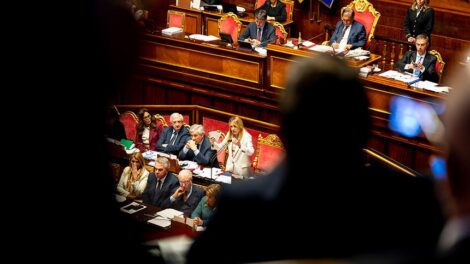
A: At this moment of relative difficulty in transatlantic relations, the current Italian government, led by Prime Minister Meloni, is among those closest to the Trump administration.
- Moreover, Italy has strong historical and sociological ties with Venezuela. For this reason, I believe Rome has all the qualities to assume a leadership role within the European framework in managing the Venezuelan dossier.
- At the moment, the Spanish position is the one that most influences the European Union’s policy toward Venezuela, and this does not benefit the country. With Rome leading the process, things could be different.
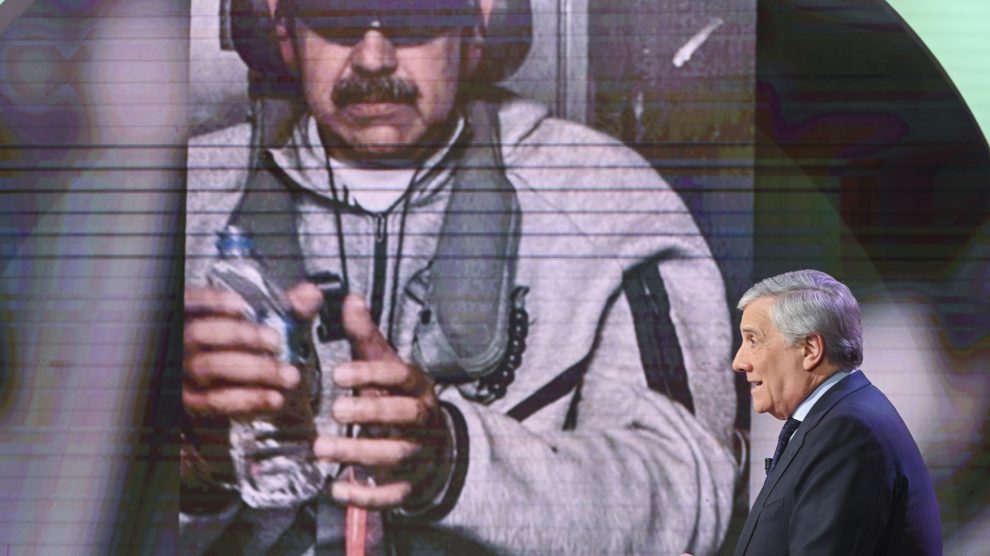
Q: How do you interpret the fact that in recent hours, Foreign Minister Tajani had a phone call with Delcy Rodríguez?
A: Antonio Tajani has been a strong supporter of the democratic cause in Venezuela for many years. After January 3, however, everything changed, opening a new and unique political phase.
- At this moment, recognition is a central issue: being considered a “legitimised” actor is essential to sit at the negotiating table. I believe Delcy Rodríguez and her team want exactly this, and I think that is what Tajani is doing.
- But, to be clear, these are and must remain dynamics strictly linked to the negotiation context, not a real legitimisation of the actors currently in power.
- We cannot accept that usurpers—primarily responsible for rampant corruption and very serious human rights violations—can have a place in tomorrow’s Venezuela.
Q: But things seem to be moving in that direction. And the news, just hours ago, about the resignation of Tarek William Saab, one of the pillars of Maduro’s regime, as Attorney General, seems to confirm it.
A: It is not clear what pushed him to resign; perhaps the United States asked him to, or Delcy Rodríguez herself. But more than a resignation, it is a sort of reshuffle.
- He has been appointed Ombudsman, the office responsible for addressing human rights violations. This is madness, considering how directly he was involved as Attorney General in some of the worst atrocities committed by the regime. It is further proof that there is no place for these individuals in tomorrow’s Venezuela.
Q: Regarding the influence of foreign actors on Venezuela, do you believe countries like China or Russia, among the staunchest defenders of the Maduro regime, will try to influence Caracas’ new political season?
A: You know, right now in Venezuela, a song by an influencer, Kilometro, has gone viral, saying: “And where is Russia? And where is China?” There is no doubt that at this moment, Moscow and Beijing are the real losers in the Venezuelan dynamics. But for them—as well as for Iran, and to some extent Cuba—this is an existential battle.
- Therefore, they operate in the long term, according to the logic of game theory, and exploit their strong propaganda apparatus. Until a few years ago, the YouTube channel Russia Today was the most popular and viewed in Latin America, even more popular than the BBC and CNN in the Western Hemisphere.
- The same was true for Sputnik. And even if this were not enough, we must still make every effort to neutralise this type of influence, especially on social media channels, which serve as a reference point for the younger generations who will one day shape the country’s future.
Q: If you had to advise European partners regarding their approach to the Venezuelan dossier, what would it be?
A: To distinguish between the real opposition to Maduro’s regime and the façade opposition. The real opponents have been repressed, tortured, and exiled, while the “fake” opponents have not only been tolerated but even integrated into Maduro’s power system. A few days ago, an important Italian outlet portrayed Henrique Capriles as a true opponent.
- But he ended up in Parliament, and we do not even know why or with how many votes. He was placed there by Maduro’s regime to maintain a semblance of “democracy.”
- The risk is that these figures will receive support—both economic and institutional—from European countries. And this would seriously undermine the democratization process in Venezuela.