Why it matters: Rome is assessing the geopolitical, nuclear and energy implications of the war involving Iran and the broader Middle East. The crisis is raising concerns across Europe about nuclear risks, energy security and regional stability.
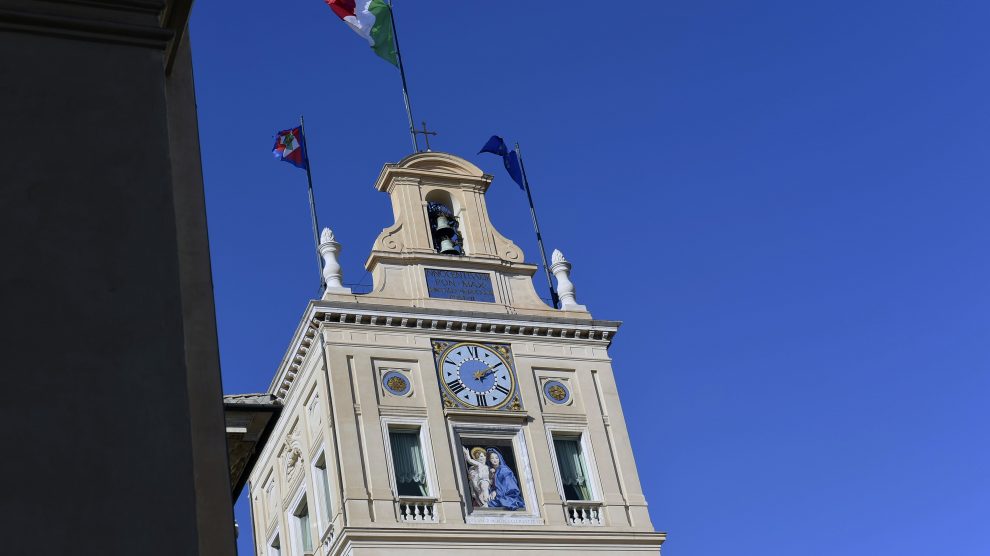
What happened: Italy’s President Sergio Mattarella has convened the Supreme Defense Council at the Quirinale Palace for Friday, March 13 at 10:00 a.m.
- The agenda is explicit: “The war in Iran and the Middle East. Analysis of the international situation and the effects of the ongoing crisis.”
- The meeting will bring together Italy’s top institutional and security leadership to assess the strategic implications of the conflict.
The nuclear front: Foreign Minister Antonio Tajani spoke with IAEA Director General Rafael Grossi about the risks linked to the Iranian nuclear program.
- Tajani said both sides share “concern about the nuclear threat.”
- Rome stressed that dialogue and diplomatic negotiations remain a priority.
- Italy also underlined that the IAEA must maintain regular access to Iranian nuclear sites.
- Tajani also expressed appreciation for the agency’s work on nuclear safety worldwide, including its monitoring missions at Zaporizhzhya and Chernobyl in Ukraine.
European coordination. Tajani also spoke with German Foreign Minister Johann Wadephul to coordinate European diplomacy.
- Key point: Rome and Berlin want Europe “at the forefront of political and diplomatic initiatives to build a path to peace in the Middle East.”
- Italy and Germany aim to protect partner and allied countries, including Cyprus and Gulf states.
- Both ministers warned about the economic consequences of the war, particularly through energy markets.
- Tajani stressed that energy stability is critical, adding that efforts are underway to prevent an energy crisis and ensure that shipping through the Strait of Hormuz can resume normally.
- Italy is currently focused on consolidating its role within Europe (the “E4,” the JCPOA’s E3 plus Italy), while continuing to act as a bridge among partners.
The G7 line. Finance ministers of the G7 say they are closely monitoring developments in energy markets.
- In a joint statement released after talks with leaders from the IMF, World Bank, OECD and the International Energy Agency, the group said they are ready to coordinate responses if the conflict disrupts global energy supplies, including the possible release of strategic reserves.
Energy cushion. According to the International Energy Agency, global strategic oil reserves amount to roughly 8.2 billion barrels, the highest level since 2021.
- Breakdown:
- IEA members: about 1.2 billion barrels of strategic reserves
- Private reserves required by law: about 600 million barrels
- Within the European Union, countries hold about 43.5 million tonnes of strategic oil stocks.
- Germany: 12.6 million tonnes
- France: 5.1 million tonnes
- Italy: 2.7 million tonnes
- Italy’s broader strategic energy reserves include:
-
- nearly 12 million tonnes of oil equivalent in petroleum products, according to OCSIT
- about 4.5 billion cubic meters of strategic gas, within 18 bcm stored nationally, according to Snam
The economic risk. Italian Economy Minister Giancarlo Giorgetti warned that the main economic danger is another surge in energy prices.
- “The economic risk is once again a surge driven by rising energy prices, and it would be a serious mistake to think the solution lies in monetary tightening,” Giorgetti said during the G7 Finance meeting.
- Separately, Industry Minister Adolfo Urso convened an urgent meeting of the government’s rapid fuel price alert commission to monitor petroleum product prices and assess possible intervention if speculative price increases emerge.
- The meeting includes several key institutions, including Italy’s financial police (Guardia di Finanza) and the Department of Information for Security (DIS), the body coordinating the country’s intelligence agencies.
Indo-Mediterranean matters. Italy is also stepping up diplomatic coordination beyond Europe. Foreign Minister Tajani spoke with India’s External Affairs Minister S. Jaishankar about developments in the Gulf and the risks linked to disruptions around the Strait of Hormuz, stressing the need to protect freedom of navigation and stabilize markets.
- Tajani also held a call with Saudi Foreign Minister Prince Faisal bin Farhan, discussing the need to safeguard maritime security and energy infrastructure in the Strait of Hormuz and the Red Sea.
- Rome reaffirmed its commitment to de-escalation and said it will support a Gulf Cooperation Council draft resolution at the UN Security Council condemning Iranian attacks against Gulf countries.