Why it matters: The simultaneity isn’t accidental. Italy is trying to keep two tracks moving in parallel — political engagement and institutional engineering — to break Libya’s prolonged stalemate without overcommitting to a single channel.
What happened:
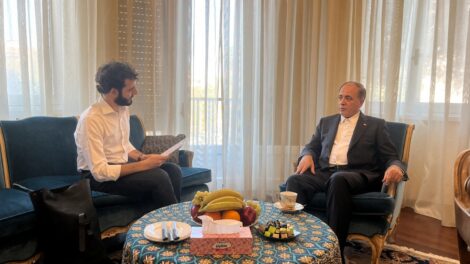
- In Tripoli, PM Abdulhamid Dabaiba met the full Copasir (Italy’s parliamentary committee overseeing intelligence) delegation — an unusually complete presence that signals strong institutional engagement
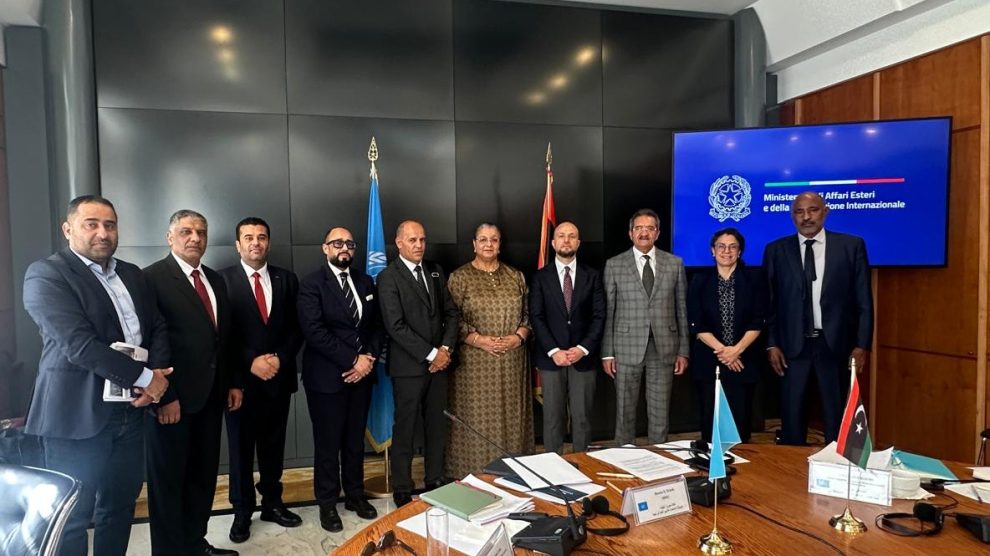
- In Rome, Italy hosted the first UN-backed “4+4” meeting under UNSMIL, bringing together eastern and western Libyan representatives.
From Tripoli, Copasir delegation meeting: During talks in Tripoli, Prime Minister Abdulhamid Dabaiba met an Italian parliamentary delegation led by Copasir chair Lorenzo Guerini, with Ambassador Gianluca Alberini present.
- Discussions centered on supporting the political process and stabilisation efforts, alongside expanding economic cooperation and partnerships in key sectors.
- Migration was a core item, with both sides exploring ways to manage irregular flows through closer Italy–Libya coordination.
From Rome, UN-facilitated 4+4 meeting: At the session hosted by Italy under UNSMIL auspices, the 4+4 format — a UN-backed mechanism bringing together four representatives from eastern Libya and four from the west — reached a key initial outcome: agreement to reconstitute the board of the High National Election Commission (HNEC).
- To break the leadership deadlock, participants backed a mechanism whereby the prosecutor general appoints an “impartial and competent” judicial figure within existing legal frameworks.
- The meeting also launched consultations on the most contentious electoral issues: candidate eligibility, participation of military figures, dual nationality, and the design of the voting system.
The backdrop: Libya’s electoral process has been stalled for months due to institutional divisions between east and west.
- Around 2.8 million Libyans are registered to vote, but elections remain on hold without an agreed legal framework.
- The 4+4 format is described as the “first operational step” of the two-phase approach presented to the UN Security Council by Special Envoy Hanna Tetteh.
Between the lines: Italy is positioning itself as both facilitator and convening power — engaging directly with Tripoli while hosting a parallel UN process.
- The synchronized timing suggests an effort to translate technical momentum into political traction.
- It also reinforces Rome’s role in an increasingly competitive external landscape around Libya.
The bottom line: Italy is betting on a dual-track strategy to move Libya forward: direct engagement with the government in Tripoli and support for a UN-led electoral pathway. The key question is whether technical progress can ultimately unlock a durable political compromise.
(Photo: X, @UNSML_)