“Disarming” artificial intelligence and removing it from the logic of profit and efficiency. In Magnifica Humanitas, Pope Leo XIV warns that humanity “must neither be replaced nor surpassed.” The document had been awaited for months — not only because it is Prevost’s first encyclical, but because of the broader significance it carries.
The Pope places the human person at the center while warning against the irrational use of technology. The Church, he argues, is facing “another industrial revolution,” one that presents “new challenges for the defense of human dignity, justice, and love.” The digital world, he says, should be understood as “a new continent to evangelize.”
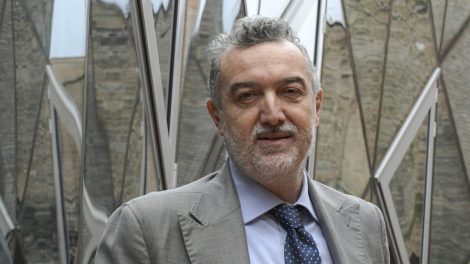
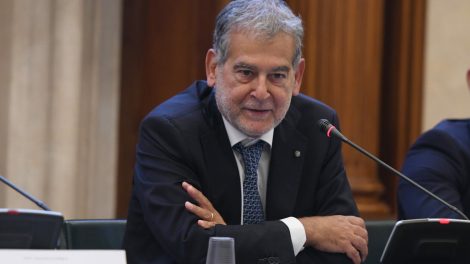
Why he matters: Paolo Benanti is professor of ethics at the Pontifical Gregorian University and one of the Vatican’s leading experts on technological ethics and innovation.
- He is a member of the United Nations Advisory Body on Artificial Intelligence. He was selected by the Italian Ministry of Economic Development to help form the national strategy for AI.
- He also chairs the Ethics Committee for the AI Observatory in the World of Labor under the Ministry of Labor.
Q: What value does the encyclical have for the Catholic world?
A: For the Catholic world, Magnifica Humanitas has the value of a compass in uncharted territory. The Church’s social magisterium has always functioned as a grammar of discernment: it does not respond to the problems of the moment with technical solutions, but offers criteria of judgment rooted in a conception of the human person that has been refined over more than a century.
- When Leo XIV applies this grammar to artificial intelligence, he is not simply updating a manual: he is recognizing that the computational question is a moral question of the highest order, touching the structure of freedom, truth, and human dignity.
- For Catholics, this means that it is not possible to address algorithmic domination as a merely technical or economic matter delegated to specialists: it concerns the way the human person is interpreted, and therefore directly challenges the conscience of each individual.
- At the same time, the encyclical offers the Catholic world something perhaps even more precious: the awareness that safeguarding the human in the age of AI is not a conservative defense of the past, but a prophetic act toward the future. Christians working in technology, economics, education, and politics find here not a set of rules, but a horizon of meaning within which their work can acquire dignity and direction.
Q: What are the principles Pope Leo XIV intends to emphasize, and why does he feel this urgency?
A: The principles are the structural ones of Catholic social doctrine — the dignity of the person, the common good, the universal destination of goods, subsidiarity, solidarity — but applied with unprecedented precision to the computational context. Leo XIV does not state them in the abstract: he uses them as operational criteria to evaluate the concrete architectures of algorithmic power.
- To speak about the universal destination of goods means affirming that data, platforms, and technological infrastructures cannot be treated as the exclusive property of a few private actors. To speak about subsidiarity means demanding that algorithmic decisions affecting the lives of communities be subject to real forms of democratic control. To speak about dignity means recognizing that automated surveillance and psychographic profiling are not questions of privacy, but questions of freedom.
- The urgency is real, and the Pope perceives it with precision: artificial intelligence systems are already being deployed in a structurally irreversible way, shaping the conditions of access to work, information, justice, and healthcare. Every year that passes without adequate governance is a year in which asymmetries of power become more consolidated and harder to correct. This is not a futuristic prediction: it is a description of the present. The magisterium has chosen to intervene now, while the process is still underway, not when it will be too late to direct it.
Q: How is the Vatican approaching AI — initiatives and concrete measures?
A: The Holy See’s path toward artificial intelligence began long before the encyclical, and it has followed a precise course. The first important step was the Rome Call for AI Ethics, signed in February 2020 by the Pontifical Academy for Lifetogether with Microsoft, IBM, and the Food and Agriculture Organization: a document that introduced the concept of “algor-ethics” — the ethics of algorithms — and established six fundamental principles: transparency, inclusion, responsibility, impartiality, reliability, security, and privacy. In the following years, the Rome Call progressively expanded its base of signatories, including Cisco, Qualcomm, and Salesforce, while also opening interreligious dialogue with Jewish and Islamic traditions.
- In December 2024, the Governorate of Vatican City State published its own Guidelines on Artificial Intelligence, which entered into force in 2025: a concrete normative act binding even the Vatican administration itself. In January 2025, the Dicasteries for the Doctrine of the Faith and for Culture and Education published Antiqua et Nova, a note on the relationship between artificial intelligence and human intelligence.
- The encyclical is therefore the culmination of a multi-year journey, not an isolated document: it is the voice of the highest magisterium adopting as its own what had been developed within the academic and diplomatic institutions of the Holy See, and elevating it to the level of universal teaching. A journey to which I had the honor of contributing as scientific director of the Fondazione RenAIssance, established by Pope Francis and dedicated precisely to this task.
Q: The previous Leo also promulgated an encyclical during the industrial revolution of the nineteenth century. Is this only a coincidence?
A: No, and Leo XIV knows this perfectly well. The choice of the date — May 15, 2026, exactly one hundred and thirty-five years after the promulgation of Rerum Novarum — is a deliberate gesture, almost a literal quotation. It means: what is happening today with the computational revolution is structurally analogous to what happened in the nineteenth century with the industrial revolution, and it requires the same quality of response.
- This is not a vague historical analogy: it is a precise diagnosis. Leo XIII did not write Rerum Novarum to criticize steam engines; he wrote it because the industrial revolution had concentrated control over the living and working conditions of millions of people into hands accountable to no one. The issue was power, not technology.
Q: And today?
Today, the problem is not the algorithm itself, but the fact that computational power is being concentrated in a few transnational private hands without adequate mechanisms of democratic accountability. The very name — Leo — is not neutral. It is a choice that says: the task of this pontificate is to do for the computational revolution what Leo XIII did for the industrial revolution. It is certainly possible that the choice of the name also had other motivations; but the symbolic effect is extraordinarily precise, and the Pope is aware of it. Great social encyclicals are not written to remember the past: they are written because the past illuminates a crisis that the present is still unable to fully see.
Q: Is Prevost more in continuity with Bergoglio than we had thought? For Pope Francis, attention to the environment was a priority; for Leo XIV, it is AI — two resources and at the same time two dangers of our era.
A: Much more in continuity, I would say. And not only from a spiritual or institutional point of view, but also on the level of philosophical analysis. The category that serves as the hinge of the entire Magnifica Humanitas — the technocratic paradigm — is the same one that Francis introduced in Laudato si’ in 2015 and deepened in Laudate Deum in 2023. Leo XIV does not take it up as a tribute: he radicalizes it and brings it to full maturity.
- In Laudato si’, the technocratic paradigm described the way in which the logic of control and efficiency was devastating the planet; in Magnifica Humanitas, it describes the way in which it is devastating the public sphere, labor, truth, and freedom. They are the same diagnosis applied to two intertwined domains: the ecological crisis and the computational crisis are not separate phenomena; they share the same root of thought.
- There is, however, a difference in context that makes Leo XIV’s task more difficult. Climate change is visible, it is felt on one’s own skin, and the coalition that recognized it as an emergency was built over time. Algorithmic power, by contrast, is invisible by nature: it operates through gratification and consensus, disguising itself as everyday utility. To do for AI what Francis did for the climate means making visible a form of domination that prefers to remain in the shadows, making people perceive as structural harm what appears as individual convenience. That is the most difficult task, and Leo XIV has taken it up with full awareness.