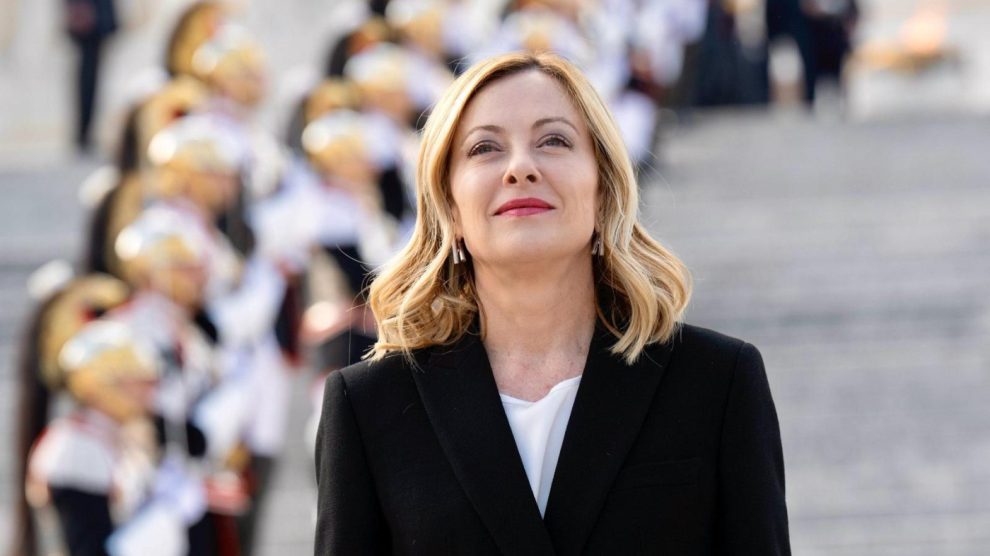
The public exchange between Italian Prime Minister Giorgia Meloni and U.S. President Donald Trump has sparked debate on both sides of the Atlantic. While some observers see the episode as a sign of growing tension between Rome and Washington, others view it as a temporary disagreement unlikely to alter the broader trajectory of the bilateral relationship.
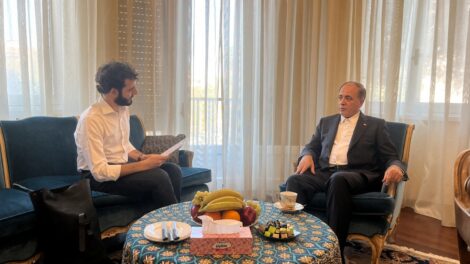
Among them is Kaush Arha, the president of the Free and Open Indo-Pacific Forum and previously served in Trump and Bush administrations.. In this interview with Decode39, Arha discusses Trump’s handling of the episode, Meloni’s response, the future of U.S.-Italy relations, and the implications for the upcoming NATO Summit.
Q: What, if anything, do you think Trump miscalculated in handling this episode?
A: Unsure. The statements were unbecoming and unfortunate.
Q: How do you evaluate Meloni’s reaction to the episode and her broader political and diplomatic strategy?
A: It was fitting for a proud leader of a proud democratic nation. She has a well earned reputation as a fighter through her political career. That spirit was on good display. She has my respect.
- Her verbal and written response were on target and politically necessary. However, I believe the cancellation of the Miami Summit was a tactical error and unnecessary.
- PM Meloni has been very adept at establishing strong working relations with both presidents Biden and Trump. She was part of a select group of world leaders to attend President Trump’s inauguration. As a strong conservative leader she is the closest ideological and policy ally of President Trump and his administration in Europe.
- She has demonstrated a good personal chemistry with President Trump. It is a testimony to that strong chemistry that the two feel comfortable at correcting each other in open media when one feels that the other has overstepped a line.
- President Trump respects strong leaders — including those that stand up to him — in the end I believe their relationship will be stronger for PM Meloni’s fighting spirit in standing up for herself.
Q: What impact could this episode have on U.S.-Italy relations in the short, medium, and long term?
A: US and Italy are natural allies with centuries old shared ideals, values and interests. It is the solemn charge of sober leaders — American and Italian — to preserve and strengthen this glorious alliance every generation after generation.
- As rich vibrant democracies, the US and Italy will periodically have iconoclastic leaders with colorful language. It is par for the course. However, it should never be allowed to detract from the natural national interest convergence of the two nations.
- Italian culture imbues American life like no other. No other large European nation loves America more. Italy remains America’s indispensable strategic ally across the Mediterranean and NATO’s southern anchor.
- As two leaders who are friends work out their relationship it is important that the critical work of bilateral economic, security and technology cooperation continues unabated. First order of business for leaders should be to consult and get the bilateral business and technology summit that was supposed to be held in Miami on June 24 back on track.
- Both US and Italy are fortunate to have extraordinary ambassadors working to strengthen bilateral relations — Ambassador Marco Peronaci in Washington and Ambassador Tilman Fertitta in Rome. It is up to them and ministers Rubio and Tajani to resume the important work forthwith.
Q: Looking ahead to the upcoming NATO Summit, what strategic implications could this episode have for the Alliance and for Italy’s role within it?
A: Italian Defense Minister Crosetto recently visited Washington and had constructive meetings with Secretary Hegseth. It is critical that this good momentum continues to the upcoming NATO Summit without any regression.
- Italy is aware that as the anchor of NATO’s Southern Flank the nation bears a special responsibility to support its allies on NATO’s eastern and northern flanks and carry its share of the security burden.
- Importantly, Italy’s defense champions — Fincantieri and Leonardo — and by extension the Italian economy and workforce stand to be among the biggest beneficiaries of increased national investment in security and defense.
- Additionally, Italy is geographically the most advantageous nation to become the hub of military mobility corridors throughout Central and Eastern Europe and the Eastern Mediterranean.
- For its own economy and security Italy should aspire to and demonstrate a credible pathway toward the new NATO defense investment targets.