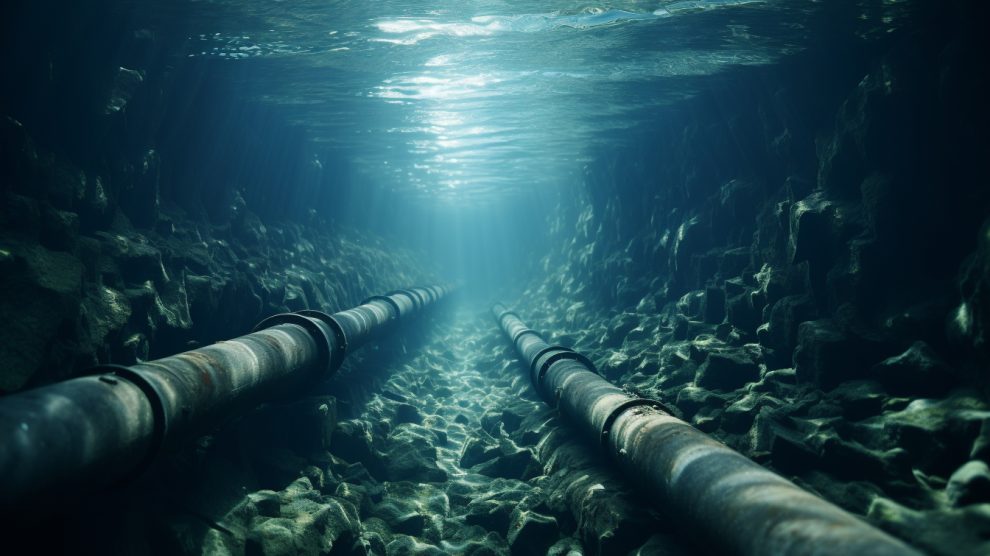
As part of a broader effort to strengthen the protection of critical undersea infrastructure, the European Commission has approved funding for the first two Regional Cable Hubs, one in the Baltic Sea and another in the Mediterranean.
A new European initiative. While the Baltic project will be coordinated by Finland, the Mediterranean hub will be led by Italy together with Greece, Cyprus and Malta.
- The decision places Italy at the center of an emerging European strategy aimed at protecting the networks that carry data, communications and, increasingly, energy flows across the continent and beyond.
Funding and operational goals. The Mediterranean hub will receive €3.3 million in EU funding and will develop shared operational procedures, common decision-making structures and a federated technological platform capable of supporting near real-time information sharing, anomaly detection and coordinated responses to cross-border incidents.
- The initiative is part of a wider package unveiled by the European Commission, which also includes a €40 million call for proposals to strengthen Europe’s cable repair capabilities. Together, the measures represent another step in the implementation of the EU’s action plan on cable security launched in 2025.
Why Italy matters: For Italy, however, the significance goes beyond the funding itself.
- Rome’s selection reflects the country’s increasingly important position within the geography of global connectivity. The Italian peninsula sits at the crossroads of routes linking Europe to North Africa, the Middle East and Asia.
- A growing number of submarine cables land on Italian shores before connecting to continental networks, making the country one of Europe’s most important gateways for international data traffic.
The convergence of data and energy. That role is becoming even more relevant as digital infrastructure and energy connectivity converge. New interconnection projects across the Mediterranean are expected to deepen links between Europe and the southern shore, adding an energy dimension to infrastructure that has traditionally been associated with telecommunications.
A shift in European thinking. The Commission’s decision also highlights a broader shift in European thinking. Undersea cables were long treated primarily as commercial assets operated by private companies and regulated at national level. Recent incidents involving critical infrastructure in European waters have changed that perception.
- Today, policymakers increasingly view undersea networks through the lens of economic security and resilience. Protecting cables is no longer simply about ensuring connectivity; it is also about safeguarding the systems that support financial transactions, government communications, cloud services and cross-border energy flows.
Coordination and resilience. The creation of regional hubs reflects this evolution. Rather than replacing national authorities, the new structures are designed to connect them, creating shared situational awareness and improving coordination across maritime regions where threats and disruptions can affect multiple countries simultaneously.
- The repair dimension is equally important. Europe’s new €40 million funding instrument seeks to improve the ability to restore damaged cables quickly by supporting deployable repair modules that can be used across the Mediterranean, the Atlantic and other maritime basins.
A strategic ecosystem. Taken together, these initiatives point to the emergence of a more comprehensive European approach to undersea infrastructure security. Surveillance, coordination and repair are increasingly being treated as parts of the same strategic ecosystem.
- Within that framework, Italy’s role is unlikely to remain limited to the Mediterranean hub itself. As Europe expands its focus on critical infrastructure protection, Rome’s position at the intersection of digital and energy corridors is likely to make it a key actor in future discussions about connectivity, resilience and security across the wider Euro-Mediterranean space.
- The cables lying on the seabed may remain invisible to most citizens. For European policymakers, however, they are rapidly becoming impossible to ignore.