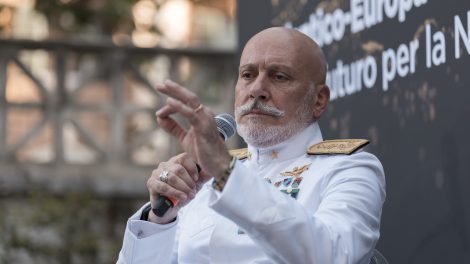
The real measure of success, however, may come from the political atmosphere among leaders rather than the final declaration, former NATO Deputy Secretary General Alessandro Minuto Rizzo writes in an analysis published by our sister website Formiche.
Why it matters: Minuto Rizzo sees the summit as a multidimensional test for an alliance navigating a rapidly changing geopolitical landscape.
- Traditional transatlantic cohesion remains at the center of the meeting.
- But Ankara brings the alliance closer to the political and security dynamics of the Gulf and Iran.
- NATO is also deepening ties with Indo-Pacific partners while looking at a potentially greater role in emerging technologies and artificial intelligence.
- Looming over the summit are the war in Ukraine and the question of how much more Europe can do as Washington’s role evolves.
The big picture: Minuto Rizzo argues that the summit’s location matters.
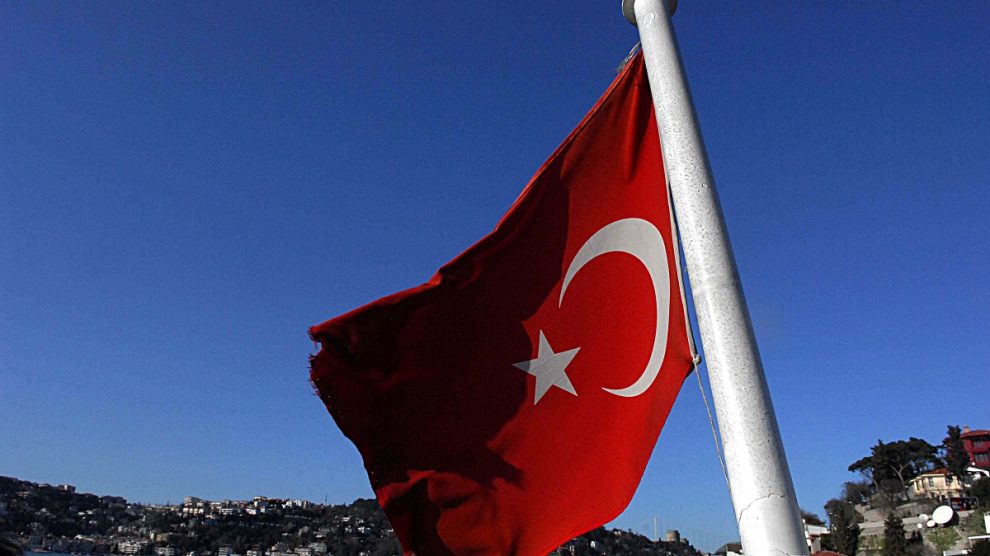
- For the first time in NATO’s 80-year history, he writes, the alliance is holding its summit in Asia, in a country bordering Iran and positioned between Europe, the Gulf and broader Asian security dynamics.
- Turkey’s role as host therefore carries added political weight.
The Gulf angle. Foreign ministers from the four countries of NATO’s Istanbul Cooperation Initiative are expected to participate on July 7.
- The central issue is partnership. According to Minuto Rizzo, Gulf countries face an increasingly difficult balance: some feel let down by Washington but remain dependent on U.S. military know-how they cannot easily replace.
- Some would like relationships with NATO that offer protections resembling those enjoyed by allies under Article 5.
- That remains impractical because they are not NATO members and such a move would struggle to win consensus within the alliance, Minuto Rizzo writes.
Between the lines: Deeper political consultation and security cooperation with NATO could still give Gulf countries a broader network of relationships beyond their bilateral ties with Washington.
- That could be particularly significant for Saudi Arabia.
Zoom out: The Indo-Pacific. The dynamic is different with Australia, New Zealand, Japan and South Korea, whose defense ministers have been invited to Ankara.
- With no immediate crisis driving the talks, Minuto Rizzo describes the meeting primarily as another step toward consolidating relationships developed over recent years.
- The Gulf presents a more urgent challenge, with Turkey’s geographic proximity and political role pointing toward potentially stronger cooperation.
Defense and tech. One meeting to watch is the industry forum accompanying the summit.
- Once a largely formal event, it could take on greater importance as NATO focuses more heavily on new technologies and artificial intelligence.
- Minuto Rizzo describes the alliance as an incubator for advanced technology projects developed by member countries, pointing to DIANA as an example.
- AI could be the next area where that role expands.
The Ukraine test. Ukraine remains one of the summit’s unavoidable issues.
- Minuto Rizzo argues that the conflict has entered a different phase from the early years of the war.
- Ukraine has continued to receive European support while developing its own ability to strike deep inside Russian territory.
- At the same time, he sees Moscow’s position hardening rather than softening.
Until a few months ago, Minuto Rizzo writes, a possible scenario appeared to be a gradual stabilization of the front followed by negotiations and an eventual “Korean-style” arrangement in which fighting stopped along existing lines.
- Instead, Russian reprisals have escalated.
- His argument is that Europe now needs stronger mediation, potentially led by France, Germany, the United Kingdom and Italy. The objective, he writes, should remain defending Ukraine from aggression rather than seeking Russia’s defeat.
Between the lines: The personal dynamics among leaders could prove decisive.
- Some NATO summits are largely formal affairs. Others change direction because of the discussions inside the room.
- Minuto Rizzo points to NATO’s 2004 Istanbul summit as an example of how exchanges among leaders can create genuine political momentum.
The same variable will be present in Ankara. A confrontational opening from Donald Trump could freeze the discussion, Minuto Rizzo argues. A more open exchange could instead broaden the debate.
- Either way, European leaders are likely to stress their willingness to do more.
What we’re watching: The summit faces variables that could quickly alter its trajectory, from Trump’s interventions to a possible Iranian provocation.
- If events proceed without major disruption, Minuto Rizzo expects NATO to seek a renewed demonstration of strategic cohesion.
- The question of Europe’s defense contribution will also be central, with Trump likely to argue that allies are still not doing enough and NATO Secretary General Mark Rutte and European leaders seeking to show that the continent is increasing its efforts.
The bottom line: Don’t judge Ankara only by its final communiqué.
- Minuto Rizzo expects the document to be relatively concise, in part to avoid disputes.
- The more important test will come after the meetings: whether leaders emerge publicly reaffirming solidarity, partnerships and transatlantic cohesion — and whether any gradual reduction in the U.S. role gives Europeans enough time to build greater capacity.
- For Minuto Rizzo, the outcome remains open. The odds of success are, for now, roughly even.