The Trump administration is stepping up efforts to broker a power-sharing agreement between Libya’s rival eastern and western leaders, betting that a deal between Khalifa Haftar and Abdul Hamid al-Dbeibah can end 15 years of conflict and political division.
The initiative could help unify Libya’s fractured institutions, but critics warn that an “elite bargain” between the country’s dominant families could undermine a UN-backed path to elections, trigger resistance from excluded factions and lock in the political system that has kept Libya divided.
Why it matters: Libya has remained split between rival political and military centers since the 2011 overthrow of Muammar Gaddafi.
- A US-brokered agreement could reshape the country’s political order while opening further space for American energy companies in Africa’s largest proven oil market.
- The push also highlights a broader debate over the Trump administration’s preference for transactional diplomacy and short-term stability.
Zoom in: The Boulos playbook. Massad Boulos, Donald Trump’s senior adviser on Africa and his son’s father-in-law, has spent more than a year shuttling between Libya’s rival camps.
- Under the reported proposal, the Dbeibah family would retain the prime minister’s office, while the Haftar family would take control of the three-member Presidency Council.
- Boulos has said that a successful agreement could be signed in Washington in Trump’s presence, though no specific timeline for such a signing has been publicly confirmed, a suorce underlined.
- His latest trip underscored the intensity of the US effort. Boulos traveled from Malta to Misrata, Tripoli and Benghazi, meeting Dbeibah, Haftar, Libyan financial officials, the interior minister and UN Special Representative Hanna Tetteh.
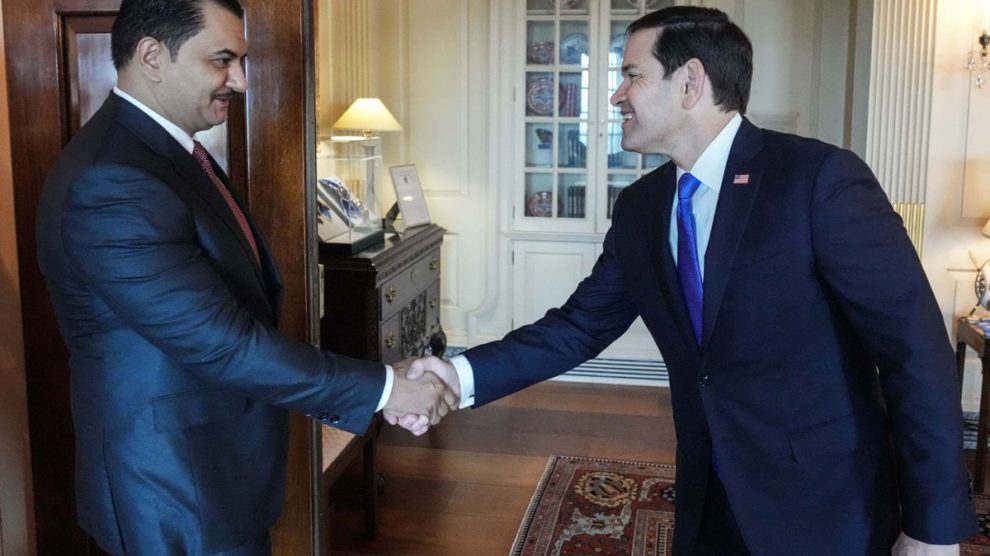
The diplomatic push followed Secretary of State Marco Rubio’s meeting in Washington with Saddam Haftar, Khalifa Haftar’s son, deputy and presumed successor.
- According to statements posted by both sides on X, the talks focused on unifying Libya’s armed forces and advancing conditions for lasting peace.
- Rubio said the United States would continue working with Libyan leaders and international partners to support a more peaceful, united and prosperous Libya, while Saddam Haftar said he had expressed appreciation for President Trump’s efforts to establish peace and strengthen cooperation between Libya and the United States.
The big picture: The administration says it supports “a Libyan-led, consensus-based political process toward unified governance and stability, with a path to credible national elections.”
- Critics see a contradiction. They argue that giving Libya’s two dominant power centers a formal division of authority could weaken the parallel UN process and reduce their incentive to eventually surrender power through elections.
- “I think it basically kills the UN plan,” Ben Fishman, a former National Security Council director for Libya, told Semafor. “These guys have no interest in giving up power. …The problem in Libya historically has been that once people have access to the money of the state, they fight like hell not to let it go or give away that access to power and wealth.”
- Cameron Hudson, a former White House official on Africa, also warned that a power-sharing deal between Libya’s dominant factions could sideline the UN-led process and entrench existing elites rather than pave the way for elections.
- The State Department rejects that argument and says Washington continues to support the UN roadmap.
Yes but… At the same time, supporters note that the UN-led process has been effectively stalled for years, with the Tripoli-based government failing to carry out the very mandate it was given — to lead the country to elections in 2021.
- “An imperfect agreement is preferable to continued paralysis and could give Washington stronger partners for counterterrorism and regional security cooperation,” said a diplomatic source from North Africa, who spoke on condition of anonymity to discuss sensitive matters.
- “The central question is whether an agreement between Haftar and Dbeibah can produce stability or simply redistribute power among Libya’s existing elites,” as the source warns that “factions excluded from the arrangement could resist it and potentially reopen armed confrontation.”
Follow the oil. Energy is also part of the equation. Libya holds Africa’s largest proven oil reserves, while US companies have been expanding their presence in the country. Over the past year, Libya’s National Oil Corporation has signed agreements with Chevron, Halliburton and ConocoPhillips.
- Is the negotiations reflecting a broader Trump foreign policy pattern, combining diplomatic deals in conflict zones with access to strategically valuable natural resources?
- “This bears all the characteristics of a Trump-style deal,” said a Libyan activist.
The bottom line: Washington is betting that a deal between Libya’s strongest rival power centers can deliver the unified governance that years of UN diplomacy have failed to produce.
- The risk is that ending Libya’s institutional division by entrenching the actors who dominate it could bring short-term stability at the expense of the country’s longer-term political transition.
(Photo: X, @SecRubio)