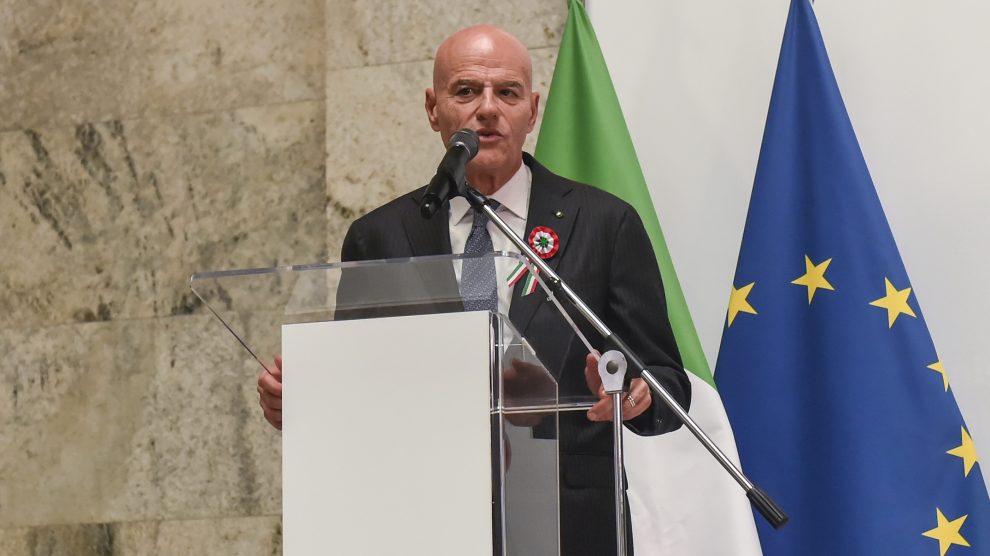
ROME — Eni CEO Claudio Descalzi told Italy’s Chamber of Deputies that energy markets have yet to fully price in mounting geopolitical risks, arguing that emergency measures have so far masked deeper vulnerabilities in global oil and gas supplies.
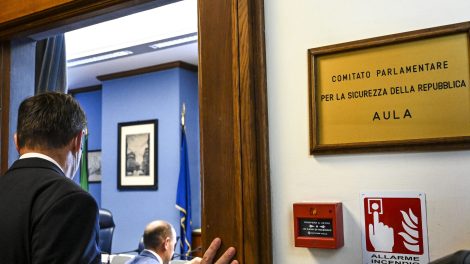
The summary: Speaking before the Chamber’s Productive Activities Committee, Descalzi said strategic oil releases, disruptions affecting the Gulf and the expected end of Russian gas flows to Europe are reshaping the continent’s energy outlook, even if prices have not yet fully reflected those risks.
Why it matters: Descalzi argued that current oil prices understate the scale of geopolitical disruption. He said Europe’s traditional energy supply model built around Russia and the Middle East has “completely eroded.”
- According to the Eni chief, the geopolitical risk premium attached to Gulf energy supplies is likely to remain elevated even after current tensions ease.
- He also warned that Europe — though not Italy, in his assessment — could face challenges as Russian gas deliveries come to an end.
The big picture: Descalzi said the current market has been supported by extraordinary interventions rather than by an improvement in the underlying geopolitical environment.
- “We are in a situation, from an energy standpoint, where obviously the price has not yet certified this as a major problem because around 400 million barrels of reserves, for OECD countries, have been released onto the market, and this has made it possible to keep prices in a range between $90 and $100.”
- He linked recent price movements to developments involving Iran.
- “With the signing of the agreement, there was a drop to $68; now we are back at $85, obviously because there was no positive follow-up to that agreement. Now, since the 11th, not even one ship has passed through the strait anymore, so there is a new blockade. This changes the order of things. It changes it for Europe, and in this case it changes it more globally.”
Zoom in: Europe’s energy map. Descalzi argued that Europe can no longer rely on the supply structure that shaped its energy system in previous years.
- “The previous configuration based on Russia and the Middle East has completely eroded,” he said, adding that production contributions from those regions “are unlikely to return to previous levels for a long time.”
- Even if Gulf supplies eventually normalize, he suggested the region’s risk profile has fundamentally changed.
- “Even when those contributions from the Gulf are available, when — I hope soon — everything is over, the risk attributed to this area will be completely different,” he said, pointing to higher financing costs, insurance premiums and consequences for investment.
Between the lines: Descalzi also pointed to the long-term effects of the war in Ukraine on Europe’s gas market.
- He said the conflict’s “tail” would likely lead to “a complete stop of the gas that comes from Russia to Europe from January 1,” describing it as “obviously a concern for all of Europe” but “not for Italy.”
- On gas storage, Descalzi said Italy’s position is stronger than that of several European partners.
- According to his assessment, Italy’s storage facilities are currently “71–72” and should reach around 90% by January, while other European countries remain “well below, still at 40–45–46%,” and will “probably manage to finish close to 70%.”
The bottom line: Descalzi’s message to lawmakers was that Europe’s energy landscape has undergone a structural shift — a vision he has already outlined and that is shaping Eni’s activities. While emergency reserves and diversified supplies have helped cushion immediate shocks, he argued that geopolitical risk — from the Gulf to the end of Russian gas flows — will continue to shape markets, investment decisions and Europe’s energy security.