Why it matters: Italy has framed the Mattei Plan as a new model for engaging Africa: less donor logic, more industrial partnership. The Malolo farm in the Republic of Congo is one of the first projects where that promise can be measured on the ground.
- One year after its launch, the BFuture Farm promoted by BF International has recovered and redeveloped 6,000 of the 10,000 hectares granted by Congolese authorities, with more than 1,000 hectares already in production. The first soybean harvest has been completed, while around 100 agricultural workers operate with 50 modern farming machines.
- The project was presented on Wednesday at BF Spa’s headquarters in Jolanda di Savoia, in northern Italy, in the presence of Congolese ambassador to Italy Henri Okemba and Italian Foreign Minister Antonio Tajani.
The big picture: The farm is not designed as a simple agricultural project. It is being built as an integrated agro-industrial hub, with storage, processing, livestock facilities and local services attached to production. A new industrial area is under construction, including 12 silos for maize and wheat, a drying plant, a seed plant, a feed mill, livestock facilities and a powdered milk production unit. The goal is to create value in Congo rather than export only raw output.
- Crop management relies on a digital platform combining satellite monitoring, weather stations and IoT sensors. The system is meant to collect real-time data, improve yields, support regenerative farming practices and make production more resilient to climate stress.
- The project also includes civil infrastructure. A new water network is already operational, serving both the farm and nearby communities through four supply points. More than 20 kilometers of roads have been built, together with the area’s first power line, running for roughly 30 kilometers.
- Training is another pillar. CIHEAM Bari and BF Educational are involved in professional programs focused on agriculture, mechanics and agro-industrial management. A local school is being renovated, while work is advancing on the area’s first health center and a maternity facility.
- Around 450 people are currently employed between farming operations and construction sites. The project’s socio-economic impact already reaches roughly 3,000 people, according to the figures presented by BF International.
The Italian angle. For Rome, Malolo is more than a corporate success story. It is a practical test of the Mattei Plan’s central claim: that Italy can combine diplomacy, development cooperation, private investment and industrial know-how in a more equal partnership with African countries.
- The Mattei Plan focuses on six areas — education and training, health, water, agriculture, energy, and physical and digital infrastructure — and has been presented by the Italian government as a framework for concrete cooperation with African partners.
- The AREA Africa program, under which the initiative falls, is co-financed by Italy’s foreign ministry and built around a public-private partnership model. CIHEAM Bari acts as the knowledge partner and implementing body for the public component, while BFI is the private partner. The program runs from 2026 to 2028 in Congo, Senegal and Ghana, to strengthen food security and climate resilience in local agri-food systems.
- Italy has made Africa a core foreign-policy theatre. The OECD’s 2026 peer review noted that the Mattei Plan has elevated development cooperation into a broader instrument of foreign policy, linking political dialogue, migration, energy security, trade and investment. But it also stressed that Rome will need clearer coordination, transparency and long-term delivery mechanisms as the plan scales up.
- That is why Malolo matters. It gives the Mattei Plan something it badly needs: a measurable project, with land, workers, roads, water, power, training and production already visible.
The bottom line: One element distinguishes the project from more controversial agricultural investments seen in Africa. The land remains owned by the Congolese state and is granted for long-term use, keeping both land ownership and agricultural production in the country. That structure is meant to distance the project from land-grabbing models and align it with the Mattei Plan’s language of mutual growth.
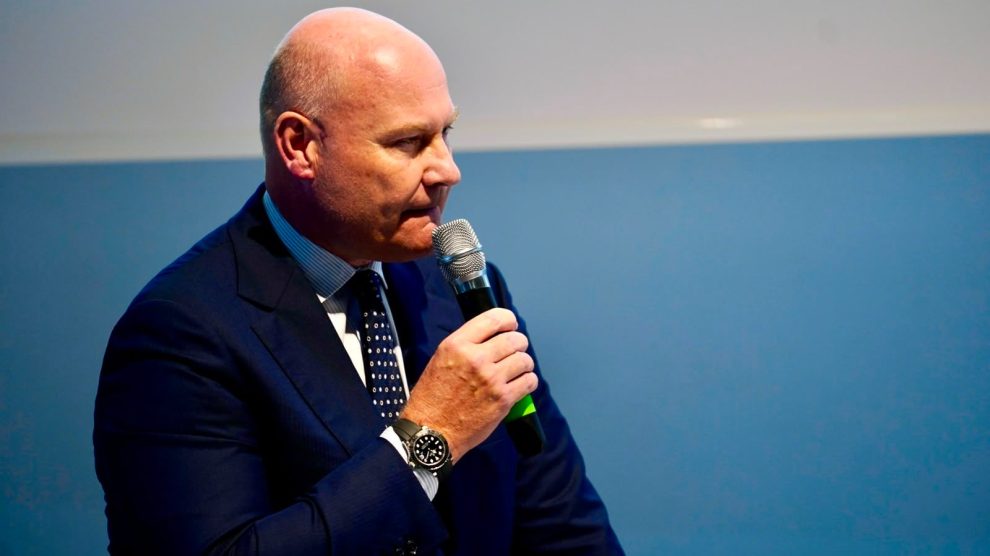
- Federico Vecchioni, executive chairman of BF Spa and CEO of BF International, described the farm as an agro-industrial infrastructure able to respond to food security and climate resilience challenges through technology and digitalization. He also framed the BFuture Farm network as an expression of Italian technical and industrial know-how applied to global challenges.
- Malolo is no longer just a pilot project. It is becoming the first operational stress test for Italy’s attempt to turn cooperation with Africa into industrial policy — using agriculture as a tool of development, stability and international projection.