
The bilateral meeting in Tromsø with the Norwegian Undersecretary of State for Defence, Andreas Flåm, was one of the most significant moments of my mission to Norway, which has just concluded. It was a political and institutional discussion that confirmed the strength of the relationship between Rome and Oslo and our shared determination to strengthen cooperation in the High North, at a time when the Arctic is assuming increasing strategic importance for European and Euro-Atlantic security.
This was not simply a continuation of an established dialogue, but an opportunity to share strategies and perspectives. Italy and Norway view the Arctic as a region where security, innovation, scientific research, freedom of navigation and the protection of critical infrastructure converge. Protecting infrastructure—including subsea infrastructure—and lines of communication is strategic in the Arctic; strengthening the partnership between Rome and Oslo means contributing to the defence of NATO’s northern flank and to the security of the entire Euro-Atlantic area.
During the meeting, we discussed the main strategic dossiers concerning the security of the Arctic and the Alliance’s northern flank. We reaffirmed the need to strengthen coordination between our two countries in the defence sector in a context marked by growing geopolitical challenges, hybrid threats and increasingly assertive postures by major global players seeking control over maritime routes—made accessible by the melting of the ice—as well as the critical and strategic raw materials with which the Arctic is rich.
- The discussion with Andreas Flåm also reinforced a fundamental principle: the security of the Arctic and that of the Mediterranean are becoming increasingly interdependent. In a NATO that must simultaneously look to both its northern and southern flanks, security can no longer be interpreted according to rigid geographical coordinates, but rather through geopolitical axes.
The Nordic Allies contribute to the stability of the Mediterranean, and Italy is called upon to contribute to the security of the High North by making its capabilities available, in accordance with the principle of shared responsibility that makes the Alliance more cohesive and more credible. It is within this perspective that Defence Minister Guido Crosetto’s proposal to build a continental-scale European defence architecture should be understood—one not limited to the member states of the European Union but also open to European countries that share the same values and security objectives. Among them, Norway, a NATO Ally and a key actor in the High North, is one of the natural partners in this broader architecture.
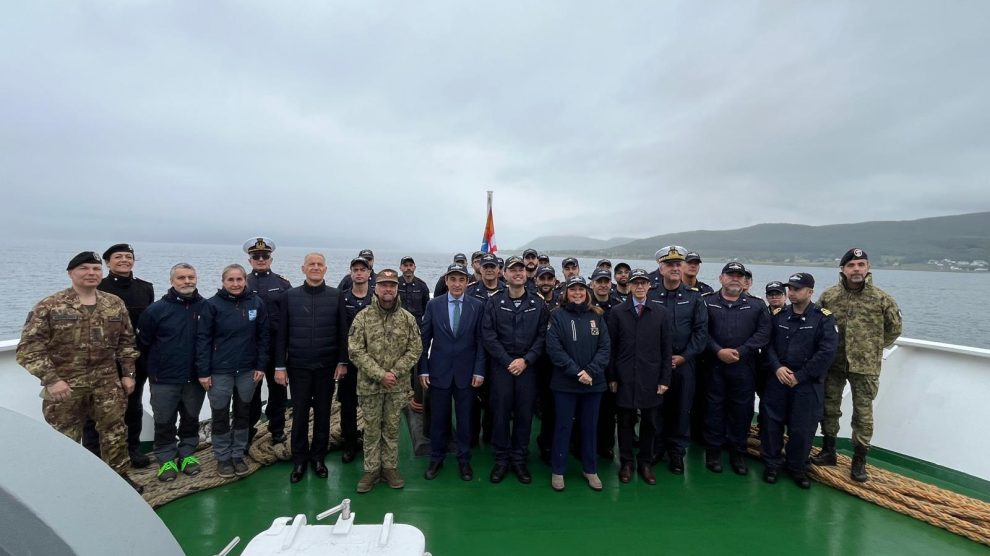
The bilateral meeting took place aboard ITS Alliance, a NATO vessel flying the Italian Navy’s flag and crewed by Italian Navy personnel, an outstanding platform for research and experimentation in the High North. On board, I met the crew, the personnel of NATO’s Centre for Maritime Research and Experimentation (CMRE), and the scientific teams engaged in the High North 2026 campaign and Task Force X-Arctic.
The High North 2026 campaign, coordinated by the Italian Navy Hydrographic Institute and now in its tenth edition, includes seabed mapping, which is essential for protecting subsea infrastructure and lines of communication and for strengthening maritime situational awareness. The collaboration with e-GEOS on the analysis of navigable routes and ice formations also enhances Italy’s satellite Earth observation capabilities.
- Task Force X-Arctic, part of the Allied Arctic Sentry initiative, coordinates Allied activities in the High North to prevent threats and protect critical infrastructure. Task Force X-Arctic translates these objectives into innovative operational capabilities.
- It is one of the four initiatives under the “NATO Task Force X” framework, alongside Baltic, Central Mediterranean (led by Italy) and the Eastern Flank Deterrence Initiative: a model designed to accelerate the integration of emerging technologies with conventional capabilities.
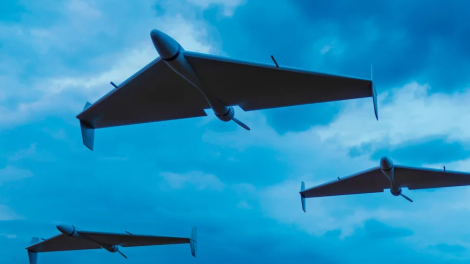
- Task Force X-Arctic is testing networked unmanned systems, data sharing, artificial intelligence and multidomain surveillance.
The bottom line: ITS Alliance demonstrates the complementarity between defence, scientific research, technological innovation and national industry, serving as an example of modern scientific and naval diplomacy, built on knowledge and operational presence.
- The Arctic is not merely a geographical frontier. It is the laboratory where the technologies of the future are tested, where the new forms of strategic competition are measured, and where tomorrow’s balances are shaped. Italy has the tradition, expertise and credibility to play a leading role in this transformation and to help define its strategic direction.
Why the author matters: Isabella Rauti was appointed Undersecretary of State for Defense in the Meloni government in October 2022. She has also the responsibility for the Arctic, Sub-Arctic and Antarctica regions.