ROME — Italy has stepped up security around U.S. military facilities as the conflict with Iran raises concerns over retaliation, covert activity and cyber operations on European soil.
The heightened alert offers a glimpse into Italy’s role on the European flank of the crisis: hosting key U.S. military infrastructure while reinforcing protection at home and keeping channels with Tehran open.
Why it matters: Italy has not authorized offensive missions against Iran from its territory. But its geography and military infrastructure put the country close to the operational architecture surrounding the conflict.
Zoom in: Italy’s security footprint. U.S. bases in Italy and in Europe are on alert. Last week, a small drone entered the main facility at Gricignano d’Aversa, near Naples, triggering an immediate alarm. U.S. Navy personnel at Capodichino were ordered to take shelter as a precaution.
- Italy hosts infrastructure that supports U.S. operations. For instance, from Aviano, a northeastern Italian base, approximately a dozen F-16s have participated in operations against Iran, flying from Jordan. Additionally, personnel from the U.S. Army’s 173rd Airborne Brigade, stationed in Vicenza, were deployed to Israel at the onset of U.S. intervention.
- Rome is preparing for threats beyond conventional military action. Italian intelligence is monitoring the risk of Iranian-linked covert networks and cyber operations inside Europe.
- Diplomacy remains open. Italy is keeping its embassy in Tehran operational and continues to present itself as interested in mediation and dialogue with Iran.
Between the lines: The warning comes as the potential scope of Iranian retaliation remains uncertain. According to the Financial Times, Iranian forces have also studied their ability to strike undersea fiber-optic cables in the Strait of Hormuz in the event of further escalation.
- One source cited by the FT said Tehran was preparing to widen the conflict if Trump followed through on threats to strike Iranian infrastructure. Another said Iran would place “no limits” on its response to renewed U.S. military action.
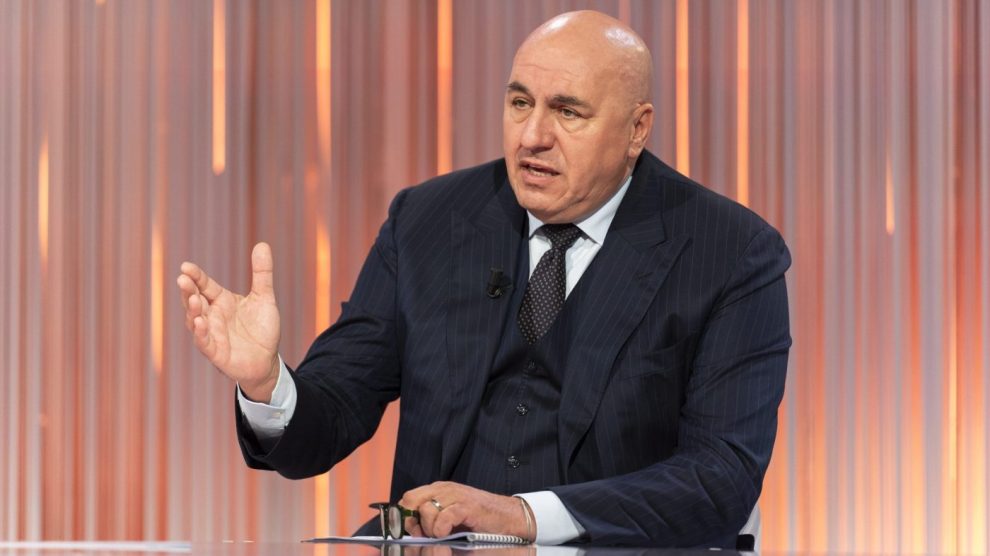
What Rome is saying. Defense Minister Guido Crosetto is keeping Italy’s options open. “Nothing is ruled out, but if I were the FT, I would avoid offering ideas and suggestions,” said Italian MoD.
- “The tactic with which they have approached the war is to bring chaos even to places and countries that had no role in the conflict.”
- The broader point: Crosetto said Iran has so far used chaos and the widening of the conflict as a tactic, meaning that under that logic “nothing is ruled out” — but warned against publicly suggesting possible targets or scenarios that Tehran itself may not have considered.
What we’re watching. Italy is simultaneously managing three fronts: protecting U.S. and strategic infrastructure on its territory, maintaining a limited operational role around the conflict, and preserving a diplomatic channel with Tehran.
- That combination — military relevance, domestic vigilance and continued diplomacy — is shaping Rome’s position as the Iran conflict increasingly tests Europe’s security architecture.