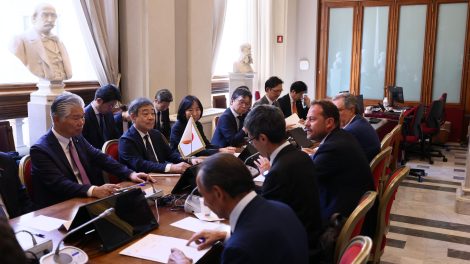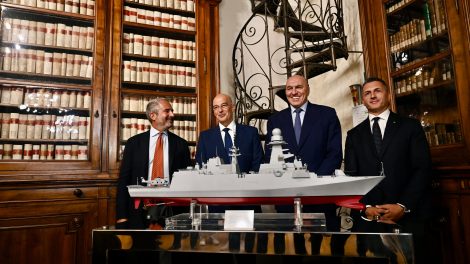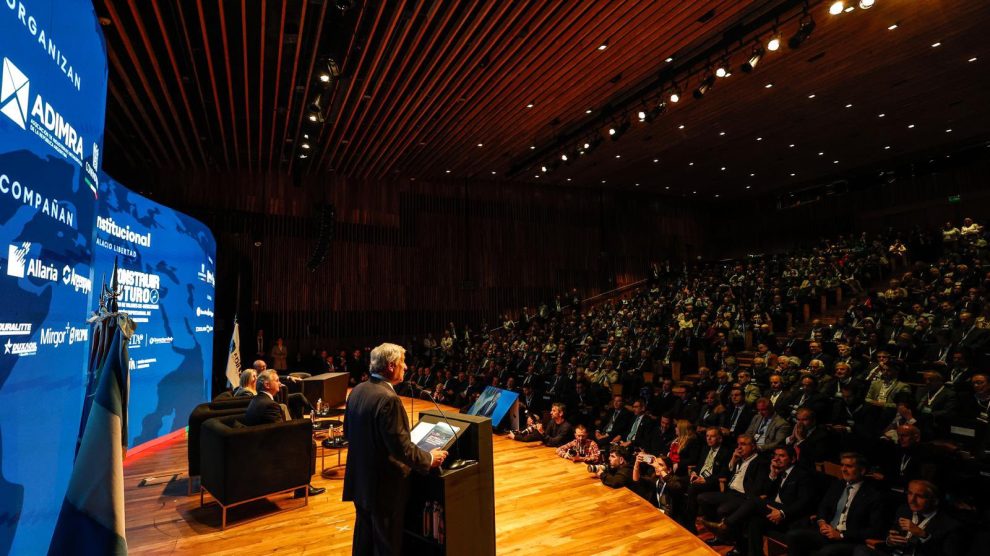
The South American mission began with business, but in São Paulo Antonio Tajani broadened its scope. After the Buenos Aires stop, Italy’s foreign minister led a delegation of more than 100 Italian companies to Brazil, alongside Confindustria and the heads of ICE, SACE and SIMEST, with the stated aim of turning the opportunities opened by the EU-Mercosur agreement into contracts, investment and a stronger industrial presence.
Behind the political and commercial push by Italy’s “Sistema Paese” lies a contest that, for the Foreign Ministry, goes beyond trade.
Trade policy meets foreign policy. “We cannot separate trade policy from foreign policy,” Tajani said in São Paulo. The remark makes clear how Rome is reading the agreement with the South American bloc.
- “We are the West, and we want Latin America to be increasingly part of the West,” the minister added, arguing that the Italian and European presence in the region represents “an alternative presence to others” and that alongside commercial competition there is also “political competition”.
- It is this dimension that turns the mission into something more than an export-promotion exercise. Italy wants to move quickly into the space opened by the EU-Mercosur agreement while seeking to translate deeper economic integration into a stronger European political presence.
- Tajani described the Italian delegation as the first of its size to arrive in Latin America following the European decision on the agreement, presenting the visit as a move from agreements to “concrete action”.
The numbers behind Italy’s interest. The figures explain the interest.
- In May and June 2026, trade in goods between the EU and Mercosur reached €21.79bn, up from €18.30bn in the same period of 2025, an increase of 19 per cent. Italy’s trajectory is similarly pronounced. Trade with Mercosur countries increased by 51 per cent between 2019 and 2025 and came close to €8bn in the first half of this year.
- The scale of the mission reflects that ambition. Around 2,800 business-to-business meetings were scheduled between Buenos Aires and São Paulo — 1,500 in the Argentine capital and 1,300 in the Brazilian metropolis — involving a delegation spanning sectors from agrifood and mechanical engineering to pharmaceuticals, digital technologies and the energy transition.
Buenos Aires and São Paulo, two sides of the same strategy. Argentina and Brazil offer two different expressions of the same strategy.
- Buenos Aires was the first political and industrial stop, combining institutional meetings with exchanges between companies.
- São Paulo added a more structured element: the decision to create a bilateral Italian-Brazilian working group tasked with facilitating trade and investment.
According to Tajani, its objective will be to address non-tariff barriers and bureaucratic obstacles that continue to hold back trade.
- The mandate has already been given to the relevant directorate-general at the Italian Foreign Ministry, and the mechanism is expected to include annual meetings.
- Rome is also seeking a two-way relationship: more Italian investment in Brazil, but also more Brazilian capital flowing into Italy.
Brazil at the centre. Brazil inevitably occupies a central position. It is Italy’s largest trading partner in South America, with bilateral trade exceeding €11bn in 2025. Tajani pointed to growth of 55.7 per cent in recent years and 22 per cent in the first months of this year.
- For Italian companies, Mercosur also means access to an economic area that the minister put at more than 700mn consumers.
But Italy’s approach does not run solely through trade and industry. Tajani stressed the depth of human ties with both countries, recalling that Brazil is home to one million Italian citizens and about 32mn Brazilians of Italian descent.
- In Buenos Aires, the mission also included a cooperation agreement between Naples’ Teatro di San Carlo and the Teatro Colón, using culture as another channel for Italy’s presence.
A relationship beyond political alignments. That network also allows Rome to claim a degree of political flexibility. Argentina and Brazil have governments of different political orientations, but Tajani ruled out this affecting bilateral relations. “What matters is not political alignment, but the willingness to build together,” he said in São Paulo.
- This is perhaps where the different strands of the mission come together. The Foreign Ministry’s “growth diplomacy” uses companies, investment, culture and historical ties as instruments of Italian projection.
- The EU-Mercosur agreement could multiply their reach, giving Rome a broader platform on which to build economic relations with Argentina and Brazil.
The bottom line: For Tajani, however, the stakes also concern Europe. If trade and foreign policy are two parts of the same strategy, the success of Mercosur will not be measured solely by an increase in trade.
- It will also depend on Europe’s ability to turn that economic opening into a more stable presence in Latin America.
(Photo: X, @Antonio_Tajani)