
ROME — Donald Trump says his relationship with Giorgia Meloni is good again. But beneath the political turbulence, Rome and Washington appear to have kept talking on the issues that matter most — from NATO and military bases to AI and critical minerals.
The latest evidence comes from Il Messaggero, which reports that the Italian government has answered (positively) a detailed Pentagon questionnaire on Italy’s military commitments, defense spending, and the use of bases by U.S. forces.
Why it matters: For Rome, the transatlantic relationship remains a central anchor of its foreign and security policy. Recent months suggest that disagreements between Meloni and Trump did not translate into a breakdown in cooperation between the two governments.
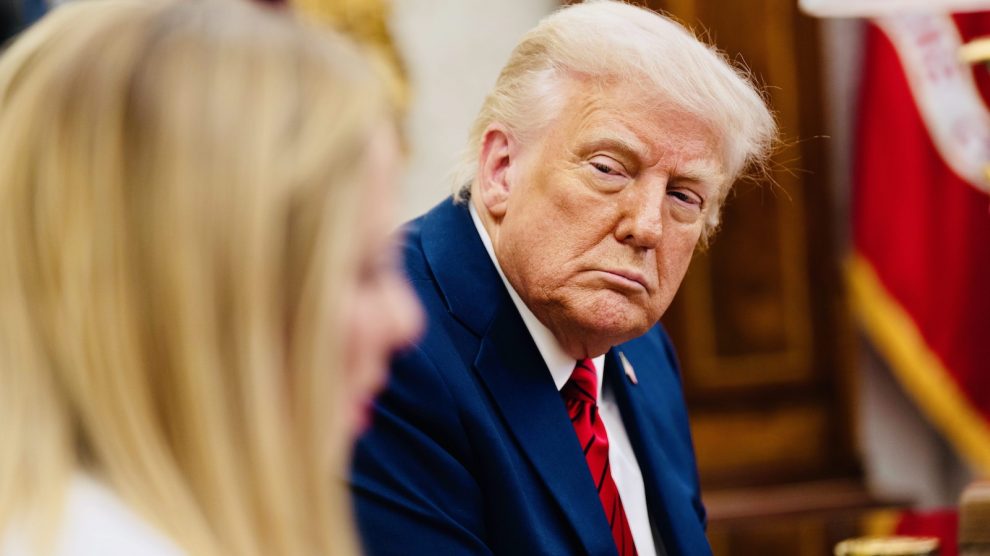
- Trump said Friday that he and Meloni have “very good relations”, adding that he has “always liked her,” months after a public dispute between the two leaders.
- Defense ties have continued behind the scenes, while cooperation has expanded into strategic technologies and economic security.
- Italy joined the U.S.-led Pax Silica framework in July and last month signed a bilateral critical-minerals agreement with Washington, connecting cooperation on AI and semiconductors with the security of their underlying supply chains.
The defense channel. According to Il Messaggero, citing two Italian government sources familiar with the matter, Rome responded to a confidential questionnaire sent by the Trump administration to NATO allies to assess their commitments and reliability.
- The answers reportedly covered Italy’s steadily increasing defense spending as well as its military deployments abroad.
- Rome pointed to its contribution to NATO’s eastern and southern flank, including Italian troops in Latvia and four Eurofighters deployed in Lithuania, as well as its presence in the Balkans and Mediterranean.
- One particularly sensitive question concerned U.S. access to military bases in Italy during the war against Iran. According to Il Messaggero, the Italian government’s answer was that it had respected existing international agreements. The newspaper also reports that Rome pointed to the bilateral Status of Forces Agreement governing the presence of U.S. forces in Italy.
- The message to Washington, as reconstructed by the newspaper, was essentially one of continuity: Italy considers itself to have met its commitments.
Follow the technology. Defense is only one of them.
- On July 31, Italy formally joined Pax Silica, the U.S.-led partnership covering semiconductors, artificial intelligence and critical minerals. The Italian Foreign Ministry described the move as “a further building block” in the strategic relationship between Italy and the United States and placed it within a broader Euro-Atlantic framework.
- Then came critical minerals. In September, Foreign Minister Antonio Tajani and Secretary of State Marco Rubio signed a bilateral memorandum designed to deepen cooperation on critical minerals, covering extraction, processing, recycling and investment. The agreement also created a technical working group, giving the relationship an operational mechanism beyond political declarations.
- The two tracks are connected. Critical minerals underpin the technology value chain, including semiconductors, data centers and defense systems — making economic security increasingly difficult to separate from traditional national security.
Beyond the political weather. Trump’s latest comments ease a tension that had become unusually public. But there had already been indications from the U.S. side that Washington did not see the broader relationship as derailed.
- In late August, U.S. Ambassador to Italy Tilman Fertitta said relations were “at a very high level” and called Meloni a “world-class leader, highly respected abroad”, despite the previous confrontation between the Italian prime minister and Trump.
- That distinction matters: the political weather around the two leaders has changed, while institutional and strategic cooperation has continued across several tracks.
The big picture: Taken together, the defense dialogue reported by Il Messaggero, Pax Silica and the critical-minerals agreement point to a relationship operating on several strategic levels.
- That does not mean Rome and Washington agree on everything. It does suggest that Italy continues to treat the transatlantic dimension as a structural component of its security and foreign-policy posture — increasingly extending it from NATO and military cooperation into technology and industrial supply chains.
- Trump’s latest words about Meloni therefore matter, but they are also only part of the story.
The bottom line: The personal relationship may have gone through a rough patch. On defense, technology and economic security, and more broadly on strategy, Rome and Washington kept the conversation going.