Serbia’s student-led movement has ended Aleksandar Vučić’s 14-year grip on power, turning months of anti-corruption protests into an electoral victory. But whether the political upheaval will bring Belgrade closer to Europe remains an open question.
Two Italian lawmakers who monitored Sunday’s vote for the Organization for Security and Co-operation in Europe (OSCE) see a democratic breakthrough — while offering different assessments of what comes next.
Why it matters: Serbia sits within Italy’s strategic neighborhood, with Rome viewing the Western Balkans as essential to regional stability and its broader geopolitical interests.
- Developments in Belgrade can reshape regional balances, particularly given Serbia’s role in Balkan security and its unresolved relationship with Kosovo.
- Serbia also maintains deep economic, energy, military and political ties with Russia and China, two powers Italy regards as strategic competitors. Its future orientation therefore matters directly to Rome.
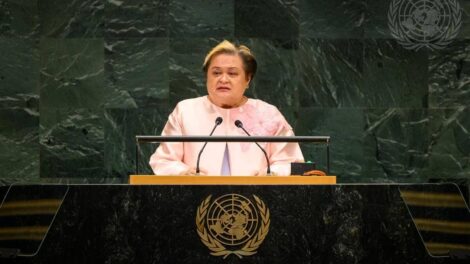
The democratic breakthrough. Federica Onori, an MP from the centrist Azione party who headed the OSCE Parliamentary Assembly’s delegation to Serbia, described the election as historic.
- “We saw very long queues at polling stations, very high turnout and, above all, strong participation by young people,” she told our sister website Formiche.net. “They were the real protagonists.”
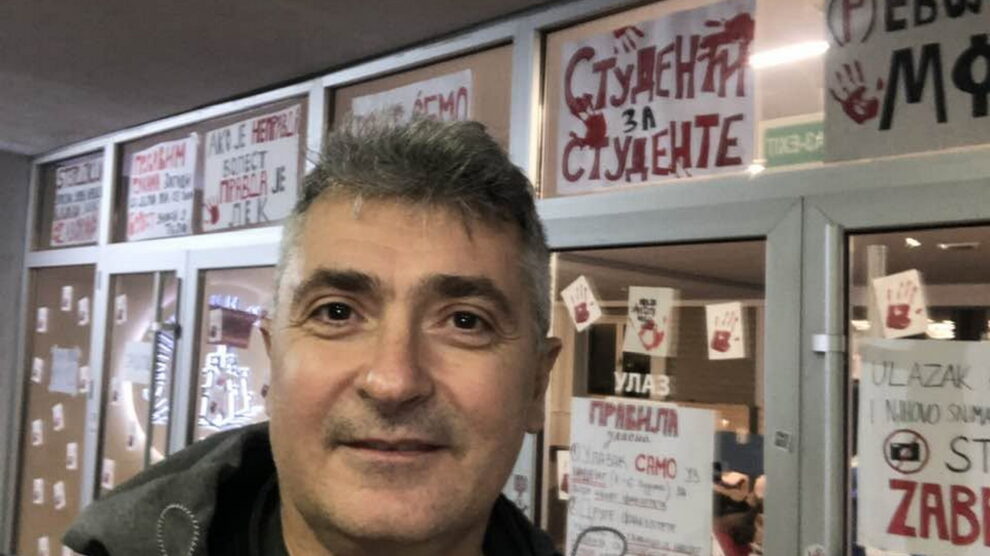
- The student movement emerged following the 2024 Novi Sad railway station tragedy, building its appeal around anti-corruption demands and institutional accountability.
- Onori said the vote demonstrated how public discontent could find expression through democratic institutions, despite an uneven campaign marked by pressure on voters, misuse of public resources and disproportionate media coverage.
- “Rather than a crisis of democracy, I see it as a strong demand for democracy directed at traditional forms of political representation,” she said.
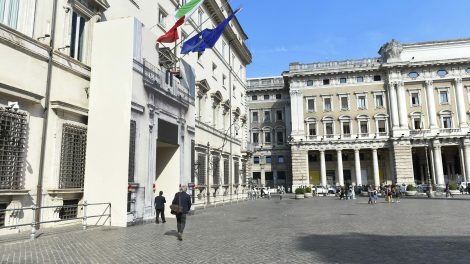
The cautionary view. Emanuele Loperfido, an MP from Prime Minister Giorgia Meloni’s Fratelli d’Italia party and a member of the Italian delegation to the OSCE Parliamentary Assembly, offered a more guarded assessment.
- “The student movement managed to interpret the desire for change, but without having a clear political program yet,” he told our sister website Formiche.net. Loperfido warned that the movement brings together voters with conflicting positions on Russia, Kosovo, Ukraine and EU integration.
- Its inexperienced leadership and horizontal decision-making structures could also complicate the transition from protest to government. He cautioned against interpreting the outcome as an automatic victory for Brussels: “It will take more time to understand where they are really heading.”
The geopolitical test. Both lawmakers recognize that Serbia’s international alignment remains uncertain, particularly given its longstanding relationships with Moscow and Beijing.
- Onori pointed to Russian interests in Serbia’s energy sector and Chinese investments in mining, steel and infrastructure as evidence of deeply rooted strategic dependencies.
- “Every time the European Union loses focus, others move in,” she warned, urging Brussels to support institutional reforms and offer tangible incentives for closer integration.
- Loperfido focused particularly on energy, arguing that Russia remains an attractive supplier and that Europe must develop competitive alternatives.
- “As Europeans, we will have to put ourselves in a position to make the European option more attractive to Serbia,” he said.
The bottom line: For Rome, Serbia’s election represents both a democratic opening and a geopolitical test. Onori emphasizes the opportunity to consolidate reforms and strengthen Belgrade’s European trajectory; Loperfido warns that replacing Vučić does not automatically resolve Serbia’s political contradictions or strategic dependencies.
- The two perspectives converge on one point: Europe’s ability to offer Serbia a credible alternative to Moscow and Beijing will matter as much as the electoral result itself.