
America’s midterm elections have demonstrated the resilience of its democracy — and delivered a warning Republicans can ill afford to dismiss, according to Paolo Alli.
Why he matters: Alli brings a transatlantic perspective as secretary-general of the De Gasperi Foundation, former president of the NATO Parliamentary Assembly, senior fellow at the Atlantic Council in Washington and president of Alternativa Popolare, an Italian political party rooted in Christian democratic, liberal and moderate traditions.
In an analysis for our sister website Formiche.net, Alli argues that the scale of the Democratic victory reveals deeper political shifts, with consequences extending well beyond Donald Trump’s remaining time in office.
The core argument: Alli sees an American political system capable of correcting its course through electoral participation. For European allies, that creates an opening to rebuild transatlantic cooperation, alongside an obligation to contribute more effectively to shared security.
- Republicans face a reckoning over their leadership and political direction.
- Democrats must turn electoral success into a credible governing alternative.
- Europe needs to translate the changed circumstances in Washington into diplomatic action.
The big picture: Turnout is central to Alli’s reading. The substantial mobilisation of voters, he argues, shows that Americans recognised the stakes and responded through democratic institutions.
- His description of the country’s democratic “antibodies” captures the core argument: the president’s divisive leadership has generated a political response from within the system.
- For Alli, this is evidence of institutional and civic vitality after years of anxiety about the health of American democracy.
What drove the vote: Economic dissatisfaction sits at the centre of his explanation. Pressure on household purchasing power, frustration over living costs and unfulfilled promises have weakened the president’s standing.
- But Alli also connects domestic discontent to foreign policy. He identifies Washington’s approach to Russia and Ukraine, its support for Benjamin Netanyahu and the prolonged conflict with Iran as additional liabilities.
- In his assessment, the costs of international decisions have reached American households through energy prices. The absence of a convincing path out of the Iran conflict has compounded doubts about the administration’s judgment.
- Together, these pressures have weakened the credibility of Trump’s promises at home and abroad.
The political shift: Alli argues that the election has also accelerated the emergence of Democratic leaders after the party’s difficulties in 2024.
- He gives particular attention to James Talarico’s victory in Texas and the place of religious and moral language in his campaign. Talarico’s appeal to neighbourliness, in Alli’s reading, offers a potentially significant way to reach voters beyond the Democratic base.
- The broader question is whether Democrats can compete more effectively over values — territory that prominent figures on the American right have occupied with considerable force.
The constituency to watch: Independent voters are decisive in Alli’s account. Their electoral weight creates opportunities for candidates able to speak beyond partisan loyalties and connect material concerns with a persuasive account of public responsibility.
- His interest in Talarico therefore extends beyond a single race: it concerns the possibility of building a broader political appeal in a deeply divided country.
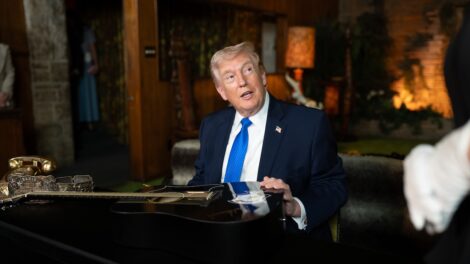
The Republican reckoning: Alli’s sharpest conclusion concerns the GOP. He argues that Republicans must consider whether they can produce leadership less extreme than that represented by Trump and Vice President JD Vance.
- In his assessment, the election marks the exhaustion of a political phase, even though Trump remains president until January 2029.
- That distinction carries practical consequences. A party focused on defending its existing leadership could struggle to absorb the electoral message and prepare for the next national contest.
What comes next: Alli expects considerable turbulence. Trump’s willingness to cooperate with Democrats remains uncertain, while a Democratic-controlled House can use its investigative powers to increase scrutiny of the administration.
- The president’s reaction to defeat — and his advisers’ ability to restrain any desire for retaliation — will help determine the tone of the next two years.
- Democrats face their own test. Alli cautions that rejection of the president does not automatically amount to confidence in the opposition. Internal competition could squander the opening unless the party develops credible leadership around its emerging figures.
The international stakes: Alli expects the consequences to be particularly significant abroad. He considers a weakened Trump favourable to Ukraine and damaging to Vladimir Putin, while also creating difficulties for Netanyahu.
- He is especially critical of the contradictions he sees in Washington’s dealings with Moscow while Russia supports Iran. In his analysis, these overlapping policies have weakened Western democracies relative to authoritarian powers.
Europe’s opening: The presidency retains substantial foreign policy authority, but Congress can influence funding, sanctions and scrutiny of military decisions.
- Alli argues that Europe and the United Kingdom should use the changed balance in Washington to strengthen transatlantic relations, reinforce NATO and secure a more consequential role in diplomacy over Ukraine and the Middle East.
- His closing challenge is directed squarely at European capitals: Americans have demonstrated their ability to change political direction. Their allies now need to demonstrate that they can meet the responsibilities that follow.