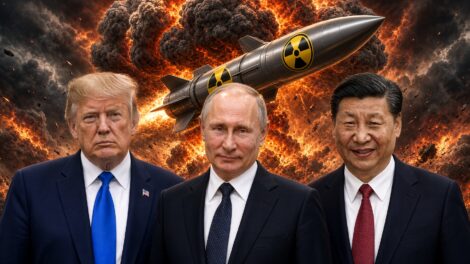

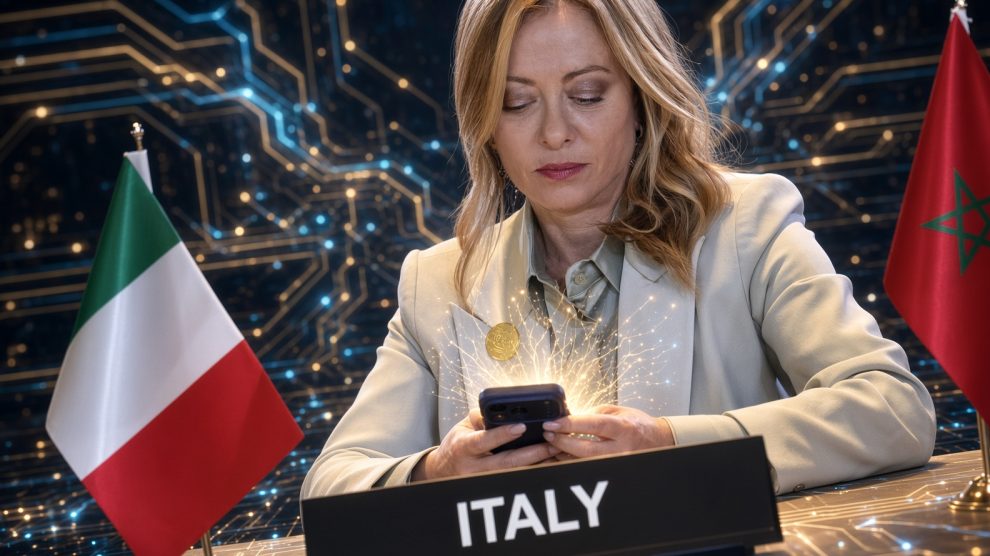
Italian Prime Minister Giorgia Meloni has called for a clear mandate for Europe’s negotiating team on Ukraine, as European leaders gathered in Berlin on Thursday to assess the implications of the Trump-Putin-Xi summit in Shenzhen and coordinate their response to renewed diplomatic contacts with Moscow.
Speaking at the Coalition of the Willing meeting on November 19, Meloni emphasized the need to establish the negotiating framework before engaging Russia. “We now need to give this team a clear mandate: what we ask for, what we offer, and what we will never accept,” she said, according to Italian government sources.
Why it matters: Rome wants Europe to participate directly in determining the conditions of a possible settlement rather than remain dependent on negotiations conducted primarily by Washington and Moscow.
- For Meloni, this objective also involves preserving Italy’s transatlantic relationship while maintaining European coordination and continued support for Ukraine.
- The position follows her earlier initiative to establish a single European negotiating voice, intended to overcome competing diplomatic formats and strengthen Europe’s ability to influence the peace process.
The Berlin format. The meeting brought together members of the Coalition of the Willing, Ukrainian President Volodymyr Zelensky and American representatives following the trilateral summit in China.
- A central development was the emergence of the E5 negotiating format, comprising France, Germany, the United Kingdom, Italy and Poland, supported by the European Commission and European Council.
- The arrangement gives Rome a formal place alongside Europe’s principal diplomatic actors in coordinating positions ahead of possible negotiations.
- Meloni’s insistence on a defined mandate suggests that Italy considers the format valuable only if its members establish common negotiating priorities and clear limits to potential concessions.
The China factor. The Italian prime minister also addressed Beijing’s position following the Shenzhen summit, arguing that China should use its influence over Moscow to encourage a genuine peace process.
- “If China wants to be a force for stability, this is the moment to use that influence to push Russia towards a real peace,” Meloni said. Her remarks place responsibility on Beijing to demonstrate whether its diplomatic influence can produce concrete results.
- The issue is particularly relevant for Rome, which continues to maintain political and economic relations with China while remaining committed to Ukraine’s sovereignty and European security.
- As Decode39 recently examined, Italy’s relationship with Beijing involves a continuing effort to balance engagement with strategic concerns.
The big picture: The Shenzhen meeting has accelerated European discussions over the future negotiating architecture. Washington is seeking to revive negotiations, while Moscow has signaled a possible opening towards a multilateral format involving European representatives. Yet important differences remain over security guarantees, territorial questions and the conditions required for a sustainable settlement.
- Meloni has expressed skepticism about Moscow’s intentions, while reaffirming Italy’s commitment to Ukraine. Rome also maintains its position against deploying Italian troops on Ukrainian territory, even as European partners continue discussing possible post-conflict security arrangements.
- These questions build on Italy’s continuing military and diplomatic support for Kyiv, reaffirmed during the recent European meetings in Dublin.
The bottom line: For Italy, the immediate diplomatic priority is to ensure that renewed US-Russian engagement does not marginalize European governments or Ukraine itself. The E5 format offers Rome a stronger position in that process, but its significance will ultimately depend on whether European coordination translates into a credible negotiating strategy.