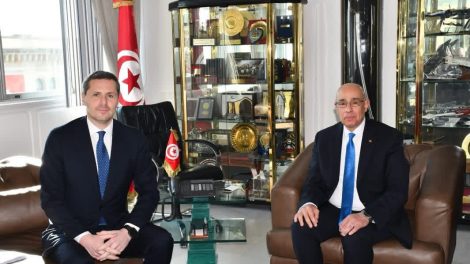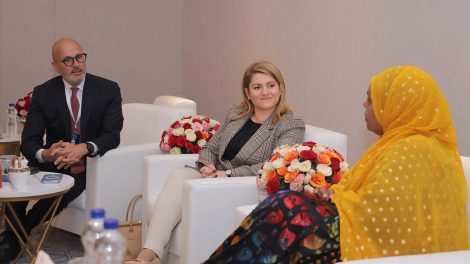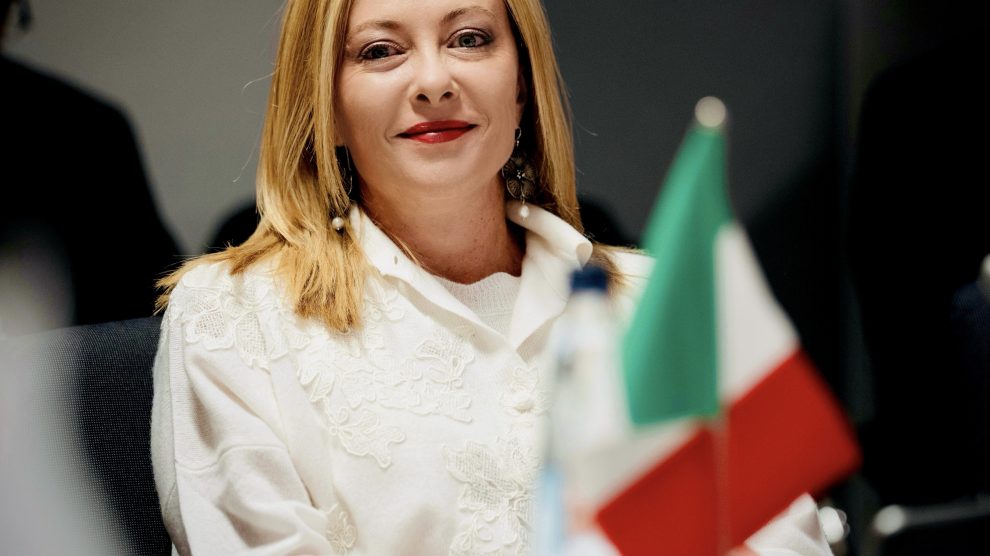
The meeting was led by Prime Minister Giorgia Meloni and Albanian Prime Minister Edi Rama.
Driving the news: Fifteen agreements and technical deals were signed, alongside a comprehensive intergovernmental accord meant to establish a stable and structured framework for bilateral relations.
Why it matters: The summit marked Italy’s intent to formalise its leadership role in the Western Balkans. In this region, Rome aimed to combine strategic influence, migration management, and energy connectivity in line with EU priorities.
- The partnership strengthened Albania’s path to EU accession and cemented its role as a critical bridge between the Adriatic and the broader European infrastructure network.
Between the lines:
-
Migration cooperation remained the most politically visible front. The Italy–Albania migration protocol, signed last year, has become a model closely watched by Brussels as a potential blueprint for future EU deals.
-
Energy and connectivity were central: both countries positioned themselves as regional hubs, with projects like the European Corridor VIII linking the Adriatic to the Black Sea.
-
Defence and security cooperation expanded, reflecting Italy’s broader strategic interest in stabilising the Balkans amid regional hybrid threats and organised crime challenges.
By the numbers:
-
Italy was Albania’s largest trading partner, with bilateral trade exceeding €3 billion and accounting for 20% of Albania’s market share.
-
The Italian delegation included nine ministers, signalling a whole-of-government approach.
The agreements: Italy and Albania signed 16 agreements, ranging from security to development cooperation — a package designed to anchor their partnership in long-term institutional frameworks.
- The centrepiece was the G2G intergovernmental agreement, establishing the political and legal architecture for structured cooperation.
- Cybersecurity featured prominently, with a Foreign Ministries MoU aimed at strengthening national cyber resilience.
- A cluster of development-cooperation instruments — including aid credits and grants — targeted Albania’s Civil Protection system and the neonatal health sector, signalling Italy’s role as primary capacity-builder.
- Interior Ministries signed an MoU on counter-narcotics operations, while the Defence Ministries concluded a defence cooperation agreement, complemented by a technical deal for Italy to deliver two patrol vessels to the Albanian Coast Guard.
- Energy and infrastructure support included a financial convention to upgrade electricity distribution in northern Albania, still affected by the 2019 earthquake.
- The economic pillar included a CDP–Finance Ministry MoU, a SIMEST–AIDA agreement to boost Albanian SMEs, and two industrial defence-sector deals:
- a Fincantieri–Kayo MoU paving the way for a joint venture to modernise the Pashaliman shipyards;
- a Leonardo–Kayo MoU on defence cooperation.
- Cultural and institutional cooperation also expanded, with a MAXXI–National Gallery of Albania agreement and a Tripartite Civil Protection declaration to set up a coordination platform.
The political POV: For Rome, the summit also carried a strong political message. Alberico Gambino, ECR/FdI MEP and Vice President of the European Parliament’s Foreign Affairs Committee, framed the meeting as “a historic turning point in relations between our two countries.”
- He told our sister website Formiche that despite decades of cooperation, “it is only under the Meloni government that a structured, long-term summit has taken place — the result of an approach based not on reaction but on construction.”
- Gambino highlighted that the 15 agreements on defence, energy, infrastructure and migration outlined a “strategic and operational partnership,” from naval cooperation to renewable energy development and shared migration management. The outcome, he said, established a stable model of institutional cooperation between two countries “bound by history, interests and common perspectives.”
- As shadow rapporteur on Albania files in the EP’s Foreign Affairs Committee, Gambino welcomed the result as one that strengthened both Tirana’s EU path and Italy’s centrality in the Western Balkans.
The big picture: Rome’s renewed focus on Albania fit into Giorgia Meloni’s broader regional doctrine — a mix of pragmatic diplomacy, security engagement, and migration management designed to project Italy’s influence in the Mediterranean and the Balkans.
It also came as the EU prepared to open the final negotiation chapter for Albania’s accession, with Italy serving as its strongest advocate in Brussels.
What we were watching:
-
Whether the Italy–Albania model on migration would influence upcoming EU reforms.
-
How the energy corridor projects would progress, especially under EU connectivity frameworks.
-
The following steps in Albania’s EU accession process, which were likely to accelerate under Italian diplomatic sponsorship.