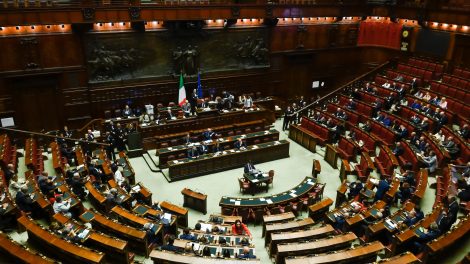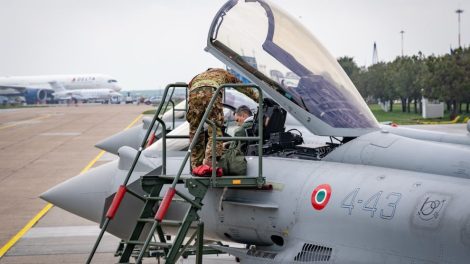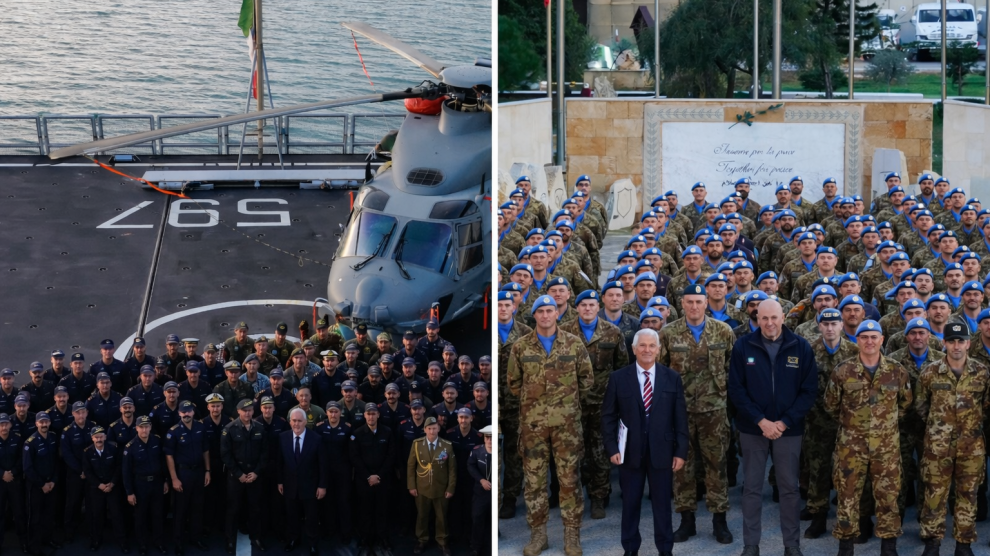
The visits demonstrate that defence and diplomacy are moving in lockstep, from the Levant to the Red Sea.
Why it matters: Rome is reaffirming its role as a security provider within multilateral frameworks, not a peripheral actor. The end-of-year timing underscores strategic continuity, rather than a reset, as we head into 2026.
The common thread: Both ministers chose to visit active Italian operational missions, not capitals or conference rooms.
- In Lebanon, Crosetto focused on UNIFIL and the broader international presence supporting stability.
- In Djibouti, Tajani highlighted Italy’s role in maritime security through the EU’s mission “Aspides” and the Italian military base, which supports operations in the Horn of Africa and beyond.
- Different theatres, same logic: presence equals influence; absence creates risk.
Crosetto: stability as a political choice. Addressing Italian troops in Lebanon, Crosetto framed the mission as a deliberate act of responsibility: “What would have happened if we had not been there?”
- He described Italy’s military presence as more than operational, rooted instead in “respect, listening, and dialogue,” adding:
“Your service builds Italy’s reputation in the world. It is this reputation that makes Italy stronger.” - On UNIFIL, the message was explicit: Italy sees international peacekeeping as a long-term stabilising investment, not a temporary deployment.
Tajani: security as an economic imperative. Speaking aboard the Italian frigate Antonio Marceglia in Djibouti, Tajani directly linked military presence to national interests:
“Without your presence, we would have suffered enormous economic damage.”
- He warned that Houthi attacks in the Red Sea would have forced merchant ships to reroute around Africa,
“causing insurance costs to increase immensely, with enormous risks to human lives and to the commercial products that Italy exports to the East, the Far East and the Indo-Pacific.” - Tajani stressed that, thanks to the mission, “476 merchant vessels instead transited safely.”
Indo-Mediterranean logic. From southern Lebanon to Bab el-Mandeb, Rome is operating along a single strategic arc:
-
- deterrence and stabilisation,
- protection of trade routes,
- containment of spillover risks such as terrorism and irregular migration.
- Africa and the Middle East are treated not as separate dossiers, but as interconnected spaces directly affecting Italian and European security.
The year-end message. Though framed as end-of-year visits, both missions function as a statement of continuity.
- As Tajani put it in Djibouti,
“For us, stability in this part of the world is important,”
a formulation that mirrors Crosetto’s emphasis on responsibility and presence. - The takeaway: Italy is closing 2025 by reaffirming, not revising, its strategic line.
The bottom line: Ministers Crosetto and Tajani are delivering the same message from different fronts:
Italy’s role in the Indo-Mediterranean is built on staying power, multilateral engagement, and the fusion of security and national interest. Not a farewell tour — but a marker of where Rome intends to stand in 2026.
(Photo: X, @GuidoCrsoetto, @antonio_tajani)