Decoding the news: The designation of the IRGC as a terrorist organisation is more than a symbolic act: it is a strategic signal through which the EU seeks to realign deterrence, credibility, and the protection of rights, identifying the IRGC as both the backbone of domestic repression and a power infrastructure shaping Tehran’s external posture.
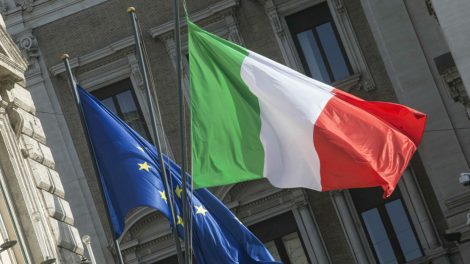
- The decision, adopted unanimously by the 27, stems from a political initiative led by Italy. Foreign Minister Antonio Tajani had publicly announced, three days earlier, that he would bring the proposal to the Council.
- From the Italian perspective, repression cannot be separated from security: the EU is imposing a political and legal cost on the apparatus that enables it, while moving closer to the line already taken by allies, foremost the United States.
The context: The move follows weeks of violent repression of protests in Iran, with human rights organisations estimating thousands of deaths. It unfolds against a backdrop of growing European alarm over Tehran’s behaviour, both domestically and in terms of regional security.
- Repression cannot go unanswered, EU High Representative Kaja Kallas said when announcing what she described as a decisive step. Kallas stressed that the IRGC is now placed on the same level as jihadist groups such as al-Qaeda and the Islamic State, while maintaining that diplomatic channels with Tehran would formally remain open.
Behind the scenes: Italy’s push. The decision did not emerge spontaneously. It was openly promoted by Italy, with Foreign Minister Antonio Tajani stating, three days before the Foreign Affairs Council, that he would arrive in Brussels with a formal proposal to include the IRGC on the EU’s terrorist list.
- According to diplomatic sources, Italy’s line was immediately backed by Germany, while other countries, notably France and, to a lesser extent, Spain, initially voiced reservations. The main concern was that designating the IRGC could end any remaining diplomatic engagement with Tehran.
- The turning point came in the final hours, when Paris shifted its position, acknowledging that the scale and brutality of the repression made a wait-and-see approach politically untenable.
- French Foreign Minister Jean-Noël Barrot described the crackdown as the most violent in Iran’s modern history, stressing that there could be no impunity for crimes committed.
- The outcome was a unanimous decision, reflecting a European convergence around a line seen as one of political common sense and consistent with that already adopted by key allies, first and foremost the United States.
What the decision entails. Adding the IRGC to the EU terrorist list triggers asset freezes, travel bans, and targeted sanctions aimed at dismantling its support networks.
- In parallel, the EU imposed new sanctions on six entities and 15 individuals in Iran, including Interior Minister Eskandar Momeni, Prosecutor General Mohammad Movahedi-Azad, and presiding judge Iman Afshari, all deemed directly involved in the violent repression of protests.
Between diplomacy and deterrence. The European decision does not formally close the door to dialogue, but it sharply raises the political cost for Tehran. As Kallas underlined, any regime that kills thousands of its own citizens is working toward its own demise.
- For Brussels, and especially for Rome, the designation of the IRGC represents a test of political credibility.
- The EU has shown it can turn a national initiative into a common line when circumstances demand it.
Transatlantic alignment and credibility. According to Emanuele Ottolenghi, senior research fellow at the Center for Research on Terror Financing (CENTEF), the EU’s decision is “likely to be welcomed in Washington.”
- “The United States has sanctioned the IRGC as a terrorist organisation for years and has repeatedly encouraged Europeans to do the same,” Ottolenghi said. “This is an important step that aligns Europe and the U.S. in punishing the praetorian guard of Iran’s dictatorial regime and could facilitate more effective joint action.”
- On credibility, Ottolenghi pointed to the 2005–2015 period, when EU-U.S. coordination on sanctions intensified after Iran’s violent repression of the Green Movement. “Washington knows the weight of a European decision that corners Tehran and values it,” he said. “In the past, it criticised hesitation more than pressure.”
Sanctions, propaganda and diplomacy. Ottolenghi said the designation opens the door to further steps. “The EU could align its sanctions more closely with U.S. measures, which already target a wide range of IRGC-linked economic, financial and military entities,” he said. “Expanding the European list would be relatively easy and would increase the effectiveness of the measures just adopted.”
- He also pointed to Iran’s overseas influence networks. “Cultural centres, schools and religious seminaries controlled by the Iranian regime could be shut down, including those linked to Al-Mustafa University,” Ottolenghi said, describing it as “a regime institution funded directly by the Supreme Leader’s office and identified by U.S. and Canadian authorities as a facilitator of terrorism and propaganda with clear ties to the IRGC.”
- Media operations could be another target. “State channels such as Press TV and Hispan TV, which aired forced confessions of protesters, could be taken off air in Europe, their websites blocked and their satellite distribution halted,” he said.
What to watch now:
- whether and how Iran responds on the diplomatic front;
- whether other European states will follow up with additional national measures;
- and whether this move will further strengthen transatlantic coordination on the Iran dossier.
The bottom line: Ottolenghi warned about diplomatic cover. “Many IRGC members operate under diplomatic cover in Iranian embassies, engaging in intelligence activities and intimidation of dissidents in exile,” he said. “Suspending diplomatic relations and expelling such personnel is also an option that should be considered.”