“Artificial intelligence will be the best or the worst thing ever to happen to humanity.” Elon Musk’s remark has become almost a cliché in public debate, yet it retains a precise analytical value for policymakers and investors alike. AI is not a technology like any other. It is a structuring force, reshaping the distribution of economic, industrial and strategic power on a global scale. This is precisely why competition over artificial intelligence is no longer confined to algorithms alone, but extends across the entire value chain that makes them possible.
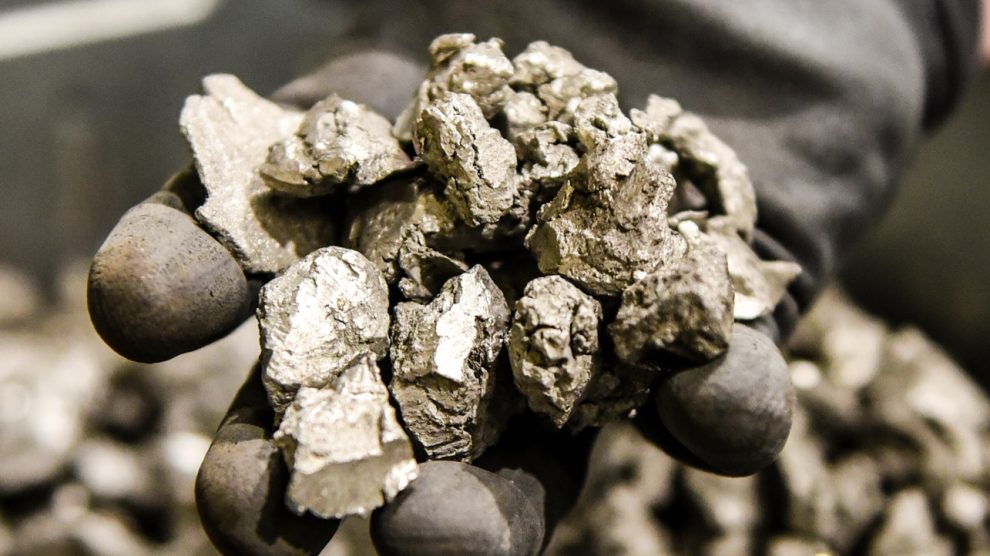
Decoding the news: Silicon, rare earths, critical minerals, energy, digital infrastructure, data centres, manufacturing capacity and logistics have become the real nodes of competition — the upstream foundations of technological leadership.
- Control over these segments increasingly shapes not only technological leadership, but also long‑term growth prospects and national security in the twenty‑first century.
- Not surprisingly, Donald Trump is poised to provide a $12 billion budget to create a strategic stockpile of critical minerals.
The Washington meeting: It is within this framework that the Critical Minerals Summit in Washington on February 4 should be read. The meeting places at the center of the Western agenda an awareness that is now widely shared: without secure and resilient access to critical minerals, the ambition to lead the historical process driven by artificial intelligence risks remaining incomplete.
- This is a matter that touches what policymakers increasingly describe as economic security, given that the value chain linking these elements is dominated by a single actor—China—whose scale and integration give it an outsized ability to shape market conditions and, at times, strategic outcomes.
- The summit also comes at a politically sensitive moment, marked by lingering transatlantic frictions, trade tensions, and China’s persistent structural advantage in extraction and refining supply chains. Beijing maintains a dominant position in key segments, particularly in rare earth processing, transforming industrial dependence into geopolitical leverage.
- This is a reality that Washington and Brussels, Tokyo and London alike, can no longer afford to ignore.
- As a result, while keeping open the possibility of a Trump-style “grand bargain” with the People’s Republic of China, the U.S. administration has in recent months accelerated public investment in domestic mining and in strengthening recycling capabilities, aware that vulnerability concerns not only extraction, but the entire lifecycle of strategic materials.
- The most delicate debate remains pricing. Some partners, particularly Australia, are pushing for stabilization mechanisms or the introduction of price floors for critical minerals—tools designed to reduce volatility that discourages private capital. Washington is proceeding cautiously, but the mere fact that the issue is on the table signals how blurred the boundary between market dynamics and national security has become.
Italy’s role in the emerging supply‑chain architecture. In this context, Italy’s participation reflects a broader European effort to remain embedded in US‑led discussions on supply chain security at a time of renewed transatlantic strain. Rome will be represented by foreign minister and deputy prime minister Antonio Tajani, one of the European officials most active in maintaining a stable channel of dialogue with Washington.
- His presence underscores an attempt by several European capitals to position themselves within emerging critical‑minerals frameworks rather than respond to them from the outside.
- A possible joint statement at the margins of the summit would therefore carry significance beyond diplomatic formulae, signalling convergence around a shared strategic priority.
- “On Wednesday I will take part in Washington in the meeting organised by secretary of state Marco Rubio on raw materials. Americans, Europeans, Koreans and Japanese all share a common interest in addressing this commercial and industrial challenge posed by China, which is our competitor,” Tajani told Corriere della Sera on Sunday.
A paradigm shift. It is precisely in the transition from summit reporting to deeper strategic analysis that a key element emerges: both continuity and a paradigm shift in U.S. policy. The United States has never abandoned its priority focus on securing technological value chains.
- Already under the Biden administration, through the Mineral Security Partnership (of which Italy is a member), Washington had recognized the structural nature of the problem, attempting to address it through a multilateral framework based on shared values, standards, sustainability, and cooperation among like-minded countries.
- That model, however, has shown clear limitations: extensive diplomacy, limited tools to influence high‑risk investments, long time horizons, and continued exposure to market volatility.
- It is from this assessment that Pax Silica emerged — the initiative launched by the Trump administration to address the same priority, the security of AI-related supply chains, through a far more pragmatic approach.
- The conceptual contours of this shift were recently outlined by Under Secretary of State for Economic Affairs Jacob Helberg in a speech at the Hudson Institute.
- Helberg made explicit the reversal of the prevailing paradigm: economic integration does not guarantee geopolitical stability, because supply chains are not neutral. On the contrary, they have become the primary arena of strategic competition.
- Before turning to the policy instruments now being deployed, the strategic logic underpinning this shift has also been articulated in Washington’s policy debate. The emphasis has increasingly moved away from abstract interdependence and towards the concrete mechanics of power embedded in supply chains.
The Hudson’s remarks. Speaking at a think tank closely associated with the US conservative establishment on national security and strategic competition, Helberg described the race for artificial intelligence as a struggle over the architecture of the twenty‑first century.
- A struggle unfolding along three fronts: the quality of innovation, the ability to impose systems and standards as global defaults, and the security of physical and digital foundations.
- From this logic comes “Pax Silica,” conceived not as a forum for dialogue, but as a coalition of capabilities—an ecosystem combining resources, capital, technology, manufacturing, and industrial demand across the entire value chain.
- Made public in mid-December, the U.S. strategy on critical minerals has already taken a more interventionist path, based on “hard” state-capitalism tools: equity stakes, direct loans, long-term offtake agreements, and, in some cases, price guarantees.
- The emblematic case is the agreement with MP Materials, supported by the Department of Defense, designed to stabilize a sector exposed to extreme volatility and reduce dependence on external suppliers.
Investment and strategy. The logic is simple but powerful: where markets struggle to sustain strategic investments, the state intervenes to signal long‑term credibility, attract private capital and accelerate the deployment of critical capacity. This approach is not confined to U.S. territory.
- Through instruments such as the Development Finance Corporation and the Export-Import Bank, Washington extends its influence to mining and industrial projects abroad, linking access to capital with economic security objectives. In other words, there is space for allies.
- In essence, with Pax Silica — which, according to informed sources, Secretary of State Marco Rubio will devote almost his entire opening address at Wednesday’s summit to — the Trump administration is attempting to bring coherence to a multiplicity of initiatives, overcoming the fragmentation of the previous phase.
- Yet it is precisely here that its structural tension emerges. A coalition of capabilities requires predictability and trust, while the simultaneous use of unilateral tools—tariffs, political leverage, strategic conditionality—risks transforming partnership into hierarchy.
The bottom line: In this sense, Pax Silica may be the most sophisticated expression of Washington’s new economic diplomacy, but also one of the most demanding to sustain over time. Its credibility — and that of the broader US strategy on critical minerals and the AI value chain—will depend on the ability to balance leadership with cooperation, and national security imperatives with economic viability.
- In a world in which artificial intelligence has become a central force multiplier, the contest is not only about who innovates fastest, but about who can offer investors, manufacturers and allies a predictable ecosystem in which that innovation can be scaled, financed and secured over time.