Decoding the news: Italy is positioning itself as a core Western partner in the emerging U.S.-led architecture on critical minerals, supply-chain security, and defense-related industrial policy—signaling alignment not just in rhetoric, but in strategic intent.
The big picture: As the U.S. accelerates efforts to de-risk critical mineral supply chains away from China, Rome is stepping forward as a transatlantic stakeholder that understands both the urgency and the strategic logic of Washington’s approach.
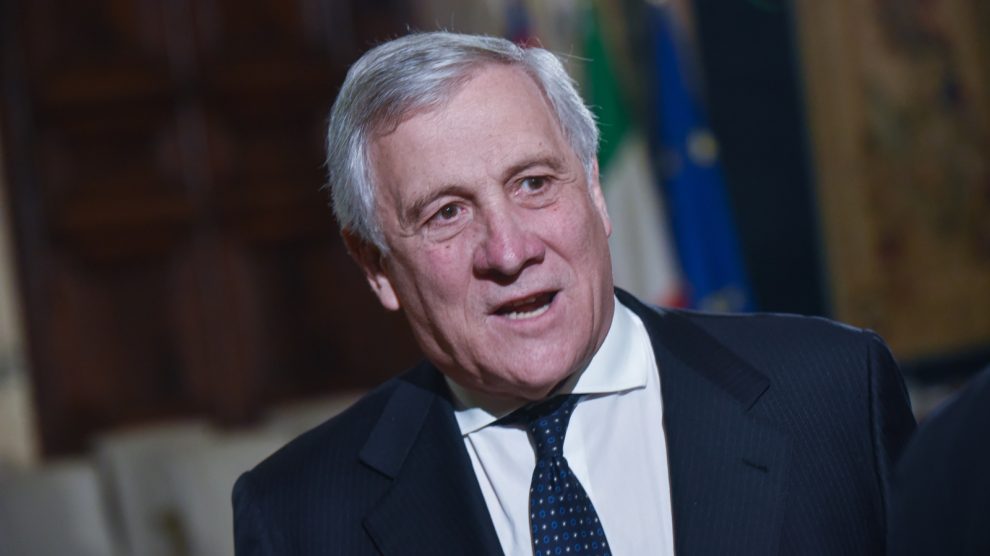
What’s happening: Italy’s Foreign Minister Antonio Tajani took part in the international coalition meeting on critical minerals in Washington, alongside around 50 countries including the UK, Japan, India, South Korea, Australia, Israel, and EU institutions.
- The message is clear: maintaining the current status quo—characterized by China’s dominant position in pricing and processing—is no longer sustainable for Western industrial and defense ecosystems.
What Italy is saying: Tajani framed the issue squarely in market terms. China, he argued, effectively sets prices for key raw materials—particularly rare earths—undermining fair competition and weakening Western industrial competitiveness.
- The quote: “Critical raw materials are fundamental for industrial countries like ours. Italy is the second-largest industrial power in Europe and the world’s fourth-largest trading nation. If we want to remain competitive, we cannot be forced to purchase raw materials under a de facto monopoly.”
- “This is why we need agreements with African countries, Latin America, and Asian partners—so that alongside China’s dominant position, which today allows it to set prices for roughly half of global raw materials, credible alternatives and an alternative market can exist.”
- Italy’s position is that global competition cannot function if Western industries start structurally handicapped. A coordinated strategy among the U.S., Europe, Japan, South Korea, India, and partner countries is needed to secure access to affordable, reliable critical inputs.
- Importantly, Rome stresses this is not about hostility toward China, but about restoring real competition and market balance.
The transatlantic angle. Italy sees critical minerals as a natural extension of the broader EU–U.S. strategic partnership—on par with energy security, technology, and defense.
- Together with Germany, Rome has already submitted policy guidance to the European Commission urging stronger EU engagement on:
- upstream and processing capacity development
- strategic stockpiling (go deeper with Italy’s new announcement)
- recycling and circular supply chains
- technological innovation, including semiconductors
- For Italy—Europe’s second-largest industrial power—securing competitive access to raw materials is seen as an industrial survival issue.
Why Africa matters: Beyond the EU–U.S. axis, Italy is pushing for deeper engagement with third countries—especially Africa—through joint ventures focused on local processing rather than simple extraction.
- This approach aligns with Italy’s broader Africa strategy and reflects a U.S.-shared interest: building resilient, diversified supply chains while offering partner countries economic value and industrial development.
- Rome has made clear it is ready to scale up investment and coordination with Washington over the coming months.
Defense and security link. Critical minerals are also framed as a defense issue.
- Italy is advocating a stronger European pillar within NATO while reinforcing cooperation with the U.S. on defense industrial policy—recognizing that supply-chain resilience underpins military readiness.
- Tajani also confirmed that Italian authorities recently thwarted a series of cyberattacks targeting diplomatic infrastructure and high-profile sites, attributing them to Russian-linked actors—underscoring the hybrid threat environment surrounding strategic industries.
The bottom line: Italy is signaling that it does not sit on the sidelines of U.S.-led economic security initiatives.
- Instead, Rome is presenting itself as a politically aligned, industrially capable, and strategically aware partner—fully embedded in the Western system that is now redefining how critical minerals, security, and competitiveness intersect.