What happened: Kremlin-aligned propagandist Vladimir Solovyov launched a personal attack on Italian Prime Minister Giorgia Meloni on live television, calling her a “fascist” and a “prostitute” and accusing her of betraying both her voters and U.S. President Donald Trump.
- The remarks triggered a swift and unusually unified response across Italy’s political spectrum — including from the opposition.
- Meanwahile, “I summoned Russian Ambassador Paramonov to the Ministry of Foreign Affairs to lodge a formal protest following the extremely serious and offensive remarks made by television host Vladimir Solovyev on Russian television regarding the Prime Minister,” annoucend Foreign Minister Antonioni Tajani.
The timing. Solovyov, one of the most visible figures in Russia’s state-aligned media ecosystem, made the remarks during a segment on European leaders. The timing was notable.
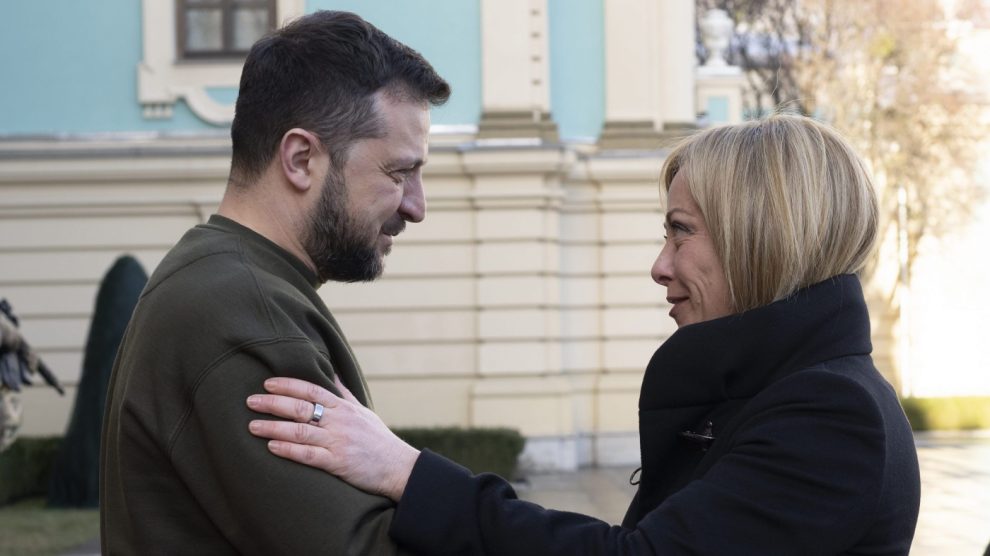
- The attack came just days after Meloni hosted Ukrainian President Volodymyr Zelensky in Rome, where she reaffirmed Italy’s support for Kyiv — a stance that continues to place Italy firmly within the Western front backing Ukraine.
A pattern, not an outlier. The episode fits into a broader pattern.
- Italian institutions — including senior government figures and the head of state — have repeatedly been targeted by Kremlin-linked media narratives since the start of the war in Ukraine.
- As Rome has consolidated its pro-Kyiv positioning, the tone and frequency of these attacks appear to have intensified, suggesting a growing sensitivity in Moscow to Italy’s role within the European alignment.
Rome closes ranks. The political reaction was immediate — and unusually cohesive.
- Fratelli d’Italia parliamentary leaders Galeazzo Bignami and Lucio Malan condemned the remarks as “inadmissible,” framing them as further evidence of Russia’s “hostile attitude” toward Italy under Vladimir Putin, and explicitly called on opposition figures to respond.
- That call was answered — most notably by Five Star Movement leader Giuseppe Conte.
- Despite longstanding tensions with the governing coalition, Conte issued a clear statement of solidarity with Meloni, denouncing the “unacceptable and vulgar personal insults” directed at the prime minister. His intervention marked a politically significant moment, cutting across Italy’s usual partisan divides.
- From within the governing majority, reactions were equally firm.
- Senate Vice President Licia Ronzulli described the episode as a symptom of the “deterioration of political and media language promoted by Kremlin-aligned propaganda.”
- Forza Italia Senate leader Stefania Craxi stressed that such attacks would not alter Italy’s “coherent and responsible” international posture, while Noi Moderati senator Mariastella Gelmini called the remarks a “shameful attack” deserving unequivocal condemnation.
The broader signal. Beyond the rhetoric, the episode highlights a clearer dynamic: as Italy deepens its strategic alignment with Western positions on Ukraine, it is increasingly being drawn into the crosshairs of Russian information operations.
- The attacks themselves are unlikely to shift Rome’s posture. But the reaction they triggered may be just as significant.
- The rapid convergence between government and opposition suggests that, at least on this front, external pressure is reinforcing — rather than fracturing — Italy’s political consensus.