Why it matters. The Italian debate over Ukraine’s place in Europe is becoming a test of how Russian pressure, domestic populism and European security guarantees intersect inside one of Kyiv’s key EU partners.
- Former Italian prime minister Giuseppe Conte has said that Ukraine “cannot enter Europe now,” arguing that the conditions are not there and that the EU’s mutual assistance clause would risk dragging member states into war with Russia “tomorrow morning.”
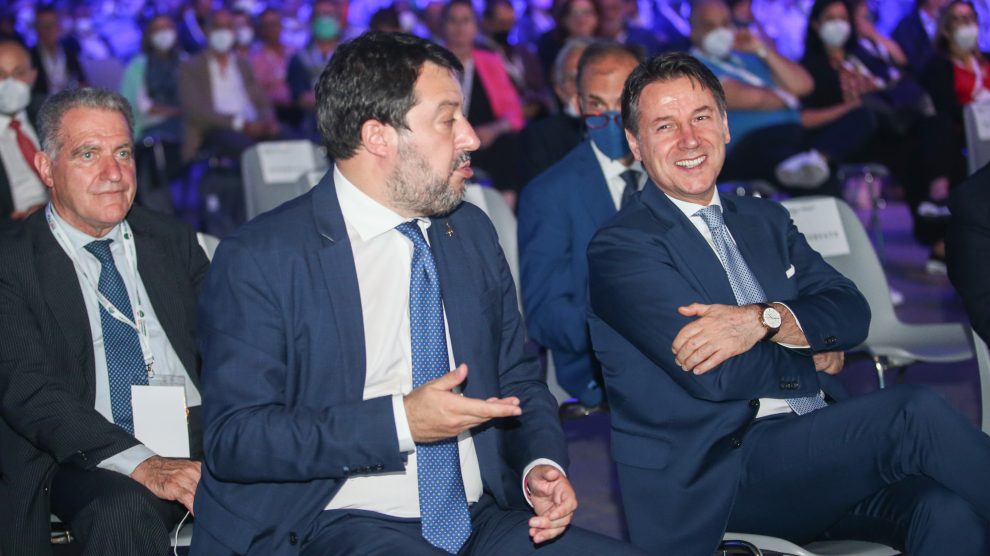
- The line closely follows the position taken by Matteo Salvini, deputy prime minister and League’s leader, which has rejected any hypothesis of Ukraine joining the European Union and framed Kyiv’s accession as an economic and social burden for the bloc.
- The convergence is politically familiar. It revives the old “yellow-green” axis between Movimento 5 Stelle and Lega Nord: formally on different sides of Italy’s parliamentary map, but often aligned when the issue is Ukraine, weapons, sanctions or the strategic cost of confronting Moscow.
The big picture. The timing is hard to ignore. While Rome’s populist flank questions Ukraine’s European future, a Russian-origin drone has hit a residential block in Galați, Romania, injuring civilians and forcing the evacuation of dozens of residents.
- Romania is an EU member and a NATO ally on the eastern flank.
- That does not mean Moscow deliberately targeted Romania. But it does show what the war has already become, a rolling security crisis that repeatedly spills into European territory, airspace and infrastructure.
- Italian Prime Minister Giorgia Meloni called it “an extremely serious act,” saying it shows that “this war of aggression spares no one, continuing to brutally hit innocent civilians, ignoring every limit and putting European security at risk.” Her statement reinforces the government’s line that Russia’s war is a direct challenge to Europe’s security perimeter.
Between the lines. Conte’s argument is built around a legal and political point:
- Article 42.7 of the Treaty on European Union, the bloc’s mutual defence clause. In his framing, admitting Ukraine while it is still at war would automatically expose the EU to direct conflict with Russia.
That concern exists in parts of the European debate. But the way it is being deployed in Italy mirrors a broader narrative useful to Moscow:
- Ukraine’s integration into Western institutions is presented as a mechanism of escalation where enlargement becomes a threat.
- The argument does not need to endorse Russia’s war to serve part of Russia’s messaging architecture. It only needs to turn the consequences of Russian aggression into a reason to slow, dilute or freeze Ukraine’s European trajectory.
Where Rome stands. The Italian government’s official position remains more favourable to Kyiv’s EU path, although with caution on timing and procedure.
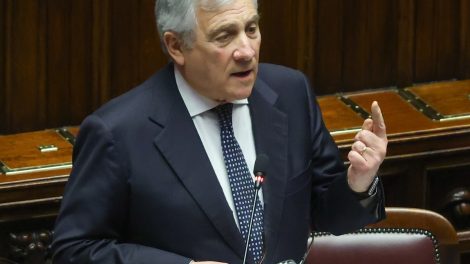
- Foreign Minister Antonio Tajani has said Italy supports a process leading Ukraine into the Union, while stressing reforms, anti-corruption requirements and the need not to forget the Western Balkans.
- Giorgia Meloni has built much of her European credibility on support for Ukraine, while Salvini continues to speak to an electorate wary of military aid, sanctions and further confrontation with Russia.
- Conte’s move adds pressure from the opposition side, in which Ukraine remains a useful dividing line with the Democratic Party and a way to contest what it describes as Europe’s failed military strategy.
What to watch. Brussels is preparing to move forward with Ukraine’s accession negotiations, starting with the first negotiating cluster.
- Every step will require political cohesion among member states, and every hesitation will be read in Kyiv, Moscow and Washington.
- For Italy, the issue is whether the Ukraine file remains a government policy or becomes another battlefield in the domestic struggle between Atlantic discipline and populist ambiguity.
- For Europe, the question is sharper. If a Russian drone can strike an apartment building inside the EU while European parties argue that Ukraine’s accession would “bring war” into the Union, Moscow has already achieved part of its objective: making the cost of defending the European order look higher than the cost of revising it.
The bottom line. Conte and Salvini are not reopening an abstract debate on enlargement. They are testing the political resilience of Europe’s Ukraine policy at the very moment Russia is testing the physical resilience of Europe’s borders.