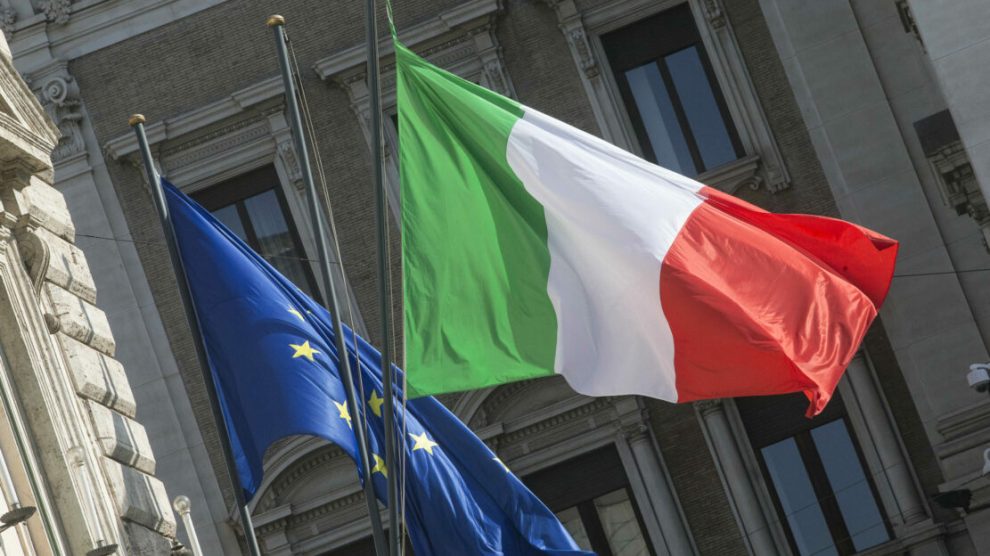
Italy is positioning itself in the evolving Caucasus landscape with a clear formula: remain firmly anchored within the European framework while leveraging its privileged relationship with Azerbaijan to turn an already solid economic interdependence into a more visible political presence.
The Yerevan–Baku sequence. On May 4, Meloni will attend the European Political Community summit in Yerevan. On Tuesday, May 5, she will travel to Baku for a bilateral visit.
- The sequence itself is more telling than the sum of its parts.
- First comes the broader European format, where security and stability in the Caucasus are discussed. Then comes the direct engagement with the partner that matters most to Rome in the region—energy, trade, and increasingly, industry.
- The Armenian stop coincides with the first EU–Armenia summit, also held in Yerevan on May 4–5 and led by EU institutional leaders alongside Prime Minister Nikol Pashinyan.
- Meloni is not part of that format. Still, she operates within the same diplomatic space and timing—precisely when Brussels is strengthening ties with Yerevan—making the immediate pivot to Baku even more significant.
Beyond Energy: A broader lever. At this point, the trip stops being just an energy mission.
- Italy is not simply seeking additional gas volumes. It is pursuing a broader lever: greater room for maneuver across Euro-Caspian corridors and more weight at European tables where the continent’s energy geography is being shaped.
- With Azerbaijan, the relationship is already structural. Italy has long been the country’s top trading partner and the primary destination for its hydrocarbon exports, at times accounting for more than half of total exports.
- At this level of density, a relationship rarely remains purely economic—it inevitably produces political effects.
Italy as an energy hub. For Rome, Baku matters above all as a node.
- The Trans Adriatic Pipeline (TAP), according to Snam’s 2026–2030 strategic plan, covered around 16% of Italy’s gas demand in 2025. From 2026, its capacity increased by an additional 1.2 billion cubic meters per year.
- Since January, Azerbaijani gas has begun reaching Austria and Germany via Italy for the first time—extending the Caspian corridor from Southern Europe into the core of the European market.
- Politically translated: the Italian government is trying to leverage its role as an energy terminal not just to secure supply, but to enhance its centrality in European debates on energy security and connectivity.
Economic Diplomacy in Action. The January 2026 mission of Deputy Minister Edmondo Cirielli reactivated the intergovernmental economic commission and led to a Joint Action Plan for 2026–2027.
- The plan spans dozens of initiatives across more than a dozen sectors: energy, infrastructure, space, agribusiness, tourism, customs, and humanitarian demining.
- At the table sat not just political representatives, but also ICE, SACE, Cassa Depositi e Prestiti, Simest, Eni, Italferr, and SMEs.
- This signals a diplomacy that aims not just to engage a country—but to embed itself within its economic development.
A Selective Regional Strategy. Italy’s approach reveals a clear pattern.
- Azerbaijan plays the central role. Georgia remains key as a transit and connectivity space. Armenia carries political and symbolic weight—especially as the EU upgrades its engagement—but does not generate the same level of material interdependence as Baku.
- In essence, Italy’s strategy is European in framework, selective in interests, and Azerbaijan-centric in substance.
Industry Footprint: The Real Backbone. The industrial geography reinforces this strategy.
- Snam holds a 20% stake in TAP, helping manage the infrastructure that makes Italy the European endpoint of the Southern Gas Corridor.
- Eni and SOCAR signed three MoUs in 2024 on energy security, emissions reduction, and biofuels.
- Ansaldo Energia is tied to the “8 November” power plant in Mingachevir, a symbol of Azerbaijan’s энергетic modernization.
- Leonardo signed a 2023 contract for C-27J aircraft and expanded into defense and aerospace cooperation.
- Italian presence also includes firms like Saipem, Technip Italia, and Maire across strategic sectors.
The Risk Side of the Equation. There is, however, a more exposed side.
- The more Italy invests in the Caspian corridor, the more its centrality in European discussions grows — but so does its vulnerability.
- The route crosses a still unstable region, shaped by Russian competition, Turkish influence, and internal fragilities.
- The extension of Azerbaijani gas flows to Austria and Germany via Italy underscores Rome’s importance—but also highlights the downside: every strategic lever in the Caucasus is also a new exposure.
The Bottom Line: Italy is practicing a measured form of realpolitik in the Caucasus. It is not seeking a balanced posture among all regional actors. Instead, it is pursuing a manageable strategic utility.
- Yerevan reinforces Italy’s anchoring within the European framework, at a time when the EU is redefining its role in the region.
- Baku secures the point where energy, industry, and influence intersect for Rome.
- Azerbaijan matters to Italy today not just for gas, but as a gateway to transform functional dependence into a more autonomous political presence.
- The upside is clear: greater weight along the corridors linking the Caspian, the Mediterranean, and Europe. The risk is equally clear: every step forward comes with increased strategic exposure.