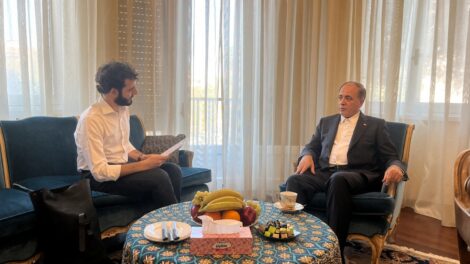

“What is happening in Lebanon is connected to the Iranian issue.” With that observation, Orna Mizrahi, senior researcher at Tel Aviv’s Institute for National Security Studies (INSS), summarized one of the main dynamics behind the latest tensions between the United States and Iran, during a briefing organized by the Embassy of Israel in Italy.
- Recent Iranian strikes against Kuwait and Bahrain, the subsequent US response, and the renewed deadlock in negotiations have pushed the Gulf back to the centre of the region’s overlapping crises. Yet beyond the exchange of missiles, interceptions and threats around the Strait of Hormuz, another arena is becoming increasingly relevant: Lebanon.
- According to Mizrahi, the Trump administration’s growing attention to Israel’s northern front reflects the interconnected nature of the region’s conflicts. “The Americans understand that Lebanon is connected to the negotiations with Iran,” she argued, warning that any deterioration on the Lebanese front could have direct repercussions on the diplomatic track with Tehran.
The latest escalation came as US-Iran talks entered a particularly difficult phase. Earlier this week, the Iranian news agency Tasnim, which is close to the Islamic Revolutionary Guard Corps, reported that Tehran had suspended negotiations in protest over renewed Israeli military operations in Lebanon. Despite the ceasefire, Israeli forces have intensified their activities in southern Lebanon in recent weeks, returning to areas they had not entered since 2000.
- The issue has also generated friction between Washington and Jerusalem. Shortly after Israeli Prime Minister Benjamin Netanyahu signalled the possibility of new strikes against Beirut, US President Donald Trump reportedly intervened to halt the operation, underscoring the White House’s desire to prevent a new escalation on the Lebanese front while preserving the diplomatic channel with Tehran.
- For Mizrahi, the growing overlap between the Iranian dossier and developments in Lebanon explains why events along Israel’s northern border are now being watched so closely in Washington. “Trump wants a deal,” she said, adding that the administration is trying to avoid developments that could derail negotiations at a delicate moment. Lebanon is no longer merely a peripheral theatre of regional competition. It has become one of the variables capable of influencing the outcome of US-Iran negotiations.
Lebanon’s place in the negotiations. In Mizrahi’s view, Tehran is seeking to demonstrate that it still retains influence over its regional allies. From this perspective, Hezbollah is not simply a Lebanese actor or a threat to Israel. It is also an instrument through which Iran can strengthen its negotiating position vis-à-vis Washington.
- “Iran wants to show that it still has influence over Hezbollah,” Mizrahi observed during the briefing organised by the Israeli Embassy in Rome. The Israeli researcher argues that one of Tehran’s objectives is to secure greater stability on the Lebanese front as part of the broader diplomatic process.
The logic is twofold. On the one hand, Iran wants to prevent Hezbollah — weakened by months of conflict, Israeli military pressure and mounting domestic criticism — from suffering further losses. On the other, it wants to show Washington that it remains capable of influencing the key actors of the so-called Axis of Resistance, reinforcing its claim to be an indispensable interlocutor in any regional stabilisation effort.
- That interpretation helps explain why the White House continues to invest political capital in negotiations despite the mounting difficulties of recent weeks. As Mizrahi put it, “Trump needs achievement.”
- After months of confrontation, the administration is facing a diplomatic challenge that combines regional security, energy stability and domestic political considerations. A deal capable of reducing tensions in the Gulf while freezing some of the region’s active fronts remains one of Washington’s primary objectives.
A gap between US and Israeli priorities. From an Israeli perspective, however, the problem extends beyond the nuclear file.
- One of the most significant observations emerging from Mizrahi’s remarks concerns the role of Iran’s regional proxies. Even if Washington and Tehran were able to reach an agreement, she argues, the issue of Iranian-backed militias would likely remain unresolved.
- “The negotiations are about the nuclear issue, not about the proxies,” she noted, echoing a criticism long associated with the 2015 Joint Comprehensive Plan of Action (JCPOA), which focused on Iran’s nuclear programme while leaving broader regional dynamics largely untouched.
- The distinction highlights a difference in priorities between the two allies. For Washington, the immediate focus remains Iran’s nuclear programme and the security of vital maritime routes. For Israel, the threat is also embodied by the network of armed groups through which Tehran projects influence across the Middle East.
Hezbollah occupies a central place within that architecture. Despite suffering substantial losses and facing growing pressure, the Lebanese Shiite movement remains, in Mizrahi’s assessment, one of the most important pillars of Iran’s regional strategy.
- “Iran still supports Hezbollah,” she said, despite the war that decimated much of the group’s leadership, the direct confrontation between Iran and the United States, and the changing Syrian landscape that has complicated logistical links between Iran and Lebanon. At the same time, she acknowledged that questions remain about how much influence Tehran still retains after the setbacks suffered by the Axis of Resistance over the past year.
Beyond the nuclear file. For that reason, Lebanon is likely to remain one of the key diplomatic battlegrounds in the weeks ahead. While Washington seeks to preserve negotiations and prevent a new escalation from derailing the process, Israel continues to regard the containment of Hezbollah as an essential component of its national security.
- The result is that a crisis ostensibly centred on uranium enrichment, sanctions and freedom of navigation through the Strait of Hormuz increasingly spills into other regional flashpoints. Lebanon has long ranked among the most volatile.
The bottom line: The paradox is that while US-Iran diplomacy formally revolves around the nuclear issue, one of the earliest tests of whether the two sides can reach a meaningful understanding may emerge elsewhere — in Beirut and along the Israel-Lebanon border.
In a nutshell: “Iran wants stability in Lebanon because it serves its interests in the negotiations,” Mizrahi argued. In her reading, that is where Tehran’s ability to influence its regional allies is being measured. It is also where Washington may discover whether diplomacy can deliver results that extend beyond the nuclear file itself.
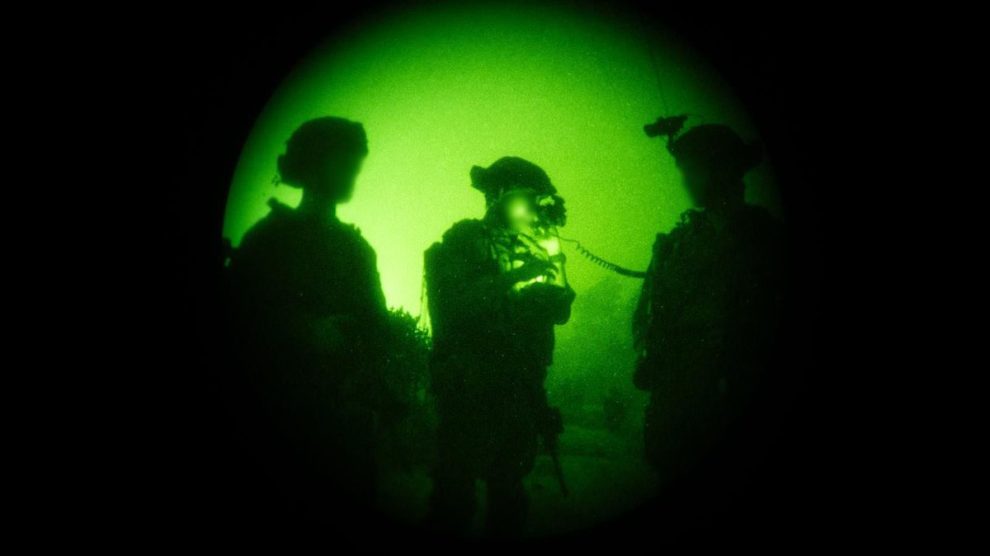
(Photo: X, @IDF)