
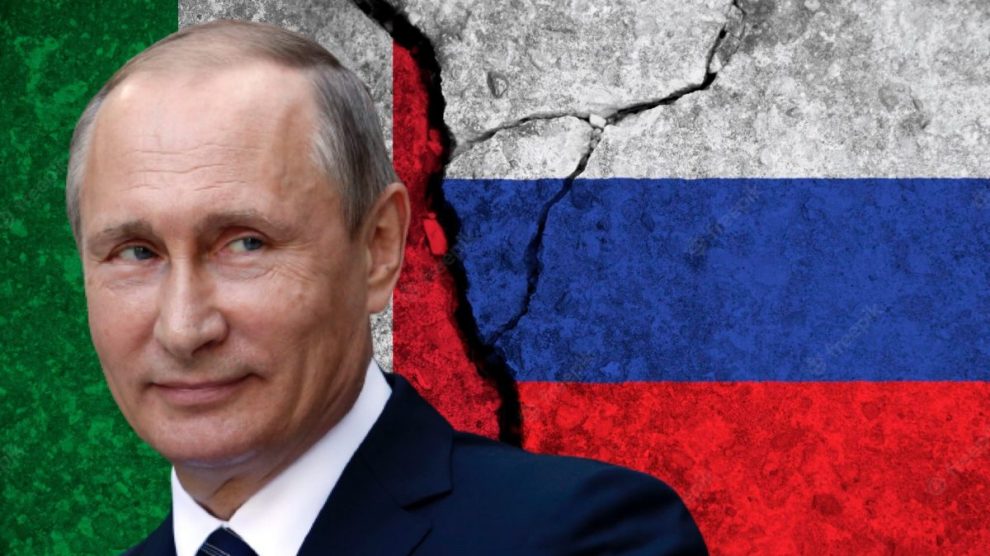
Why it matters. Italy has long been one of Europe’s most exposed political arenas when it comes to Russia: close economic ties before the war, a public debate still sensitive to the costs of sanctions, and coalition forces that do not always speak with the same voice on Moscow.
- Tajani’s warning therefore lands on two levels. Externally, it aligns Rome with the EU and NATO reading of Russia’s hybrid activity as a sustained pressure campaign against European unity. Internally, it raises a more delicate issue: how to protect the democratic process without turning foreign interference into a partisan weapon.
What he said. Speaking before an informal meeting of EU foreign ministers in Wicklow, Ireland, Tajani said the matter was not only Italian but European. He argued that attempts to condition elections in countries going to the polls “cannot be ruled out”, adding that governments should act early rather than after the damage has been done.
- He also recalled a previous cyberattack against the Italian foreign ministry’s website during Volodymyr Zelensky’s first visit to Rome, presenting it as evidence that hostile activity against Italian institutions is not theoretical.
The interference file. The point Tajani was making is broader than a single election or one alleged operation. Russian interference, in the European reading, works less like a one-off intrusion and more like an ecosystem: cyberattacks against public institutions, false or manipulated content pushed into domestic debates, amplification of polarising narratives, pressure on critical infrastructure and attempts to turn social fatigue over Ukraine into political leverage.
- The EU Council has formally described Russia’s hybrid campaigns as persistent, coordinated and long-standing, aimed at undermining support for Ukraine and weakening the security and stability of EU member states. NATO, too, lists political interference, malicious cyber activity, economic coercion and subversion among Moscow’s hybrid tools. In this context, an election does not need to be “hacked” in the narrow sense to be targeted.
- It can be pressured indirectly – by feeding distrust in institutions, by magnifying divisions over sanctions and arms deliveries, or by using fake news and distorted images to shape the emotional climate around a vote. Tajani’s reference to the Catalonia referendum went exactly in that direction: not a claim that Italy is already under attack, but a warning that similar methods can be recycled wherever public opinion is divided and European cohesion is politically costly.
The Vannacci angle. The domestic trigger was the Financial Times profile of Roberto Vannacci, which presented the former general and leader of Futuro Nazionale as a possible “Trojan horse” for Russian influence in Italy. Tajani did not endorse the label. Asked about it, he said the FT was free to write what it wanted, but added that such claims must be proven and that he hoped they were “absolutely false”.
- That caution matters: the political question is not whether one article can define a party leader’s role, but whether pro-Moscow narratives – stopping aid to Ukraine, reopening commercial channels with Russia, framing sanctions as the source of Italian economic pain – can become electorally useful inside the Italian right.
The political backdrop. Vannacci is no longer only a media figure. Reuters reported this week that his Futuro Nazionale has overtaken Forza Italia in polls, reaching 7.5% and becoming Italy’s fourth-largest political force only months after its launch.
- That gives the debate a sharper edge for Giorgia Meloni’s coalition: if Vannacci consolidates support on the right, his positions on Russia and Ukraine could pull part of the political conversation away from the government’s official line, which has so far remained aligned with Kyiv and with NATO.
The coalition split. Tajani’s words also exposed the familiar difference in tone inside the government. Matteo Salvini pushed back against the alarm, saying Italians do not vote because of foreign influence and warning against what he called an excessive “anti-Russian anxiety”.
- He acknowledged that Russia started the war, but argued that some Western capitals appeared to be looking for pretexts to prolong it. The exchange does not amount to a government rupture. But it shows why Russian interference is a particularly sensitive issue in Italy: it is both a national-security concern and a political fault line.
The bigger picture. Across Europe, the debate on Russia has moved beyond tanks, missiles and the front line in Ukraine. The current concern is the grey zone: sabotage, cyber operations, disinformation, influence campaigns and the use of domestic political grievances to weaken support for Kyiv.
- Reuters reported on Wednesday that the EU is preparing to increase pressure on Moscow after Germany blamed Russia for an explosives-laden drone incident at Leipzig/Halle Airport, while Berlin is also investigating new suspected sabotage cases. That European context is what gives Tajani’s remarks their weight. Italy is not an exception to the pattern; it is one of the places where the pattern could matter most politically.
The bottom line: Tajani’s warning is not an accusation that the Italian vote has already been compromised. It is a preventive signal. Russia’s influence operations, when they work, rarely announce themselves as foreign interference. They travel through existing fractures — inflation, war fatigue, distrust of Brussels, unease over sanctions — and try to turn them into strategic advantage. For Rome, the test will be to treat that risk seriously without inflating it, and to defend the electoral process without letting Moscow become just another instrument in the domestic campaign.