The context: In a rapid-response parliamentary question, Formentini asked whether Rome is ready to join the Central and Eastern European forum and link it to the India–Middle East–Europe Corridor (IMEC).
Why it matters: For the Italian Foreign Ministry, the Three Seas and IMEC are not separate tracks but parts of a single strategy: positioning Italy at the centre of the infrastructural networks connecting the Mediterranean, the Gulf, South Asia, Central and Eastern Europe, and ultimately the Indo-Pacific.
- The goal is to consolidate Italy’s emerging role as a geo-economic hinge in Europe’s logistical and energy value chains.
Driving the news: In the official response — read by Decode39 — the Ministry stresses that Italy is already “strongly engaged” in the area linking the Adriatic, the Baltic and the Black Sea, a political, economic and security axis that Rome intends to “further strengthen.”
- Any move toward the Three Seas, therefore, fits into a broader strategy that acknowledges the rising strategic weight of Central and Eastern Europe in global competition, as ECFR’s Teresa Coratella noted in a commentary.
- Yet the real centre of gravity lies elsewhere: IMEC. The Ministry describes it as one of Italy’s main vectors of external projection. The wider Mediterranean is framed as a natural junction between the Atlantic, the Gulf and the Indo-Pacific — a geography in which Italy can function as a hub for emerging energy and logistics corridors.
- Foreign Minister Antonio Tajani’s recent mission to Riyadh and his upcoming visit to New Delhi in early December are presented as steps of a unified diplomatic effort to deepen cooperation on IMEC. This project could turn Italy into “Europe’s gateway to Asia.”
Between the lines: This is the prism through which Rome’s interest in the Three Seas becomes fully coherent. The Ministry notes that the forum is of “growing relevance and interest,” backed by a substantial North–South investment plan that spans road, rail, and digital infrastructure.
- That same axis — critical for Europe’s competitiveness — could intersect with IMEC’s East–West trajectory, creating an integrated logistical geography in which Italy aims to play a balancing role.
- Hence, the Ministry’s confirmation that it is assessing “numerous aspects” of a potential accession, including institutional implications and synergies with other regional formats such as the Central European Initiative.
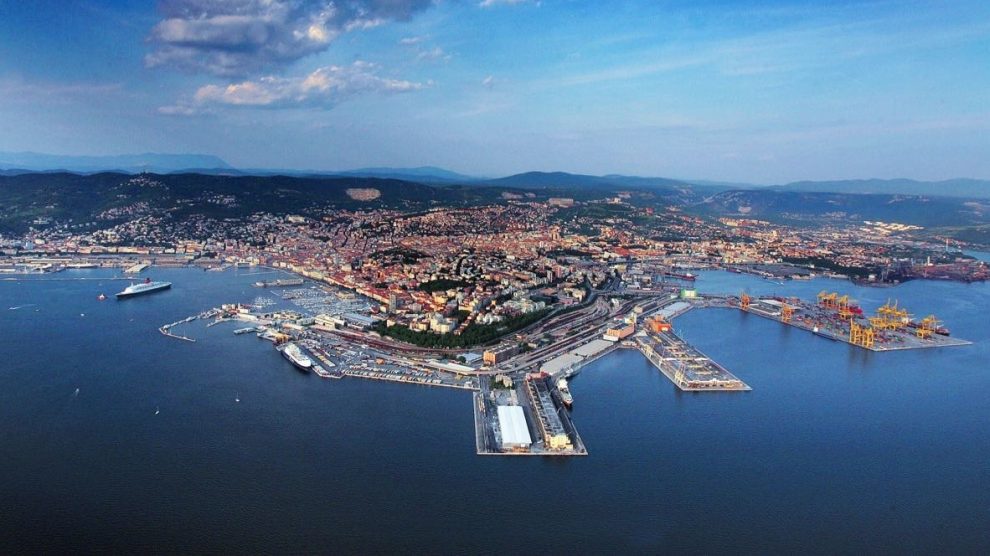
State of play: The reference to the port of Trieste reinforces this reading. The Ministry highlights its strategic weight — along with the broader Adriatic system — for Italy’s projection both toward Central Europe and along IMEC’s emerging commercial routes.
- It is no coincidence that the Trieste Summit organisation will devote the coming days to an international deep dive on the corridor, exploring opportunities and challenges from the vantage point of the city that aspires to become one of its anchors.
- Parallel to this, the response highlights the role of Italy’s Special Envoy for IMEC, Ambassador Francesco Maria Talò, who is tasked with enhancing Italy’s logistical infrastructure and supporting Europe’s energy diversification through routes that pass directly through the Italian system.
- On the domestic front, the Ministry welcomes the creation of a parliamentary intergroup on IMEC — co-chaired by Formentini — calling it a valuable political catalyst capable of accelerating the operational translation of Italy’s strategic intent.
What we’re watching: The Foreign Ministry’s line is clear: Italy intends to seize every opportunity to reinforce its geopolitical and commercial role, positioning the country “at the centre of the new routes of connectivity, infrastructural development and economic growth.”
- Any eventual accession to the Three Seas is not treated as a stand-alone objective, but rather as a component of a broader strategy to position Rome as a natural hinge between Europe and Eurasia, leveraging national infrastructure, economic diplomacy, and Italy’s ability to navigate a global system increasingly shaped by infrastructural competition.